



Africa is on the cusp of an agricultural revolution. With a burgeoning population projected to hit 2.5 billion by 2050, mounting food security imperatives, and a wave of government-backed mechanisation strategies sweeping from Dar es Salaam to Nairobi, the continent’s farmers have never needed reliable, versatile, and productive machinery more urgently than they do right now.
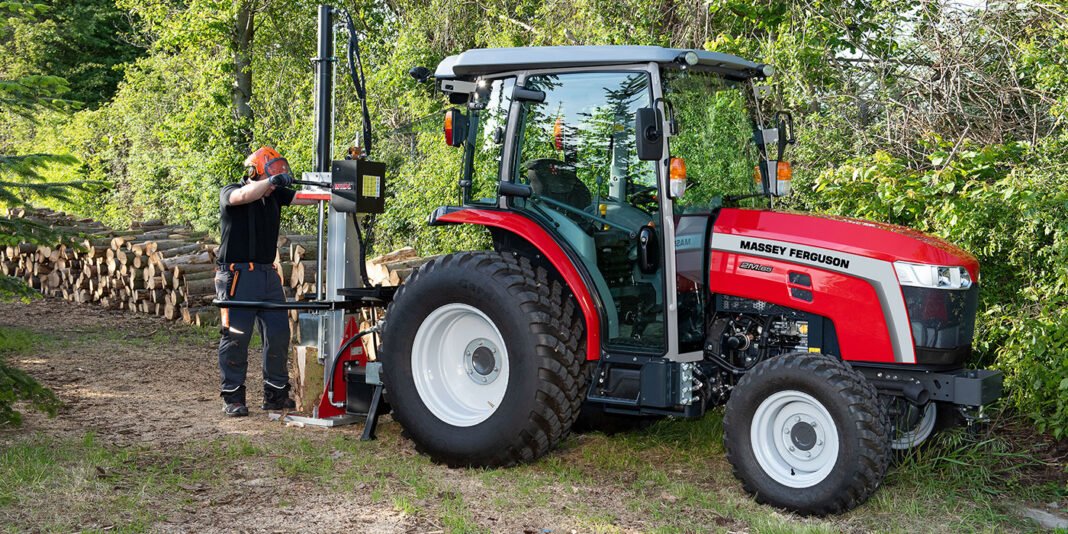
Enter the Massey Ferguson MF 2M Series — a brand-new lineup of compact tractors that debuted in early 2026 and is already generating considerable buzz among farmers, agri-dealers, and policy-makers across the continent.
Built to punch well above its weight class, this three-model range combines best-in-class hydraulics, operator-first ergonomics, and the legendary Massey Ferguson durability that African farmers have trusted for decades.
This is not just a tractor launch story. It is a story about the convergence of machine capability and continental opportunity — and why the MF 2M Series may be exactly the tool Africa’s next generation of farmers has been waiting for.
Africa’s Mechanisation Moment Has Arrived
In February 2026, heads of state, agricultural ministers, FAO officials, and private sector leaders convened in Dar es Salaam for the Africa Conference on Sustainable Agricultural Mechanisation.
The summit carried a singular message: mechanisation is no longer optional. It is the engine of transformation.
Tanzania’s Prime Minister Mwigulu Nchemba set the tone when he described mechanisation as essential to Africa’s agricultural future, declaring that the continent must turn its farms into a “mechanised sector that is sustainable, for this generation and future generations.”
That kind of political will, backed by the Comprehensive Africa Agriculture Development Programme (CAADP) Strategy and Action Plan 2026–2035, signals that the window for machinery investment on the continent is wide open.
The numbers back this up. Egypt achieved a record agricultural export value of over $11 billion in 2025 — representing roughly 24% of the country’s total exports — powered in large part by precision agriculture adoption.
Morocco, meanwhile, has seen agriculture swell to contribute more than 13% of national GDP under its Generation Green programme.
Uganda, Kenya, and Tanzania are rapidly mechanising food staple production across smallholder plots. The African agricultural boom is not coming. It is here.
Yet a critical gap persists. Millions of smallholder farming families remain under-mechanised, still dependent on rain-fed systems and manual labour.
The missing link has often been the right tractor: compact enough for restricted plots and low buildings, powerful enough for commercial-grade workloads, and reliable enough to survive Africa’s demanding terrain, heat, and dust.
The MF 2M Series was built to close exactly this gap.
“Through action, we can change Africa’s agriculture into a mechanized sector that is sustainable, for this generation and future generations.” — Tanzania PM Mwigulu Nchemba, Africa Conference on Sustainable Agricultural Mechanisation, 2026
Meet the MF 2M Series: Three Models, One Clear Mission
Massey Ferguson’s new MF 2M lineup comprises three distinct models — the MF 2M.50, MF 2M.55, and MF 2M.65 — spanning 49 to 65 horsepower.
This is a range that occupies a critically important sweet spot: more capable and feature-rich than basic entry-level machines, yet far more affordable and manoeuvrable than full-size utility tractors.
Production began in late 2025, with first deliveries reaching customers in 2026.
All three models arrive with the refreshed MF family styling that integrates seamlessly with Massey Ferguson’s higher-horsepower lineup, updated model numbering, and redesigned cabs that project a distinctly modern, professional image.
In African markets where the tractor is often a statement of serious farming intent, this aesthetic upgrade matters.
| Specification | MF 2M.50 | MF 2M.55 POPULAR | MF 2M.65 |
|---|---|---|---|
| Engine Power | 49 hp | 54 hp | 65 hp |
| Engine Type | 4-cylinder diesel | 4-cylinder diesel | 4-cylinder diesel |
| Transmission | Hydrostatic (HST) | 12×12 Power Shuttle | HST / 12×12 Shuttle |
| Drive | Selectable 4WD | Selectable 4WD | Selectable 4WD |
| Cab Options | Air-con cab | Air-con cab | Cab or ROPS |
| Rear Lift Capacity | 1,580 kg | 1,580 kg | 1,600 kg |
| Hydraulic Flow | 48.1 L/min | 48.1 L/min | 48.1 L/min |
Table 1: MF 2M Series at a glance. All models feature four-cylinder engines, selectable 4WD, factory-installed rear remote valves, and quick-hitch compatibility.
The Hydraulics Advantage: Built for Hard African Work
If there is one specification that separates serious farm tractors from lightweight alternatives, it is hydraulic capability.
African farming demands it. Whether you are operating a three-bottom disc plough through the black cotton soils of the Rift Valley, running a seedbed cultivator across the maize fields of Zambia, or lifting a fully loaded transport box on a horticultural holding in Morocco, hydraulic muscle is non-negotiable.
The MF 2M Series delivers in this area decisively. With rear linkage lift capacity reaching up to 1,600 kilograms on the flagship MF 2M.65 and hydraulic oil flow peaking at 48.1 litres per minute across the range, these machines are designed to operate complex, modern implements without compromise.
Factory-installed rear remote valves come as standard — a significant advantage over competitors that charge extra for this essential feature — and quick-hitch compatibility slashes implement changeover time in multi-task operations.
Massey Ferguson describes the hydraulics as “best-in-class” within the compact tractor segment, providing smoother operation and higher efficiency when paired with the range of compatible implements.
For African farmers juggling cultivation, planting, transport, and harvesting across a single working day — as is the reality on thousands of mixed farms — this versatility directly translates to more productive hours and lower costs per hectare.
Transmission Intelligence: Matching Africa’s Diverse Terrain
Africa is not one landscape. It is hundreds. From the volcanic highlands of Rwanda to the semi-arid savannah of Botswana, from the irrigated delta plains of the Nile to the steep tea estates of Kericho, the continent demands different things from a tractor drivetrain on almost every farm.
Massey Ferguson has addressed this reality by engineering real transmission choice into the MF 2M Series rather than forcing a single compromise on all buyers.
The entry-level MF 2M.50 comes standard with a smooth, responsive hydrostatic transmission (HST) — ideal for loader work, property maintenance, and mixed-use applications where operators need seamless forward and reverse movement without clutching.
The MF 2M.55 steps up to a 12×12 power shuttle mechanical gearbox, giving commercial arable and livestock operators the precise speed control they need for field operations.
The range-topping MF 2M.65 uniquely offers the buyer a choice of either system, making it the most versatile specification in the lineup.
The 12×12 power shuttle option is particularly compelling for African commercial operations.
With speeds ranging from a creeping pace suitable for planting vegetables and transplanting seedlings, all the way up to a brisk transport speed, operators have granular control over every task.
For a smallholder who needs one tractor to serve double duty — cultivating the plot by week and collecting market produce by weekend — this range of operational capability is transformative.
Designed for the Operator: Africa’s Farming Workforce Counts
One of the most persistent barriers to tractor adoption across Africa is operator fatigue and the skill gap.
Long working days under punishing sun, rough terrain, and the physical demands of field work take a toll. Tractors that are hard to operate or uncomfortable to use quickly fall out of favour — or worse, contribute to accidents and mechanical damage from incorrect handling.
The MF 2M Series takes a deliberate operator-first design philosophy that directly addresses African working conditions.
Both the MF 2M.50 and MF 2M.55 include a quiet, air-conditioned cab as standard equipment — not as a costly upgrade. In markets where daytime field temperatures regularly exceed 35 degrees Celsius, this is not a luxury.
It is a productivity tool that keeps operators alert and capable across a full working day.
The upgraded seat features superior cushioning with air suspension, significantly reducing vibration-related fatigue on rough ground.
A redesigned dashboard delivers clearer, more intuitive displays, and all hydraulic controls are now colour-coded for instant identification — a critically important usability improvement for operators with varying literacy levels or those new to mechanised farming.
Strategically positioned controls minimise repetitive reaching and strain, while LED lighting extends the effective working window into lower-light conditions, crucial during planting and harvest seasons when every hour counts.
The robust Iseki diesel engines powering all three models are proven for long-term reliability even under heavy-duty use — and in African markets where service intervals can be long and dealer networks are still developing, durability is everything.
A rugged chassis with cast components and reinforced axle load capacity further ensures that the MF 2M Series can absorb the kind of punishment that African field conditions routinely deliver.
“A reinforced frame, upgraded hydraulics, and colour-coded controls across the MF 2M Series — engineered for the operator who works all day, every day, in demanding conditions.”
The Africa Opportunity: Where Will the MF 2M Make the Biggest Impact?
The MF 2M Series sits at a power and price point that aligns with some of the most dynamic agricultural sectors on the African continent.
In East Africa, smallholder and mid-scale horticultural producers — growing high-value vegetables, flowers, and cut herbs for export — need compact, manoeuvrable tractors that can operate within greenhouses, polytunnels, and confined field rows.
The MF 2M.50’s hydrostatic transmission and tight turning radius make it a natural fit. Kenya’s horticulture sector, which earns billions in export revenue annually, is a ready market.
In Southern Africa, commercial grain and oilseed producers scaling up from 50 to 500 hectares need reliable workhorses that can handle multi-implement tasks without the cost and maintenance demands of full-size 100+ horsepower tractors
. The MF 2M.65 with its 65-horsepower output, choice of transmission, and 1,600-kilogram lift capacity slots directly into this gap.
In West Africa, where Nigeria’s agricultural transformation is gathering pace and Ghana is investing heavily in mechanisation programmes, the MF 2M Series’ combination of toughness, accessibility, and Massey Ferguson’s established dealer and parts network makes commercial sense.
AGCO — Massey Ferguson’s parent company — operates in over 140 countries and has a deeply embedded presence across the African continent, meaning that parts availability and service support are far more reliable than for many competing brands.
In North Africa, where Egypt is leading the continent’s precision agriculture charge and Morocco is investing aggressively in human capital and climate-smart farming, the MF 2M Series’ modern operator environment and hydraulic sophistication will appeal to younger, increasingly tech-savvy farmers entering the sector.
Competing in the Compact Tractor Market: How Does the MF 2M Stack Up?
The compact tractor market in Africa is competitive. Kubota, John Deere, and a growing wave of Chinese-manufactured machines have made significant inroads in recent years, particularly among cost-sensitive buyers. So why should an African farmer or agribusiness choose the MF 2M Series?
The answer lies in the total value equation rather than the sticker price alone. The factory-fitted air-conditioned cab on the MF 2M.50 and 2M.55, which competitors typically charge as a premium option, instantly changes the cost comparison.
The 1,580–1,600 kilogram rear lift capacity and 48.1 L/min hydraulic flow rates benchmark strongly against rivals in the 49–65 horsepower class.
The choice of hydrostatic or 12×12 power shuttle transmission — available even on the entry model — gives buyers flexibility that many single-transmission competitors cannot match.
Critically, the MF 2M Series is backed by the Massey Ferguson brand heritage in Africa — decades of trusted performance, a wide dealer network across the continent, and the global support infrastructure of AGCO.
For a farmer making a major capital investment, that brand assurance carries real weight.
When a tractor breaks down in a remote farming region, access to spare parts and qualified service technicians is not a minor consideration. It is potentially the difference between a successful harvest and a failed one.
The Bigger Picture: Technology, Policy, and the Road Ahead
The launch of the MF 2M Series in 2026 lands at precisely the right historical moment. Across the continent, governments are revising national agricultural mechanisation strategies.
The CAADP 2026–2035 framework explicitly positions mechanisation as a strategic enabler of agrifood systems transformation.
FAO and the African Union’s Framework for Sustainable Agricultural Mechanisation in Africa (F-SAMA) is driving institutional coordination at continental scale. Private sector investment in African agriculture is rising.
At the farm level, a new generation of African farmers is entering the sector. Younger, better educated, more connected to digital tools and global market prices, this cohort demands machinery that is modern, intuitive, and productive.
The MF 2M Series — with its updated dashboard, colour-coded hydraulics, comfortable cab, and flexible transmission options — speaks directly to this emerging farmer profile.
These are not machines designed for yesterday’s operator. They are built for the farmer Africa is producing today.
Massey Ferguson’s commitment to the continent goes back decades, from the launch of the People’s Tractor in Kenya in 2015 to the Vision of the Future showcase in Zambia in 2016 and multiple tailored product launches across the continent since.
The MF 2M Series continues this trajectory — not as a machine cynically repurposed for Africa, but as a compact tractor that genuinely meets the continent’s unique operational, environmental, and economic requirements.
Verdict: A Machine Whose Time Has Come
The Massey Ferguson MF 2M Series represents a significant step forward in the compact tractor segment — and its arrival in 2026 aligns with a continent-wide inflection point in agricultural mechanisation.
With three well-differentiated models spanning 49 to 65 horsepower, best-in-class hydraulics delivering up to 1,600 kilograms of lift and 48.1 litres per minute of flow, genuine transmission choice, and an operator environment that prioritises comfort and usability, this is a lineup that has been engineered with serious intent.
For Africa’s smallholder farmers scaling up production, for commercial agribusinesses diversifying their implement portfolio, for municipal and horticultural operations that need a reliable, manoeuvrable daily workhorse — the MF 2M Series earns a long and serious look.
As Africa’s agricultural boom accelerates into the second half of the 2020s, the machines that will define its productivity story are being built right now.
The MF 2M Series is one of them.
Also Read
Why Tractor Sales Are Rising in Nigeria in 2026
Top Ultra High-Horsepower Tractors Reshaping Global Agriculture

Martin is a writer at Agrimachinery Africa specializing in agricultural machinery, mechanization trends, and farm technology across Africa. His work focuses on tractors, harvesting equipment, irrigation systems, and emerging innovations helping farmers improve productivity and efficiency. Through in-depth industry coverage, he highlights technologies shaping the future of modern agriculture.