Home Blog Page 28

Smart sensors and sensor fusion pave the way to autonomous working machinery


Sensor fusion optimally combines the measurements from multiple sensors, providing higher quality than any single sensor can alone.

This approach is already being employed in driver assistance systems and autonomous driving for on-road vehicles, where fault tolerance and accuracy are a must.

While still a relatively new field in agriculture and the off-highway sector, sensor fusion is expected to quickly make inroads into mobile off-highway equipment such as excavators, bulldozers and tractors

From November 12 to 18, Systems & Components in Hanover, Germany, will showcase the evolution of mobile machinery, driven by rapid advances in sensor technology. Powerful assistance systems that unburden the driver and increase efficiency will be presented at the exhibition grounds.

Working alongside their OEM customers from the outset, the exhibitors at the B2B platform, taking place in parallel to Agritechnica, are developing market-relevant solutions that meet their customers’ automation needs.

The need for reliable technologies in the off-highway sector is growing rapidly with sensors playing an increasingly important role in the monitoring and control of mobile machinery used in agriculture, forestry, construction and mining.

However, choosing the most appropriate sensors is of crucial importance, as, in contrast to industrial automation, much higher demands exist for mobile applications. Agricultural and construction machines must collect their data under adverse conditions and  providing reliable measurements where factors like dirt, moisture and extreme temperatures may impact results.

Different sensors often measure the same scenario

Smart sensors that not only measure but also process data into a usable form are already used extensively on off-highway commercial vehicles. Where several measurements of the same scenario, for example the state of a crop in the field, are taken using different sensors, “sensor fusion” algorithms can combine and compare this data from different sources and offer more reliable recommendations.

A typical scenario could use a near-infrared sensor detecting nitrogen levels, a mounted visible light camera that can also see the greenness of a field, and a far-infrared satellite for field mapping.

The combination of the sensor information provides more accurate, robust and up-to-date information than any one approach on its own. Sensor fusion is already employed for driver assistance systems in cars, improving driver safety through warnings and even automatic braking, and its use in off-highway applications promises the needed robustness and accuracy.

Harsh conditions, robust instrumentation

As an example, where a threshing unit is to work continuously, staying level on an uneven field, robust inclination sensors must detect deviations laterally and in the direction of travel. The driver then has all the information needed to both correct and avoid overloading. Strong vibrations lead to measurement noise – errors in angle and position measurement – and the task for the technology providers is to adapt the sensors to the conditions that prevail off-road. Robust measurement systems that correct inclination sensors using a gyroscope can effectively block out such jolts.

Sensor systems for mobile automation are of particular importance for driver assistance. The assistance functions currently available are the first step on the way to an autonomous mobile machine that carries out its work automatically without manual intervention.

At the Systems & Components trade fair, this progress will be reflected in the phased and demand-driven approach that technology providers are taking to development – starting with warning functions in the cockpit, through semi-autonomous systems that support the driver, to complete telematics packages that increase the efficiency of machines even in remote regions. Engineers, developers and fleet managers will be able to find a complete toolbox for almost all sensor applications in mobile machinery at Systems & Components.

High integrity sensor systems improve mobile machinery safety

A particularly interesting example is high-resolution radar, operating around 77GHz, that detects both moving and stationary objects. The radar sensor can accurately monitor objects in the vehicle’s surroundings and, in combination with assistance systems, can aid the driver and warn of any potential collisions.

Solutions such as those offered by automotive and off-highway electronics supplier Hella use a frequency-modulated continuous-wave radar with a 75 degree field of view, which functions reliably at extreme temperatures, at night and in conditions of poor visibility, such as fog, rain or snow. A system of eight sensors can provide 360 degree monitoring of the objects in the vehicle’s immediate vicinity, precisely measuring distance, relative speed, and the angle to the objects.

The exhibitors at Systems & Components draw on a broad technology portfolio from the automotive sector, which they are continuously developing for off-highway use, above all, 24 Volt compatibility  and the IP69K rating.

They thus provide OEMs of mobile machinery with a practical modular system for cost-effective production applications, with which they can design their own “plug & play” assistance systems. In addition to radar sensors, systems using other sensors like ultrasonics or cameras can be flexibly configured and tailored to the requirements of the specific application.

A simple sensor system might only detect obstacles and measure their distance, whereas high-end solutions combine radars with cameras leading to much improved object localization and detection reliability.

Detailed interpretation of the environment

By “fusing” the data from different sensors, the advantages of the different measurement technologies can be optimally combined, thus increasing the potential of the assistance and safety functions.

Powerful “data fusion” algorithms that are increasingly using artificial intelligence, enable the interpretation of the sensor data, providing a detailed representation of the environment around the vehicle. In advanced steering system solutions, sensor fusion facilitates autonomous operation in the field, such as precision farming with modern plant row recognition or precise section control.

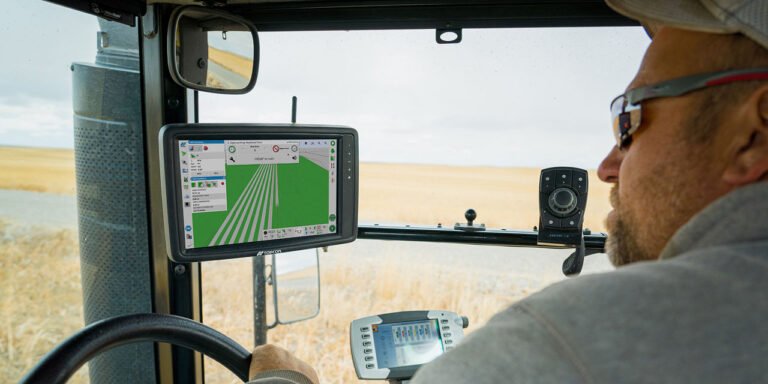
Using GPS, the machines follow specified routes with high accuracy, reducing overlapping and the associated excess use of pesticides or fertilizers.

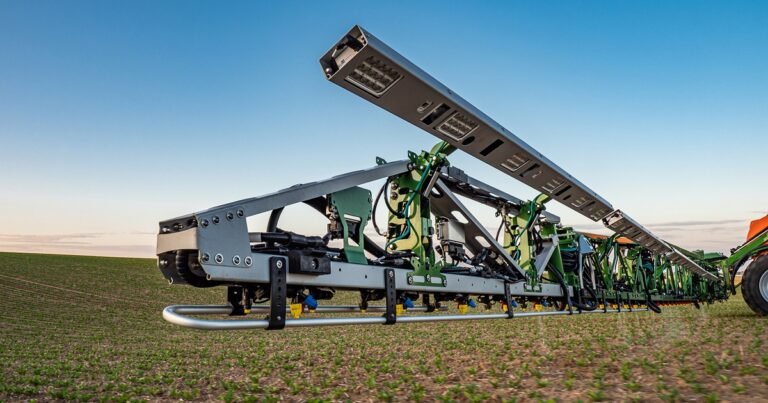
For object detection, distance measurement, and collision avoidance, Bosch uses a combination of ultrasonic and radar sensors for its “Off-Highway Surround Sensing” offering. The combination of ultrasonic technology, optimized for close-range applications, with radar systems for both near- and far-field monitoring can be used for collision warning and avoidance as well as for distance control, for example with spray booms or grape harvesting.

The system ensures that the optimal distance between the harvesting machine and the vines is maintained. Using precise localization, the system not only warns the driver of a possible collision, but also provides the exact distance and position of other objects, making it easier, for example, to drive two machines in parallel.

The concept received the “Systems & Components Trophy – Engineers’ Choice” award from DLG at Agritechnica in 2022. “With Off-Highway Surround Sensing, we are creating the basis for the efficient development of more advanced assistance functions. In the future, agricultural machines will be able to perform many work steps completely automatically,” explains Stefan Schenk, responsible for the Off-Road division at Robert Bosch GmbH.

Equipped for the trends of tomorrow

Even though it will probably be a few years before autonomous driving machines dominate construction sites and agricultural fields, networking and digitization are already making their way into the off-highway sectors.

Sensors make it clear what is happening in and around the machines, and allow drivers to optimize their machines and avoid being overloaded. From November 12 to 18, Systems & Components will present a wide range of solutions for measuring every aspect of agricultural processes that will prepare commercial vehicles for the automation requirements of tomorrow.

Also Read

Less fertilizer thanks to test strips and satellite data

Expanded API Now Available for the Trimble Agriculture Cloud

Case IH acquires spray booms specialist to strengthen its crop protection equipment portfolio

0

CNH Industrial has acquired Specialty Enterprises LLC (Specialty), North America’s largest manufacturer of premium aluminium spray booms for agricultural applications.

Specialty, which operates one manufacturing facility in Wautoma, Wisconsin, has been a supplier to Case IH since 2020.

The direct ownership of spray boom production is the latest step in Case IH’s strategic road map for its sprayer product platform.

As the company works to enhance its application-product offering, the inclusion of longer, lighter booms enables accelerated development and deployment of new technologies.

These solutions will be implemented across the Case IH product portfolio.

Scott Harris, Global president of Case IH:
“We are thrilled to be working so closely with Specialty, which has been a fantastic partner to Case IH over the last few years, as we deliver more productive application solutions.”

“This acquisition strengthens our in-house capabilities and allows us to retain key strategic personnel to ensure continuity in this vertical integration.”

Helps maximize yield

The acquisition of Specialty signals Case IH’s continued commitment to Agronomic Design, helping operators maximise yield and ROI potential.

As aluminium spray booms are up to 50% lighter than their steel counterparts, they result in less field compaction, less rutting and better weight distribution.

Monte Weller, Global product manager for Crop Production and Hay & Forage product lines of Case IH:

“At Case IH, one of our primary crop production goals is to help operators cover more acres more efficiently, with solutions that are built to last.”

“This acquisition will be key to providing operators with the equipment and agronomic solutions they need to feed a growing world.”

Specialty is known for its advanced engineering and high-quality workmanship as a world-class welding operation.

The company’s sprayer boom design incorporates multiple patents to virtually eliminate the fatigue cracking associated with other aluminium boom designs.

The aluminium used by Specialty is sourced and extruded in the United States.

Also Read

Yokohama Off-Highway Tires launches largest tractor tire to date

Massey Ferguson’s MF8S wins Trator do Ano 2023/2024 in Brasil

Yokohama Off-Highway Tires launches largest tractor tire to date


Yokohama Off-Highway Tires’ (YOHT) flagship brand Alliance recently released new sizes of the proven Agriflex+ 372 radial tire for tractors and harvesters – including a size that makes it the largest tire ever produced by Alliance.

Size VF750/75R46 is for the absolute largest tractors and machines and challenges competitors with economically and qualitatively competitive tires.

The VF tires are recognized as leaders in the global flotation radial market: Alliance VF technology delivers in terms of effective soil protection, efficiency gains and yield increases.

Innovative technology pays off
Alliance Agriflex+ 372’s success was confirmed by a scientific field experiment by SEGES Innovation in 2021. The results of the field studies revealed the positive effects of Alliance’s VF tires in comparison to conventional ones.

Tested on a tractor-trailer-combination, the low inflation pressure of the Agriflex+ 372 and the Agriflex+ 389 tires cut the track depth during the application of liquid manure in half. At the same time, wheel slip was reduced by 4.4 percent, and measurements with a penetrometer showed lower soil compaction in the ‘VF tire tracks’ in the soil zone from 0 to 40 cm.

Furthermore, maize yields in the tracks on ‘VF tire plots’ exceeded those of the tracks on the ‘conventional tire plots’ significantly by about 12.9 harvest units per hectare, i.e. by about 10 percent.

Thanks to Alliance VF tires – and depending on the working width of the liquid manure spreader – these results translate to yield increases between 1.5 and 2.2 per cent per hectare and calculated profit gains due to higher yields and reduced tire slippage of up to almost 80 EUR per hectare.

Also Read

Light tillage, soil preservation? BKT’s latest-generation tires are all you need

6 benefits of VF agriculture tyres?

TVS Eurogrip Unveils Tigertrac Radial Tyres For Farm Sector


TVS Eurogrip has unveiled a new range of agricultural radial tyres at the Farm Progress Show 2023.

These off-highway tyres include the Tigertrac FL909 steel belted and FL900 textile belted flotation radials for agricultural transport and implements.

The wide portfolio of bias implement tyres are represented by models such as IM 45, I 09, F-2 tractor front tyres and R-2 and I-3 flotation tyres such as the TM 09 and FL 09.

Arvind Singh, COO, TVS Srichakra said the company has made significant investments in capacity expansion and technology to cater to the growing demands from worldwide markets. Participating in such programmes will help TVS expand its footprint in the USA, he said.

Field demonstrations are an important feature of this show, and this include side-by-side tillage, harvest, grain handling, autonomy, UAVs as well as ride and drive opportunities. Over 600 exhibitors from across the world are participating in the show.

Also Read

Two New Mitas AGRITERRA 02 Tyre Sizes for Special Agricultural Machines

Titan Debuts new tread design on world’s largest farm tire

South African farmers get Agro Energy Fund as load shedding bites

0

The ongoing load shedding in South Africa has become a serious constraint on growth and profitability for various sectors, agriculture included.

In addressing the negative impact on the productivity and profitability of farm operations brought about by the load shedding crisis, Land Bank and DALRRD, on 29th August launched a blended finance fund called the Agro Energy Fund that is geared towards financing alternative energy solutions with a focus on energy intensive agricultural activities which include irrigation, intensive agricultural production systems and on-farm cold chain related activities.

The fund aims to support all South African producers and agri-businesses in the agricultural sector from smallholder to large scale and mega commercial producers.

“I must emphasise that the purpose of the Agro Energy Fund is to incentivise farmers to invest in alternative energy sources. This Fund will run parallel to other existing financial instruments that are designed to support farmers with production, farmer infrastructure, market and other. Applications will be directed to the Land Bank and will be subjected to approval guidelines of the bank” said Minister Didiza.

The funding will be deployed through a blended finance structure which is a combination of a loan and grant. DALRRD will contribute a grant portion to a total value of R500 million which will be matched with a loan portion to a total value of R710 million from Land Bank.

This will effectively create a R1.21 billion fund size. The fund will be available in the market until the allocated funds are completely drawn down. The prioritised focus will be on supporting dairy farming, piggeries, poultry, all irrigated commodities and on-farm processing.

In deploying funding to producers, the Bank will also rollout its Green Finance product
offering with a focus on financing solar panels, biogas and biomass plants which will result in the installation and commissioning of energy efficiency projects across the country which will partially offset electricity usage from the grid.

The Agro Energy Fund will enable the Bank to contribute to building resilience for enterprises against energy shocks in the sector which have negatively impacted productivity and profitability in farm operations.

Food security and rural development remain key priorities in the agricultural sector. The
intended support to producers will also indirectly result in the maintenance of jobs in the sector which is experiencing growth in employment numbers.

“We are delighted to be in this partnership with the Department for the implementation of the Agro Energy Fund which is important to provide energy security to ensure that farming continues uninterrupted even during load shedding hours and there will be extra energy produced by farmers through this funding.

This may also reduce the electricity bill of the farmers as they will no longer buy full units but use solargenerated energy” said Mr Andrew Makenete, Deputy Chairman of the Land Bank Board. The launch of the Agro Energy Fund follows the successful launch of the Blended Finance Scheme (BFS) in October 2022 through the partnership between Land Bank and DALRRD.

The launch therefore marks the opening of lending activities under the Agro Energy Fund.

Also Read

Tractor sales in Australia plummet, says association

Massey Ferguson Introduces 1 Series Round Baler

Less fertilizer thanks to test strips and satellite data


A new technology will facilitate quick, easy and precise fertilizing in the field in the future.

Thanks to the combination of biosensor test strips and satellite-based remote sensing data, the Technical University of Munich (TUM) is developing a method for determining the nutritional condition of cereals and the perfect amount of fertilizer.

Automatic provision of digital analytical data to the tractors terminal should save time and prevent overfertilization in the future. With its development of environmentally friendly technologies the Straubing campus for sustainability plays a leading role within the TUM.

Along with light and water, plants require nutrients that must be provided for their growth. Precise fertilization of agricultural crops ensures successful yields and environmentally friendly cultivation. Scientists have long searched for methods and techniques to provide plants with sufficient nutrients while conserving resources.

The goal is to determine the exact amount of fertilizer needed for each stage of growth and to use technology to apply nutrients in the field with precision and accuracy.

New technologies using test strips and satellite remote sensing data

Researchers at the Technical University of Munich (TUM) are working on a new and simple method of determining the nutritional condition of cereal plants with the help of easy-to-use biosensor test strips, much like blood sugar testing for diabetics.

Multiple plant stems are collected from at least three different locations in the field and used for extraction. One drop of the sap on a test strip is enough to measure the nitrate content with a diagnostic device that fits in the palm of your hand.

The result is available in a few minutes. It is used to calibrate remote sensing data which is already available via satellite from the EU Copernicus program, the European land monitoring service.

The combination of precise local measurements from the new diagnostic device using test strips and widely available earth observation data based on satellites allows for exact calculation of the amount of nitrogen fertilizer required in the field examined. By the TUM researchers’ estimation, this saves up to 20 percent of the fertilizer required for the cultivation of cereals.

Fertilizing practice has been imprecise until now

According to the Federal Environment Agency, 50 percent of the nitrogen fertilizer used in agriculture is not absorbed by the plants. Excess quantities of fertilizer remain in the natural cycles in nature and have an impact on the soil and water. Fertilizer calculations for cultivated plants are done purely mathematically with standardized parameters or based on experience. Although it is possible to determine the nutritional conditions of the plants through laboratory analysis, this currently is very costly in terms of time and money. It has therefore been rather impractical for use in the field to date.

Accurate quantity of fertilizer is available quickly and digitally

The initial focus of research at the TUM is on the supply of nitrogen for cereals. In the future, it will be also possible to test the plants’ nutritional condition with regard to phosphate and potassium. The TUM uses prototypes of the new diagnostic method, which is also expected to be affordable to purchase in the future.

The researchers calculate the cost at around 20 Euro per hectare for agricultural use of the new technology. The aim is to be able to deliver the processed analysis results from test strips and satellite data directly into the digital on-board technology in agricultural machines and fertilizer applicators. In this way, fertilizing can be done entirely digitally and precisely without any laborious calculations.

Practical field tests are already starting this year

Field tests with the new technology are already starting this year. Collaboration with regional machinery rings is making it possible for the TUM researchers to gain experience with a broad range of users. “Right from the outset, we will be carrying out field tests with farmers in the region in order to develop our technology in collaboration with the users,” says Dr. Tobias Vöpel, Project Leader at the TUM Straubing campus. The results of the practical field tests will be incorporated into the development of the new technology over the next three years.

First EIC Transition project for the TUM

With the research project for simple determination of fertilizer requirement, the TUM has now been awarded the European Innovation Council (EIC) Transition program grant, which provides financial support for researchers in their work on innovative technologies for sustainable and future-proof agriculture.

Multiple university chairs are working together on the project in order to develop a technology which is ready for market. The Chair of Prof. Nicolas Plumeré, Professor of Electrobiotechnology at the TUM Straubing campus is leading the project.

Also Read

Expanded API Now Available for the Trimble Agriculture Cloud

Jacto: Spread precisely and save on fertilizer

Massey Ferguson Introduces 1 Series Round Baler

0

A global leader in the design, manufacture, and distribution of agricultural machinery and precision ag technology, announced today the launch of a new round baler series.

The Massey Ferguson 1 Series round baler delivers efficiency, quality, and operator comfort with straightforward, proven technology and rugged dependability.

The series was specially designed to perform in challenging dry hay, stover, and residue applications. Massey Ferguson will display the new baler at this year’s Farm Progress Show in Decatur, Illinois, and is currently accepting preorders.

Baling dry hay and stover is incredibly demanding on hay equipment,” said Matt LeCroy, director, hay and harvesting, for Massey Ferguson North America. “Our engineering team in Hesston, Kansas, worked diligently to provide an efficient solution that can stand up to the challenging conditions our farmers face in the field.”

Straightforward Comes Standard

The Massey Ferguson 1 Series round baler integrates proven technology from decades of industry-leading innovation to make the baling process more efficient and more comfortable than ever before. It is available in two variable-chamber models, the RB.146, which produces up to 4-by-6-foot round bales, and the RB.156, for up to 5-by-6-foot bales.

The 1 Series comes standard with a camless pickup for increased efficiency and comfort. This reduces power requirements to just 80 hp for the RB.146 and 100 hp for the larger RB.156. Additionally, without a cam track, the 1 Series round baler minimizes maintenance and noise.

With the 1 Series round baler, hay producers can be loaded in minutes with minimal physical requirements. A front-mounted net binding system allows for tighter, faster binding without the visibility tradeoff of other models, providing the best of both worlds for North American farmers. The baler features a duckbill-style net system.

This mechanically moves net from the roll to the bale, eliminating environmental obstructions, while the net braking design allows for easy one-handed adjustment without tools, ensuring optimum net tension. An innovative net roll loading rack pivots out at approximately tailgate height, minimizing lifting and positioning.

An optional hydraulically operated drop floor provides further comfort, allowing operators to clear obstructions without leaving the tractor.

Durability for Extreme Haying Conditions

Engineers designed the 1 Series round baler to deliver dependable, long-lasting service even in the challenging conditions of North American dry hay production. Heavy-duty components ensure the new baler will stand up to the harshest conditions, year after year, for fast ROI and a better total cost of ownership. This includes:

  • Triple-lip sealed bearings to keep out dust and debris.
  • Heavy-wall aggressive rollers with welded cleats for long service life.
  • Debris shields and cast roller flares prevent material buildup, protecting bearings.

Additionally, the 1 Series uses high-quality systems proven to reduce unnecessary downtime. For example, the maintenance-free elastomeric tension and toothless idlers minimize wear on diamond roller chains for maximum uptime. Keeping with Massey Ferguson’s focus on straightforward and dependable equipment, moving parts are minimized throughout the baler for low maintenance and a operator-friendly experience.

High-Speed, High-Quality Hay

“From the moment of cutting, hay quality begins to diminish,” LeCroy said. “Our one purpose is providing the tools farmers need for faster baling without jeopardizing quality. The Massey Ferguson 1 Series round baler delivers on our promise of farmer-focused equipment solutions that meet the needs of North American hay producers. The 1 Series allows operators to maintain density while running at increased speeds. Additionally, they have access to cutting-edge technology that makes haying easier than ever before.”

The baler employs a vertical chamber that uses gravity to increase bale density without additional parts or power. It also features a positively engaging undershot rotor for increased efficiency.

State-of-the-art, cross-platform commonality allows for easy integration into any operation. This includes tractor implement management (TIM) capabilities, which allow the baler to stop the tractor and completely cycle the bale without operator input.

Also Read

Mahindra seeks to revolutionalise global farming with OJA Tractor Platforms

Tractor sales in Australia plummet, says association

Tractor sales in Australia plummet, says association


July has seen a significant fall in tractor sales in Australia evidence that some sales were brought forward in June to take advantage of the Temporary Full Expensing Program.

Normally a quiet month, there were only around 750 tractors delivered in July which was around 250 units or 36% fewer than the same month last year.  This now means that the year-to-date figure is 18% behind the same period last year.

Sales around the nation were well down across the board with Victoria off 32% on the same month last year to be 25% behind year to date. Queensland was down 38% and is now 14% behind year to date, NSW was down 35% to be 19% off YTD.

Sales in Western Australia reported a drop of 49% and remains 18% behind last year. South Australia recorded a 22% decline and now sits 8% behind YTD and Tasmania was off 58% for the month, 25% down YTD with sales in the NT finishing 9% down remaining 9% down YTD.

Looking at the machine categories, we find that the small under 40 hp (30kw) category, the category most likely to be affected by interest rates, was down by 45% for the month and is now 20% behind year to date.

The 40 to 100hp (30-75kw) range was also down 34% and is now 19% behind year to date, the 100 to 200hp (75-150 kw) category was down, this time by 27% and remains 21% behind YTD and finally the 200 hp (150kw) PLUS range slipped, down 44% remaining 10% behind last year.

Sales of Combine Harvesters continue to gather pace with more than 350 units delivered in the year so far. This puts us well ahead of the same time last year, up 75% in fact and expectations are for an outstanding year ahead.

Baler sales enjoyed a small rise and are now 12% ahead on a year-to-date basis and sales of Out – Front Mowers enjoyed another strong month, up 45% on the same time last year.

The machinery sales industry is experiencing some significant headwinds at present. Machinery prices are high and look to be remaining so, recent interest rate rises are impacting the cost of finance and the expectations of a drier summer have caused some farmers to reconsider their machinery purchases.

Despite this, we remain optimistic that we will see more of a “soft” landing as conditions continue to normalise after what has been an amazing two-year period.

Finally, the annual TMA conference has now been held in Sydney and was a tremendous success with all sponsorships an  tickets sold out. The day saw an exciting range of speakers but undoubtedly, those in attendance thoroughly enjoyed the networking opportunity the event provided.

The TMA Conference is the must attend event for all manufactures, dealers and suppliers to the industry and we look forward to a bigger and better event again next year.

Also Read

Brazil Optimistic About Agriculture Machinery Exports

Jacto: Spread Precisely And Save On Fertilizer

Expanded API Now Available for the Trimble Agriculture Cloud


Trimble announced today the release of its flexible API for the Trimble Agriculture Cloud, an industry cloud that streamlines farming operations.

The availability of this API represents the next evolution of connectivity for agriculture integrators by coupling in-field devices and operational workflows for enabling compatibility with both Trimble and third-party agriculture applications.

As part of its focus to provide precision agriculture technology for mixed fleets, Trimble has created a path to enable broad compatibility that seamlessly connects local, regional and national applications to Trimble equipment in the field, as well as the data it collects.

The Trimble Agriculture Cloud helps farmers execute workflows with greater accuracy, more efficiency and fewer errors while driving sustainability. It also centralizes data needed for compliance and regulatory requirements.

For integrators, access to the Trimble Agriculture Cloud’s API enables third parties to connect to the Trimble platform and its key workflow applications, including Trimble Ag Software, Trimble Ag Mobile and the Precision-IQ™ field application, expanding the value of the solutions they offer.

“At Trimble, our vision is to help farmers work more efficiently through data-driven farming practices and decision support tools,” said Dave Britton, vice president of Product Management, Trimble Agriculture.

“Enabling farmers to complete workflows that involve solutions from multiple technology providers is critical, especially in cases where third-party applications address unique regional farming practices. With this in mind, we created the Trimble Agriculture Cloud and an expanded, flexible API to establish a place where integrators could easily connect and share data, regardless of brand.”

API capabilities include farm setup, task records and recommendations, materials, vehicle setup, work orders, harvest and crop zones activities. Through the combination of software and hardware, Trimble enables integrators to create value for farmers and their partners, including consultants, agronomists, custom applicators and more, by facilitating workflows that leverage connectivity to the machine in the field, improving the overall crop production process.

With the recent update of the Trimble Agriculture Cloud, the most common API workflows available to third-party integrators address the majority of applications on the farm, including:

  • Accessing Trimble display as-applied data in third-party applications for productivity analysis and regulatory compliance
  • Sending prescriptions to and from third-party applications to Trimble displays
  • Aligning field resources such as boundaries, guidance lines and landmarks between connected third-party applications and Trimble displays for in-field execution

Trimble currently has more than 180 million customer acres (72.8 million hectares) using its Trimble Agriculture Cloud on the connected platform, along with many partner integrators ranging from enterprise farmers, customer software applications and local and regional dealers.

“As an environmental software company that enables farmers and their partners across New Zealand to connect, manage, visualize and share their environmental data, we need partners that can make data sharing simple. Syncing data to the Trimble Agriculture Cloud allows us to easily send prescription files to Trimble displays and receive equipment activity data back, allowing farmers and their contractors to provide proof of application for their spreading and spray applications,” said Chloe Walker, chief operating officer, Precision Farming Ltd.

“The Trimble Agriculture API opens up the market to a much broader range of options for New Zealand-based GPS guidance users, allowing them to utilize the devices of their choice and automatically return that data to where they need it to go. Proof of application data from Trimble displays can now be returned to the farmer, supplier and regulator as part of a digitized workflow management process for contractors.”

The Trimble Agriculture Cloud is part of the Trimble Developer Program, a Trimble-wide initiative to streamline the developer experience across the Trimble software ecosystem, making it easier for developers to discover, learn, access and receive support for APIs and SDKs.

Also Read

Crop protection: Largest ever electric drone authorized to operate in the US

Trends driving automation on the farm


Mahindra seeks to revolutionalise global farming with OJA Tractor Platforms

0

Mahindra Tractors, the world’s largest tractor manufacturer by volume, today launched its much-anticipated, future ready range of tractors – the Mahindra OJA – at Futurescape, an event held in Cape Town, South Africa.

Derived from the Sanskrit word “Ojas”, meaning Powerhouse of Energy, OJA is Mahindra’s most ambitious global lightweight tractor platform.

Developed in collaboration between the engineering teams of Mahindra Research Valley, India, the R&D centre for Mahindra AFS and Mitsubishi Mahindra Agriculture Machinery, Japan, at an investment of $ 145 million, the new OJA range brings about a transformative shift in Light Weight 4WD Tractor design and engineering, to deliver cutting-edge innovation in tractor technology.

With 4WD as standard, the OJA range is based on 4 platforms:

Sub-Compact – 20-26HP

Compact – 21-30HP

Small Utility – 26-40HP

Large Utility – 45-70HP

Differentiated based on variations in weight and dimensions (length, width, and height), the 4 new platforms are poised to facilitate the introduction of more than 40 distinct tractor models by Mahindra.

Encompassing a broad range of horsepower levels, from 20HP to 70HP (equivalent to 14.71kW to 52.48kW), the OJA range leverages 4 Engines and 4 Transmission technologies ensuring adaptability of the OJA range for a wide range of applications, providing unparalleled versatility and efficiency to handle diverse agricultural tasks.

In Cape Town, Mahindra unveiled new tractors on 3 OJA platforms – the Sub Compact, Compact and Small Utility platforms, addressing diverse market needs including that of the U.S., India, and ASEAN. With 4WD as standard, Mahindra also launched 7 new tractor models for the Indian market on the Compact and Small Utility platforms. These models range from 20HP – 40HP (14.91kW – 29.82kW).

By partnering with prominent attachment and implement suppliers at a global level, the OJA range will provide all-encompassing solutions tailored to the demands of farmers and a wide range of users. This will result in unparalleled product performance, catering to customers across various segments, including horticulture, paddy and vineyards.

During the Mahindra OJA launch, Mr. Rajesh Jejurikar, Executive Director and CEO (Auto & Farm Sector), Mahindra & Mahindra, said ‘At Mahindra we are extremely proud with the Global launch of the OJA range, epitomizing innovation to transform farming globally.

After kickstarting its exciting journey in India, the OJA range will subsequently be launched across new and existing markets. Encompassing over 25% of the Global Tractor Industry, OJA will also signify our entry into Europe and with Thailand serving as our gateway, we are all set to enter into the ASEAN region.”

Talking about the OJA launch, Mr. Hemant Sikka, President, Farm Equipment Sector, Mahindra & Mahindra said, “A powerhouse of energy, the OJA range features 4 Light Weight 4WD Tractor platforms (20-70 hp). Pioneering technologies like Connectivity, Precision, and Automation combined with modern design, operator comfort, and convenience, ensure that the OJA range is world-class in every way.

A monumental leap for us at Mahindra, these new tractors will redefine agriculture mechanisation across the globe, promising profound farm productivity.”

The Mahindra Oja tractor range will be exclusively manufactured at Mahindra’s state-of-the-art tractor facility in Zaheerabad, Telangana, India’s largest and most advanced tractor manufacturing plants. A vertically integrated tractor facility, this facility rolls-out Mahindra’s wide range of tractors.

About Mahindra

Founded in 1945, the Mahindra Group is one of the largest and most admired multinational federation of companies with 260,000 employees in over 100 countries. It enjoys a leadership position in farm equipment, utility vehicles, information technology and financial services in India and is the world’s largest tractor company by volume.

It has a strong presence in renewable energy, agriculture, logistics, hospitality and real estate. The Mahindra Group has a clear focus on leading ESG globally, enabling rural prosperity and enhancing urban living, with a goal to drive positive change in the lives of communities and stakeholders to enable them to Rise.

Also Read

Kenyan sugarcane farmers urged to use top notch fertilizer application technologies

Trends driving automation on the farm