Home Blog Page 30

Tractors sales continue to plummet in Australia


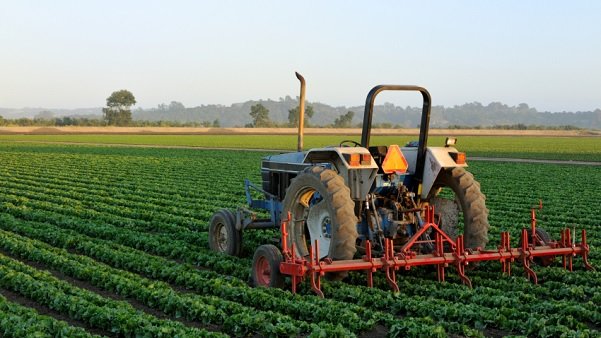
The market for tractor sales in Australia has seen further declines in October and now sit 24% behind the same time last year.

Whilst the level of decline appears high, there has been around 12,000 tractors sold already in 2023 which is in line with what has traditionally been regarded as a strong year for sales.

For some months now we have been reporting a slowdown in demand due to the predicted onset of drier weather along with the ongoing increases in interest rates, clearly there is still solid demand for new machinery in the market as recent rains have brought some encouragement to farmers in the near term.

Dealers continue to report solid inventory levels across the board with the biggest challenge being able to supply the precise machine being requested. Supply chain bottlenecks appear to be easing due mainly to the lower volumes of machines coming into the country. This is particularly the case for containerised freight which is moving smoothly.

Ro-Ro (Roll On Roll Off) freight continues to present the odd challenge due mainly to the stringent quarantine regulations in place which can have the effect of sidelining entire shipments if a single problem is detected. This can be particularly stressful for time sensitive deliveries such as those required for harvest.

Looking around the nation, all states have experienced significant drops in the month, beginning with Queensland, down 26% against the same month last year to be 21% behind year to date. NSW was down 34% to be 25% off YTD, Victoria was off 27% and is now 28% behind year to date.

Sales in Western Australia were in line with last year and remains 19% behind last year. South Australia recorded another big decline, off 45% and now sits 20% behind YTD and Tasmania was off 17% for the month, 21% down YTD with sales in the NT finishing 8% down, remaining 13% down YTD.

Falls were experienced in all machine categories where we find that the small under 40 hp (30kw) category was down by 41% for the month and is now 25% behind year to date. The 40 to 100hp (30-75kw) range was also down 32% and is now 25% behind year to date, the 100 to 200hp (75-150 kw) category was down, this time by 19% and remains 25% behind YTD and finally the 200 hp (150kw) PLUS range slipped, down 8% remaining 16% behind last year.

Sales of Combine Harvesters have stalled somewhat and are now in line with last year with just under 800 units sold so far in 2023. Baler sales enjoyed another healthy rise and are now 15% ahead on a year-to-date basis and sales of Out – Front Mowers are down by around 4% compared with the same time last year.

In summary, there has been a noticeable pullback in machinery sales and whilst the current sales volumes can be described as good, we remain cautious about the outlook for 2024 where the full impact of climate conditions, commodity prices, machinery price rises, and higher interest rates have a fuller effect.

Also Read

Silo manufacturer Symaga receives major business award

Why smart spraying is rapidly gaining ground

Why smart spraying is rapidly gaining ground


Smart spraying technologies are continuing to evolve, and technologies that were considered visionary only a few years ago have already been proven ready for practical application.

Today high-technology sprayers are often considerably more expensive than conventional ones, but smart spraying is rapidly gaining ground.

Smart spraying is becoming increasingly attractive

There are various reasons for the increasing appeal of these technologies.

  • An important advantage is cost efficiency due to the savings in crop protection inputs. Not only is consumption reduced, but the effectiveness of the crop protection measures is also increased.
  • Lower consumption of chemical crop protection products brings farmers closer to the European Commission’s goal of halving the use of these products by 2030.
  • As crop protection products are applied in a targeted and precise manner, fewer chemicals are released into the environment, with only affected areas being sprayed.
  • Finally, the smart spraying protect crops and strengthen their vitality. With fungicides and insecticides, there are fewer overlapping areas at the headland, while with liquid fertilizers, more precise application reduces “burning” of crops.

Critical cornerstone of “Green Productivity”

All the latest applications and variants of smart spraying technologies will be on display at Agritechnica 2023 this November. The exhibition program will be complemented by a technical program with Expert Stages and the special show “DLG Spotlight Smart Farming” in Hall 9, Stand B06, where the topic of smart spraying will be examined in detail.

Digitally assisted application of crop protection products is therefore an important sub-theme of the trade fair’s main theme of “Green Productivity”..

Pulse width modulation as a key enabling technology

Variable Rate Technology (VRT) allows smart spraying systems to automatically adjust the application rate of crop protection products depending on the level of infestation or weed density in a particular area. This results in optimized distribution of chemicals across the entire field.

Many smart spraying applications use pulse width modulation (PWM) to electrically controll the nozzle valves on the boom of the crop protection sprayer, which are switched on and off up to 50 times per second. Each nozzle has the same spray pressure and droplet spectrum, thus PWM adjusts the application rate, like changing the nozzle size during spraying.

Due to the short opening times at constant frequency, the flow rate can be controlled and varied precisely and each nozzle adjusted individually. This is an advantage not only for pinpoint application, but also when cornering, where PWM keeps the quantities on the inside and outside of the turn constant and prevents over- and under-dosing. At the headland, the individual nozzle control reduces gaps or double applications in the case of fields that do not converge at right angles, and when accelerating, the same application rate is applied with the same droplet spectrum, while at slower speeds, for example on slopes, there is no incorrect metering.

Direct feed 

Direct feed, in which the crop protection agent is only added to the water just before it reaches the spray nozzle, is another interesting technology for the targeted, environmentally friendly application of crop protection agents.

Its advantages are compelling: the tank does not have to be cleaned and there are no mixed waste quantities. In addition, with the right technical equipment, different crop protection products can be applied to specific areas as required.

First generation direct-feed systems have not been able to gain acceptance due to demanding cleaning and delays in long spray lines But new solutions promise to solve these problems and enable flexible, on-demand application of crop protection agents.

Spraying on demand

Through site-specific or pinpoint application, the use of herbicides and liquid fertilizers can be significantly reduced. The crop is protected and indeed strengthened, as the application rate is based only on actual needs. In addition, there is environmental benefit, as the areas free of weeds and disease are not treated.

The spraying pattern can be determined in advance, using satellite or drone imagery to generate treatment maps, or dynamically in the field in real-time, through high-resolution cameras, image recognition and artificial intelligence (AI).

Create application maps with drones

Many field sprayers can already use application maps, increasing the dosage to control weed nests, for example. However, satellite-based application maps are often too coarse for this, making targeted crop protection measures difficult or impossible.

The answer to this is drones flying low over the crop, equipped with high-resolution hyperspectral cameras optimized for weed detection. The images are evaluated and an application map created that shows the field sprayer where to start and stop.

Multispectral camera systems can also identify plant diseases but, as the drone flight and the evaluation of the imagery are additional work steps, costing time, this can make timely crop protection more difficult.

Site-specific application of liquid fertilizer can also take advantage of predetermined and dynamic mapping methods, with application determined by yield maps or in real-time using nitrogen sensors.

Real-time weed detection

Where the spraying map is generated by a service provider, the required drone imagery, satellite data and recordings from the tractor must be transferred over the internet and processed in the “cloud”, which takes time.

However, if the spraying system itself has sufficient processing capacity, new options are presented. High-resolution cameras and sensors can be analyzed by AI-based algorithms on powerful on-board computers, enabling, for example, the detection of weeds in real time as the sprayer passes them, which are then treated directly. This high precision in individual plant detection and treatment enables significantly reduced herbicide use.

While any smartphone can already distinguish between individual weeds and crop plants, , doing the same in a field in real-time places high demands on the processing systems, which only increases with travel speed.

Intelligent algorithms can already detect almost any weed, even if it has only just emergedbut these are only treated when a predefined number of weeds per unit area is exceeded and the expected cost of the crop losses exceed the cost of the treatment. One significant challenge remains however, in distinguishing weeds and cereal plants, where some development work is still needed.

Focus on low-vibration spray booms

Weed detection sensors are mounted on the spray boom, which, in order to maximize weed detection performance as well as maintaining a consistent distance between the sprayer nozzle and the ground, must be smoothly and accurately positioned.

This requires active boom guidance and vibration damping to ensure a smooth boom position under difficult terrain conditions and at high travel speeds, despite ever increasing working widths. Oscillations must be avoided not only vertically but also horizontally, i.e. in or against the direction of travel, as this has a particularly strong impact on the accuracy of distribution.

Further development of boom technology will thus play a central role when it comes to further reducing application rates, while maintaining precision and reliability.

Agritechnica 2023: Showcase for latest smart spraying technology

Crop protection technology is becoming increasingly important and not only due to the impact of ever greater precision, up to pinpoint accuracy. This is because spraying needs to be even more targeted in the face of rising costs, increasing political limitations and social resistance to the blanket usage of crop protection.

In the foreseeable future, smart-spraying technologies will be used in practice to keep the area treated to a minimum and to apply crop protection products only where they are needed.

Agritechnica 2023 will reflect the full breadth of these technologies and offer visitors the unique opportunity to gain a comprehensive picture of the state of the art.

Also Read

FRUIT LOGISTICA offers exhibitors various chances to shine

Boost for African agriculture and food production

Boost for African agriculture and food production

0

A new private sector-focused Alliance to bridge the critical financing gap in agriculture in Africa has been launched.

The alliance by African Development Bank Group, Afreximbank, Arise Integrated Industrial Platforms, the Islamic Development Bank Group and the United Nations Industrial Development Organization was launched at the 2023 Africa Investment Forum Market Days.

Founding members of a new private-sector focused Alliance for Special Agro-Industrial Processing Zones (SAPZ) have announced $3 billion in new investment to transform Africa’s underdeveloped rural areas into agro-industrial corridors of prosperity.

The Alliance, comprising development financial institutions, the private sector and development-oriented technical partners, will also help streamline the development and delivery of SAPZ projects.

The new commitments consist of $1.1 billion by the African Development Bank Group, $1 billion by Afreximbank, $300 million by the Islamic Development Bank Group (IsDB) and $600 million from Arise Integrated Industrial Platforms (Arise IIP) and its partners.

Dr. Akinwumi A. Adesina, President of the African Development Bank Group, said, “The Alliance will raise funds through various investment windows for project preparation, project development and construction, and financing for tenant companies.”

“By doing so, the Alliance will bridge the critical financing gap, complement existing initiatives, and mobilise resources towards our common goal of enhancing agricultural value addition in Africa”, Adesina added.

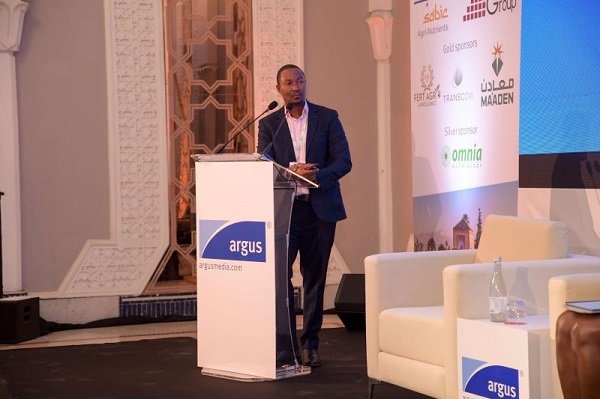
The Alliance was launched at the 2023 Africa Investment Forum Market Days — the continent’s premier investment marketplace — in Marrakech, Morocco on Wednesday. During the launch session, founding members discussed how the SAPZ model could impact Africa’s agro-industrialisation process.

“The beauty of this Alliance is that it brings together a lot of different, diverse players — is just a start and others will join us,” said Dr. Beth Dunford, African Development Bank Vice President for Agriculture, Human and Social Development.

Special Agro-Industrial Processing Zones stimulate structural transformation in agriculture by connecting rural and urban development through the zone’s ecosystem. These zones integrate smallholder farmers into value chains through logistics and infrastructure, linking them to agro-industrial processors and consumer markets.

Prof. Benedict Oramah, President and Chairman of the Board of Directors of Afreximbank, welcomed the emergence of the Alliance and suggested that, to attract the private sector, the creation of continental regulatory bodies that countries could respect should be considered. “Projects of this nature are very visible,” he explained.

According to the Alliance members, meeting this financing goal will deliver an additional 15 to 20 SAPZ projects in various countries across the continent and improve administrative, policy and investment incentives.

“Financing alone has never been enough to develop,” said Eng. Hani Sonbol, CEO of the International Islamic Trade Finance Corporation and acting CEO of the Islamic Corporation for the Development of the Private Sector, representing IsDB President Dr. Muhammad Al Jasser. “Strengthening food sovereignty in Africa will require us to think differently in terms of investment. We look for self-sufficiency, climate change and adaptation, and how to attract private sector involvement”, he said.

Arise IIP CEO Gagan Gupta underlined the need for infrastructure around the zones that reflects the need of these communities, including housing, transportation, health and extension services. “These zones rely on the governments for policy frameworks, supporting infrastructure, and training and vocational centres,” he said.

The United Nations Industrial Development Organization (UNIDO) brings on its part to the Alliance a wealth of technical assistance knowledge, practical experience, tools and methodologies.

“We have a lot of experience in developing, planning and implementing industrial parks and special economic zones,” said Gunther Beger, UNIDO Managing Director of the Directorate for Sustainable Development Goals, Innovation and Economic Transformation. “The Alliance presents a completely new approach to transform Africa’s agro-food system. This is a much-needed partnership of financial institutions, public and private sector players,” he added.

Across the continent, the African Development Bank has already committed $853 million to develop more than two dozen Special Agro-Industrial Processing Zones in 11 countries. This investment has attracted $661 million in cofinancing from Bank partners.

Professor Oyebanji Oyelaran-Oyeyinka, Senior Special Advisor to Dr. Adesina, concluded: “SAPZ is a tool designed to achieve the twin objectives of structural transformation and rural development through agro-industrialisation.”

Prior to the panel discussion, Mr. Ryad Mezzour, Minister of Industry and Trade, Kingdom of Morocco, called on large private sector companies to become tenants in SAPZ. “You need a company that can bring the others – that integrates this area.”

Rwanda’s Minister of State for Treasury, Richard Tusabe, said: “Special Agro-Industrial Processing Zones will give us a chance to mass produce the food we need to feed our population. We need to feed our people — is no shortcut.”

The Africa Investment Forum draws African heads of government, investors, transaction sponsors and development financial institutions. The Forum also includes boardroom sessions that showcase billions of dollars in agribusiness, transport and energy deals, among other critical sectors, to investors.

Also Read

Silo manufacturer Symaga receives major business award

FRUIT LOGISTICA offers exhibitors various chances to shine

Silo manufacturer Symaga receives major business award


During October 25th, Marta Garrido, Head of the IT department and member of the board of directors of Symaga, received the Business Award from the CECAM, Regional Confederation of Entrepreneuers of Castilla La Mancha, which celebrates her whole trajectory and contribution to the development and socio-economic growth of the region.

After receiving the award Marta expressed her gratitude:  “any achievement in business life would not be possible without the contribution of an exceptional team. I want to thank the entire Symaga Team for its passion, commitment, and dedication which they bring into their every day work“.

Also I would like to share it with our suppliers, whose confidence and support have been essential for our progress.

And with our customers, who have relied on our products and services over the years.

Thanks to all who are part of Symaga, who have managed to bring our silos, manufactured entirely in Villarta de San Juan, a small village in La Mancha, to 150 countries around the world.“

We would like to extend our congratulations to the rest of the award winners, and of course to CECAM for sucessfully putting in place this important prize event which values and rewards the efforts of our Managers. Moreover, we would also like to thank all of them for strengthening the business cohesion, representation and dialogue between the companies in Castilla La Mancha.

Marta dedicated once again the award to her father, the origin of what Symaga has become today, and to the entire Symaga team.

Also Read

The New Pendular And Rotative Sensor From Symaga

BKT announces participation in agritechnica 2023

FRUIT LOGISTICA offers exhibitors various chances to shine

0

The leading trade show for the global fresh produce business FRUIT LOGISTICA has started taking applications for its coveted annual FRUIT LOGISTICA Innovation Award (FLIA) and also for its very demanded Tech Stage presentation slots.

In addition to the FLIA, the FLIA Technology will be awarded for the first time in 2024 for outstanding innovations in the field of Machinery & Technology.

Over almost two decades, FLIA has established itself as the fresh produce industry’s number one award. Voted for exclusively by visitors to the show, each year’s winning products, services, or technologies benefit from widespread recognition on what is the sector’s largest international stage.

Like this year’s triumphant Tatayoyo peppers, for example, which took the gold award with more than a quarter of the votes. Developed by Dutch company Rijk Zwaan, the product stood out for its unique combination of convenience and flavour.

“The FLIA is the most prestigious award in the fresh produce industry and a true recognition of the innovative power of Rijk Zwaan,” says Jan Doldersum, the group’s Chain and Retail Manager. “For Tatayoyo, it has helped tremendously to gain exposure to a worldwide audience. And we have now numerous testing projects to successfully launch it on various retail shelves.”

In the latest FRUIT LOGISTICA newsblog post, Jan Doldersum describes what winning FLIA has meant for Tatayoyo’s marketing and offers tips for success. In addition, interested companies learn how they can register for the FLIA. The closing date for registrations is 17 November 2023.

FLIA is presented by FRUIT LOGISTICA together with its media partner Fruitnet Media International and rewards outstanding innovations throughout the fruit and vegetable supply chain from production to the point of sale.

As of now companies with new and exciting technologies for the fresh produce business can apply to be on FRUIT LOGISTICA’s Tech Stage, an open forum accessible to all trade visitors. Here, exhibitors can present their innovative ideas and solutions during dedicated 20-minute presentation slots. It’s a unique opportunity to explain precisely how new technical solutions work, and to underline the value they can add. The closing date for registrations is 2 December 2023.

Also Read

African Agri Investment Indaba

Africa Fertilizer and Soil Health (AFSH) Summit 2023

African Agri Investment Indaba

0

The African Agri Investment Indaba (AAII) is the global meeting place for agrifood investment in Africa.

Bringing together over 1200 key stakeholders – from governments, banks, financiers, investors, project owners, project developers, commercial farmers and the agro and food processing industry – to discuss trends that will likely influence food and agribusiness economics over the next decade in Africa.

The Agri Indaba delivers a unique mix of decision makers from across the food and agriculture value chain making it the most effective place to conduct business in the sector.

Dates: 20 – 22 November 2023

Also Read

BKT announces participation in agritechnica 2023

John Deere, Equity Bank partner to boost farm mechanization in Kenya

BKT announces participation in agritechnica 2023

0

After four years, Agritechnica 2023 is back! The international trade show taking place from November 12 till November 18, 2023, in Hanover, Germany, will bring together the world’s leading industry players expecting more than 2,400 exhibitors from 53 countries.

Among these leaders, there is BKT, the multinational Off-Highway tire manufacturer that for more than 30 years has been able to combine reliability, innovation and high performance in one of the widest product ranges designed to meet all types of applications: from agricultural to industrial operations, as well as the construction, mining and quarrying industries.

In line with the theme “Home of farming pioneers,” chosen by Agritechnica for this year’s upcoming edition, BKT will focus on sustainability and innovation – two key values of the projects that will represent the future of agriculture.

At the exclusive BKT space, which can be visited at Stand A36 in Hall 7, attendees will be able to take part in networking activities, digital experiences, freestyle football shows, as well as a rich program of events, starting with the traditional and eagerly awaited free distribution of more than 30 thousand footballs.

Among the stars of the exhibition area, there will be recently-announced products, such as AGRIMAXFACTOR, the 70 series for tractors, which has been launched just a few months ago and designed to meet the needs of road transport and tillage operations. This tire combines technology and aesthetic design, ensuring high standards of drivability and excellent maneuverability.

With AGRIMAXFACTOR being part of the E-Ready range, BKT pursues its commitment to electric mobility with the future goal of implementing technology to improve product performance, thus anticipating market needs.

Among the new agricultural tires, the company will showcase also RIDEMAX FL 615 and FL 695: the former suitable for free-rolling wheels of agricultural trailers, tankers and spreaders, while the latter has been specifically designed for trailers in agricultural transport operations as well as construction activities. Thanks to its robust casing, the tire is able to maintain stability in all conditions.

At Agritechnica 2023, BKT’s latest innovations will be in the spotlight: First and foremost, a new radial forestry tire, conceived for tractors, and a new conventional forestry tire model, that will enrich the company’s forestry range.

Visitors will also have the opportunity to preview an innovative agricultural trailer tire, featuring high lateral stability as well as low rolling resistance thanks to the closed tread design and the All Steel radial structure.

The tire ensures exceptional flotation and traction performance on soft surfaces. Finally, among the novelties, there is a new size of rubber tracks, which have been recently launched and are already attracting great interest from both the aftermarket and Original Equipment manufacturers.

“Today we have to face the increasingly complex challenges imposed by the global agricultural production. For BKT, Agritechnica is an opportunity to engage with the world’s key industry leaders and explore which will be the future shape of agriculture, as well as an occasion to share the technological innovations that distinguish our products.

Ever since, it has been our mission to understand and meet the needs in terms of growth and evolution of OEMs, partners as well as end users, whom we look forward to all welcoming to our booth for memorable experiences.”- Lucia Salmaso, Managing Director of BKT Europe.

BKT looks forward to seeing you at Agritechnica, Hanover, November 12-18, 2023, at booth A36 Hall 7.

Also Read

John Deere, Equity Bank partner to boost farm mechanization in Kenya

Africa Fertilizer and Soil Health (AFSH) Summit 2023

John Deere, Equity Bank partner to boost farm mechanization in Kenya

0

Equity Group Holdings and farm equipment maker John Deere have signed a comprehensive agreement to offer tractors into the Kenyan market through well-defined and affordable finance programs for both large scale and small-scale farmers.

The agreement underpins Equity Group’s strategic vision plan for social economic transformation in the `Africa Recovery and Resilience Plan’ which puts a focus on value addition and mechanization of agriculture in the East and Central Africa market.

It was signed by John Deere Head of Business for Africa, Asia and the Middle East, Jason Brantley and Equity Group Holdings CEO and Managing Director, Dr. James Mwangi.

“Through this collaboration between Equity Group and John Deere, a world-renowned agriculture, turf and construction equipment maker, small scale farmers, builders and landscape providers in Kenya will benefit from state-of-the-art technology which will equip them with capability to scale and grow their yields and businesses for larger markets,” said Dr. James Mwangi.

“Kenyan farmers have the opportunity with the implementation of the Africa Free Continental Trade Area Agreement to increase production for global supply chains which were disrupted by the COVID-19 pandemic and the Russia-Ukraine conflict,” he added.

Equity Bank will provide finance products to customers initially in Kenya for a current term of two years under the agreement. The equipment dealer MASCOR who has dealerships throughout East Africa will be the partner dealership.

Equity, John Deere and MASCOR will conduct joint trainings and marketing campaigns together to enhance farmer education on the usage of the Deere equipment in order to enhance agriculture productivity and to understand the value of mechanization in yield improvements.

For farmers, including emerging and commercial farmers, part-time contractors, full time contractors and farmer groups the intention is to support profitability by improving revenues linked to yields, reducing losses, and reducing operational costs related to agriculture production.

Equity’s ‘Africa’s Recovery and Resilience Plan’ is committed to supporting the advancement and scaling of Africa’s small-scale farmers with training, mechanization, and market access.

Dr. Mwangi stated, “In John Deere we have a significant partner of like-minded interest to support scaling and mechanization for small-scale farmers in Kenya. This partnership aligns to the Africa Recovery and Resilience Plan, which seeks to foster a more coordinated, connected and capacitated primary supply chains to drive higher productivity.”

He continued, “With American expertise and African ingenuity, hard work and natural resources, coupled with access to affordable financing and the network of infrastructure (branches, agents) that Equity can offer the partnership, in collaboration with MASCOR dealerships in the region, the milestone of our signing today can pave the way for a cohesive US-AFRICA private sector engagement framework built on trust and mutual interests in the market”.

This is the second roadshow in partnership with the US Embassy Kenya, Ambassador Meg Whitman, and Prosper Africa which Equity Group and Dr. Mwangi have participated in; the first one being in March 2023 in New York City with US financial investors.

In addition to the Equity-John Deere agreement signing, Dr. Mwangi participated in the opening panel moderated by Ambassador Whitman entitled, “Why Africa, Why Kenya?” during which he articulated the Africa Opportunity for assembled US and Kenya companies, US and Kenya government officials and American investors.

Dr. Mwangi and the Equity team also held meetings during the day’s networking portion with US and Africa agriculture companies wanting to do business or already doing business in the East and Central Africa region.

From Chicago the roadshow headed to San Francisco for two days of meetings with American technology companies.

Africa Fertilizer and Soil Health (AFSH) Summit 2023

0

The summit is expected to bring together the African Heads of State, high-ranking government officials, senior policy makers, private-sector players and civil society organizations.

Other participants will include representatives of farmer organizations and development agencies, including NGOs, scholars and scientists, and representatives of leading donor organizations.

Background Information:

The Africa Fertilizer and Soil Health summit will be held to deliberate on Africa’s recent widespread decades-long decline in soil quality of farmland – a phenomenon that continues today and negatively impacts the agricultural production capacity and food security in the continent.

In June 2006, the Heads of State and Governments of the African Union endorsed the Abuja Declaration on Fertilizer for the Africa Green Revolution, a continental strategy to reverse the worrying trend of poor productivity of the African soils.

The Declaration focused on key targets required for agricultural growth, food security, and rural development in Africa, with a focus on the role of fertilizers.

It recommended raising the use of fertilizers from 8 kg/(nutrients)/ha to 50 kg (nutrients) /ha in 10 years and the establishment of an African Fertilizer Financing Mechanism (AFFM) with the objective of improving agricultural productivity by providing financing required to boost fertilizer use in Africa to achieve the target of 50 kg of nutrients per hectare, as mandated by the Abuja Declaration.

Fifteen years after the Abuja Declaration, Africa’s agriculture and food security narrative has evolved significantly. The fertilizer market itself has changed, including the roles that private and public sector actors are playing. Another major change since Abuja, is the increased recognition of the critical role of sustainable soil management.

The decline in soil health has hindered the efficiency of fertilizer use and hampered agricultural productivity growth, food security, and environmental sustainability across the continent. As a result, economic growth and well-being—particularly for the rural population, who derive their livelihoods directly from agriculture – in the continent have been hampered.

It is therefore, timely to review the state of Africa’s soil health to recalibrate the strategies being deployed for boosting the productivity of soils towards higher and sustainable gains in crop yields as well as economic growth and transformation, and overall well-being.


In Summary


What: Africa Fertilizer and Soil Health (AFSH) Summit 2023.

When: 5th -7th November 2023

Where: Nairobi, Kenya (Kenyatta International Conference Centre)/ KICC,

Media opportunities:

The high-level opening session will include the following media opportunities:

  • Opening statements by African Union Heads of State and Governments
  • Speeches by the Chairperson of the AU and the Chairperson of the AU Commission (AUC);
  • Keynote address by Invited high level dignitaries;
  • Group photo
  • Media interview

Also Read

Brazil expects to reap big after participating in Africa’s largest agricultural fair

Malawian groundnut farmer transitions into global trader in a remarkable three years

Animal welfare and crop protection – for BKT, sustainability goes hand in hand with simplicity


The farm L’Orée des Bois farm is located in Vendée, in the south of the Pays de la Loire region, in an area that is renowned for its landscapes and rich agricultural heritage.

Here, Adrien and his family raise pork, poultry, and Angus beef cows, which they exclusively distribute through nearby butcher shops and restaurants to ensure products that are of prime quality, traceable, zero-mile. Thus, there is no direct sale on the farm.

Nothing new so far, except for the fact that pigs are raised on straw, poultry in the fields and cows are kept outdoors. This is actually one of the rare examples of non-industrial farming, where one of the cornerstone principles is to raise animals naturally, according to their needs, without any additives. The pigs, for example, have 50 square meters of free space for their own.

In addition to breeding – as fodder for the animals on the farm – wheat, barley, and sunflower seeds are grown and then mixed by means of computerized technology as to the specific needs of the different types of animals. So, for example, chicks are given a specific food, that is different from that for piglets or adult chickens, and so forth – with the utmost respect for their natural life.

And always in line with the principles of sustainability that are behind all activities of L’Orée des Bois, non-till farming methods are adopted on the farm, i.e., no soil tillage deeper than 40 cm in order to not disturb the soil’s life cycle, maintaining its organic structure and fertility.

Precisely with the aim of preserving the quality of the agro-ecosystem present on their property, Adrien has chosen BKT tires to equip their agricultural vehicles – tractors and tippers of over 20t – for the past 6 years, since they are particularly apt due to their exceptional features.

“As machinery is getting heavier and heavier, we need tires that help us not to ruin the land,” Adrien says. “BKT tires fit the best thanks to their special flotation properties and because we can be fast and well-performing when moving from the fields to the road. We are also supported with excellent traction, one of the most encountered difficulties in our job, for the very heavy loads we have to carry every day.”

A new tractor will soon arrive on Adrien’s farm; its front axle it will be fitted with AGRIMAX V-FLECTO, a tire that can carry heavy loads at a lower inflation pressure than standard and IF tires, reaching high speeds; while the rear axle will be fitted with AGRIMAX FORCE, BKT’s flagship product that is specifically designed for tillage, transport and harvesting applications with high-power tractors and harvesters.

Thanks to the IF technology, this tire is able to carry heavy loads at a lower inflation pressure than a standard tire, thus reducing soil compaction.

The two three-axle trailers have already been fitted with RIDEMAX FL 693 M for six years, the ideal tire for frequent travel on road sections with trailers and tankers.

Sustainable breeding and farming? This is a practical example: simple, but more importantly, feasible.

The secret? A clear plan, unwavering faith in nature and – now more than ever – relying on the right technology. These distinctive aspects are the founding values of companies like BKT, which has always been attentive to customer benefits.

The company, a leader in the Off-Highway tire industry, can provide a variety of high-performance products to support hard-working farmers, who, like Adrien, turn the efforts in the fields into a life project – for themselves and for the community to which they belong.

Also Read

Electric Sustainability: With “E-Ready”, BKT Puts Its Mark On It

Yokohama Off-Highway Tires Launches Largest Tractor Tire To Date