Home Blog Page 34

Bayer pilots unique generative AI tool for agriculture


Bayer has announced the pilot of an expert GenAI system to benefit farmers and up-level agronomists in their daily work.

The company has been using proprietary agronomic data to train a large language model (LLM) with years of internal data, insights from thousands of trials within its vast testing network, and centuries of aggregated experience from Bayer agronomists around the world.

The result is an expert system that quickly and accurately answers questions related to agronomy, farm management, and Bayer agricultural products. Instead of a time-consuming process, the intuitive system responds to natural language and can generate expert information within seconds.

Validated by agronomists, the pilot is already unlocking productivity for Bayer teams in the United States while significantly outperforming out-of-the-box LLMs currently serving the agricultural market.

The future benefit in comparison to today’s reality: A farmer asks their agronomic advisor a series of detailed questions about a product’s characteristics, performance under specific conditions, and application rates.

Today, the advisor searches online materials, sends text messages to colleagues, gathers information from multiple sources, and puts together a response, all while the farmer waits hours or days for urgently needed information.

Bayer’s expert GenAI system is changing the game, making better information more quickly and readily available.

“Our unique GenAI system has the potential serve agronomists and benefit farmers all over the world, further advancing AI as an indispensable technology for agriculture,” said Amanda McClerren, CIO and Head of Digital Transformation & Information Technology for Bayer’s Crop Science division.

“We’ll continue to use traditional AI to develop better products, and we’re also committed to harnessing new GenAI technology in a thoughtful way that augments and supports knowledgeable experts across the industry, bringing value to farmers and those who serve them.”

Developed in collaboration with Microsoft as leading technology partner and Ernst & Young (EY) as an industry partner, Bayer is exploring ways to integrate the expert GenAI system into its digital offerings, and the company anticipates broad opportunities for collaboration with other agricultural offerings and partners.

Designed as a global capability, the tool will benefit millions of smallholder farmers in the future by democratizing access to agronomic advice and product information critical to feeding communities and improving global food security.

“AI and automation are helping farms of all sizes produce more while using fewer natural resources, and we’re starting to see how they can enhance decision-making on almost any plot of land,” said Ranveer Chandra, Managing Director, Research for Industry & CTO, Agri-Food at Microsoft.

“With Bayer’s strengths in data science, digital, and especially agronomic expertise, we’re pleased to be contributing to an expert system that will make agronomic understanding more accessible and empower those responsible for feeding the planet.”

Bayer aims to expand the pilot of the expert GenAI system to selected agronomists and potentially farmers as early as this year, while continuing to advance a separate GenAI prototype allowing users to directly query their own farm data.

Because they also pull insights from closed data sets, these GenAI tools are unique for agriculture and will bring more meaningful value to farmers, agronomists and other industry users, compared to out-of-the-box LLMs that only use open-source data.

Advancing solutions to enable the ‘cloud-connected acre’

In addition to collaborating with Microsoft on the expert GenAI system, Bayer announced an update late last year on the companies’ strategic partnership to bring readymade capabilities, AgPowered Services, to the agri-food industry.

Making available a capability that was previously for internal use only, Bayer® Historical Weather brings a comprehensive weather dataset to Azure Data Manager for Agriculture that spans the last 40 years and provides detailed, field-level weather insights across global agricultural regions.

Integrating tools from IBM, including from the IBM Environmental Intelligence Suite, the new capability can inform weather risk assessments and actuary processes. It will also be used by Bayer and now others to forecast crop seasonality and production changes year over year, as well as train agronomic models.

Building on the commitment to provide machine data connectivity with leading original equipment manufacturers (OEMs), Bayer is developing a connector that enables access to irrigation data from Lindsay Corporation, an industry-leading irrigation solution provider.

This expands the data types available to Azure Data Manager’s enterprise customers, making it possible for them to connect to irrigation data in the same seamless fashion as weather, imagery, OEM data, and other data types.

For technology providers, it brings down the cost of technical investment required to develop these tools. For farmers, it accelerates the development of digital tools that can help them monitor, measure, and control water usage in their fields.

The new cloud offerings will also support regulatory and sustainability reporting. For example, capabilities that provide supply chain traceability can help ensure compliance with new laws like the EU Deforestation Regulation, which is expected to go into effect at the end of 2024.

Bayer® Smart Boundary ID uses satellite imagery to detect the boundaries of a field, and automatically identifies the geographic area within a field where the seasonal farming activity took place. The solution can help commodity traders ensure regulatory compliance, as well as serve food companies and financial institutions who are looking to monitor growing progress.

“Whether you are a farmer using digital tools or a company that operates downstream, you need technologies that can help your business adapt to a changing landscape. With our AgPowered Services, we are making access to digital tools easy and convenient, benefiting the industry and driving innovation,”

said Jeremy Williams, Head of Digital Farming for Bayer’s Crop Science division. “There is both a tremendous opportunity and a pressing need for digital technology to better serve farmers and the industry, and we aim to achieve this by enabling the cloud-connected acre.”

Under industry preview, the cloud offerings from Bayer and Microsoft will make it possible for organizations to access readymade capabilities and build on top of a robust digital infrastructure, instead of developing from scratch.

This reduces time to market for new capabilities, delivering increased opportunities for farmers and value chain customers.

Also Read

Simeza Silos to build one of the biggest hopper bottom silos in Europe

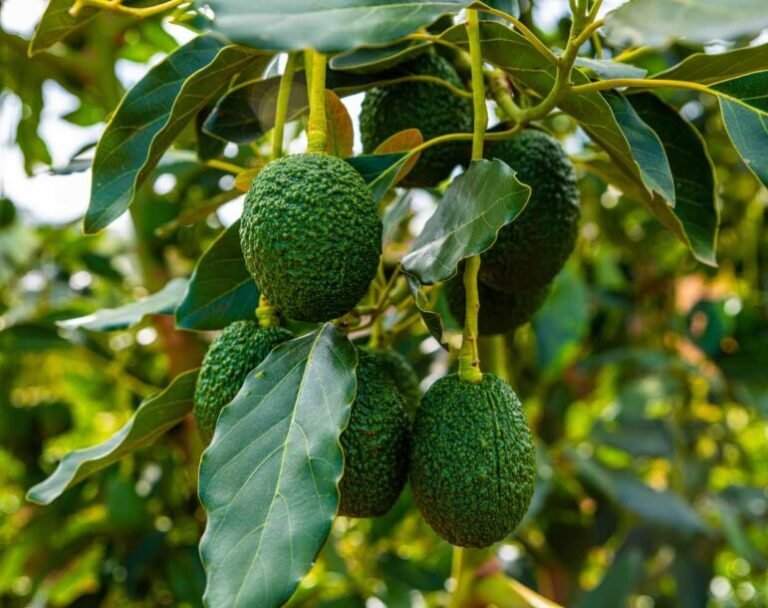
Kenya’s Kakuzi offers free avocado testing as export begins

Simeza Silos to build one of the biggest hopper bottom silos in Europe


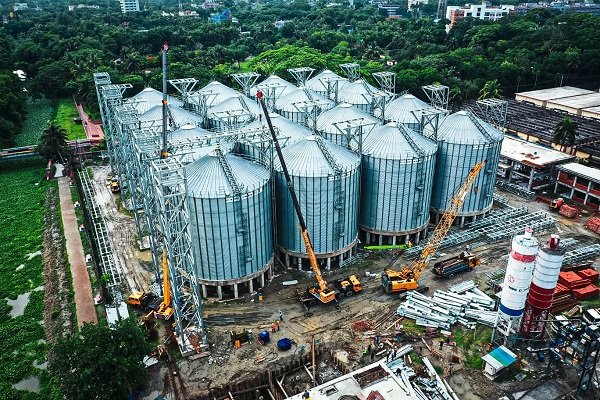
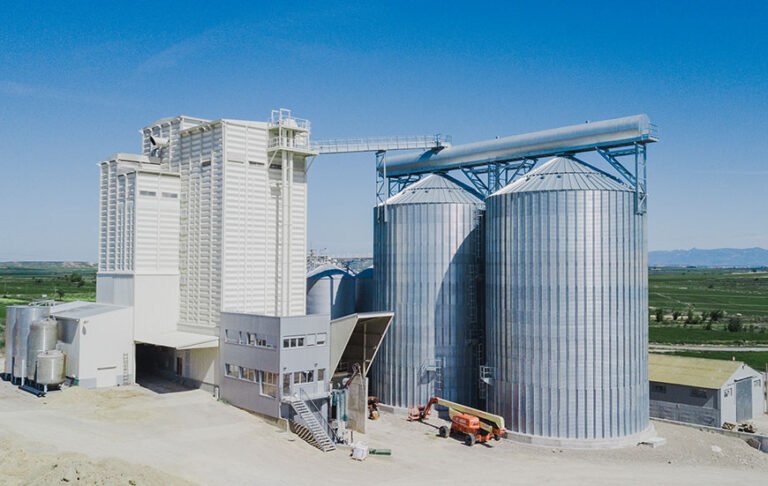
sIMEZA Silos has been contracted to build one of the biggest hopper bottom silos (HBS-S) in Europe at one of the Vall Companys group’s plants, a leading European agri-food company group.

The project will be undertaken at the Vall Companys factory located in Ejea de los Caballeros, about 50 km from the city of Zaragoza, Spain.

The purpose of this expansion and the remarkable storage capacity is in response to an increasingly globalized market.

The new infrastructure will allow Vall Companys to have greater storage capacity for raw materials, providing even more stability to the agri-food and livestock value chain.

The facility will consist of four hopper bottom silos “HBS-S model” (silos with conical bottom and metal skirt), specifically designed for this project. Each silo will have a unitary capacity of 3,000 tons, making a total of 12,000 tons of storage for cereals.

With a diameter of 13.75 meters and a total height of 36 meters, the silos will include accessories such as vertical ladders, inspection doors, roof vents, level sensors, handrails, and other necessary elements.

In addition, special catwalks and metallic supports will be installed, as well as a ventilation system with an internal perimeter ring to ensure suitable conditions, adapted to the large volume of stored grain.

One of the main advantages of using an elevated hopper bottom silo, instead of a flat-bottom one, is the ease of unloading the stored product, saving costs related to civil works (tunnels, pits, etc.)

Regarding the estimated timeline for completing this installation, different stages have been planned.

Starting with the client’s investment study and the adjudication of offers to suppliers (already completed), next will be the engineering project and approval, obtaining construction licences, and the layout of civil works (in progress).

Subsequently, the assembly of the silos and necessary components will be carried out, along with the installation of filling and emptying machinery, electrical panels, and site infrastructure.

Finally, the start-up and final acceptance of the installation will be carried out. This process is estimated to take about 10 months in total.

The project has presented challenges, as it involves pioneering storage silos in Europe.  However, the technical team at SIMEZA Silos is handling each one with professionalism and attention to detail.

The company has set international standards by selecting materials for the silos’ construction, opting for structural galvanized steel in two types: band galvanization or hot dip galvanization. The high quality of the materials used ensures the long-term durability of the silos and their components, as always in every SIMEZA silo project.

In terms of sustainability and energy efficiency, the design and construction of this facility have taken these key aspects into account. On one hand, gravity discharge under the silos is simplified by using a single conveyor, avoiding the need for additional machinery.

On the other hand, both the machinery’s design and its components have been developed under energy efficiency standards.

The construction project of the largest conical base silo plant in Europe for Vall Companys represents a significant milestone for SIMEZA and for any silo manufacturer worldwide. 

The company has demonstrated its technical expertise and collaboration capacity with prominent suppliers to meet the client’s demands.

The successful completion of this project will allow Vall Companys to have a cutting-edge silo plant, ensuring autonomy and efficiency in the storage of raw materials at its factory.

Also Read

Kenya’s Kakuzi offers free avocado testing as export begins

Mahindra bolsters mechanisation in Kenya with tractor launch

Kenya’s Kakuzi offers free avocado testing as export begins

0

Kenya’s Kakuzi PLC Managing Director Chris Flowers has confirmed that Kakuzi’s free avocado maturity testing services will be available starting Wednesday.

MD Christopher Flowers says that the free maturity testing services offer, targeting smallholder avocado farmers around Mt Kenya region and beyond, will be available at the FSSC 22000 Food Safety Management Systems certified Kakuzi Avocado Processing and Packhouse facility located near Makuyu town, along the Nairobi-Nyeri highway.

“Kakuzi welcomes the directive provided by Agriculture and Food Authority (AFA) through its Horticultural Crops Directorate (HCD) and confirms that for shared prosperity, we shall be providing free Avocado maturity testing services for all smallholder farmers to ensure compliance with the regulatory, national and international market requirements,” Flowers said.

He added, “Kenya currently enjoys a favourable international market position for quality avocado production, and this status needs to be jealously guarded by ensuring phytosanitary, environmental, social, and governance standards are strictly maintained across the board.”

He disclosed that Kakuzi has already undertaken internal maturity testing at its Quality Control Room within its GlobalGAP-certified Makuyu Packhouse, with a forecast to commence its HASS avocado harvests in compliance with the regulations.

In its directive, AFA-HCD has reiterated that all avocado export produce will be subject to inspection by AFA-HCD inspectors. Exporters will also be required to apply for inspection at least three days prior to shipment.

To ensure product traceability, all exporters must also submit a list of their Horticultural Produce Marketing Agents (HPMA) or suppliers before Monday, February 26, 2024.

The directives to ensure quality and market standards also stressed that exporters or their agents found transporting avocados without crates or on open pick-up trucks (or Probox vehicles) contrary to the Horticulture Regulations shall be penalized.

Also Read

Bad start for farm machinery dealers in South Africa as sales tumble

Mahindra bolsters mechanisation in Kenya with tractor launch

Oman Agrofood: 2 to 4 December 2024

0

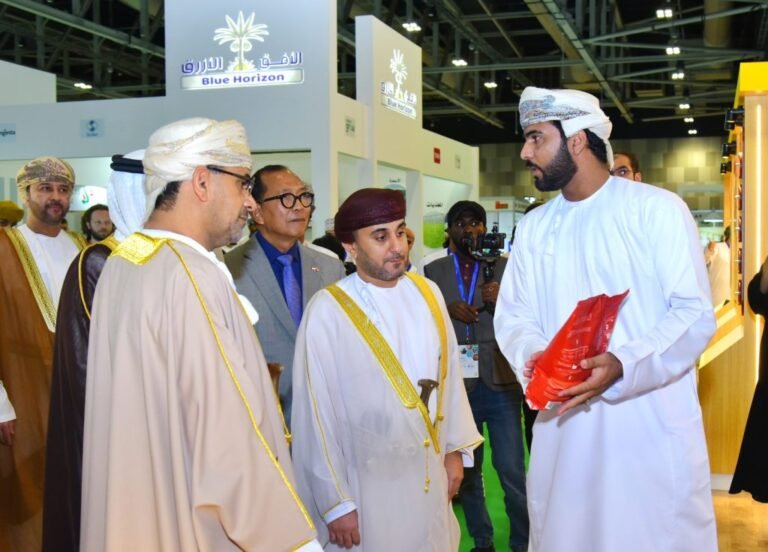
Oman AgroFood, the 6th International Trade Exhibition for Agriculture, Food and Fisheries, will be held from 2 to 4 December 2024 at the Oman Convention & Exhibition Centre, under the patronage of the Ministry of Agriculture & Fisheries Wealth.

This event aims to unite government decision-makers, international stakeholders, regional buyers, traders, and innovative technology providers. Through fostering collaboration, it seeks to actualize the Sultanate’s ambitious vision for transformative advancements and sustainable growth, specifically in the agriculture, food, and fisheries industries.

OPENING HOURS

10:00 AM – 6:00 PM

THE VENUE


Oman Convention and Exhibition Centre

The Oman Convention & Exhibition Centre is located in its own fully integrated precinct only four kilometers from Muscat International Airport.

Architecturally advanced in design and capability, this world-class venue is amongst the first to be built to meet the rigorous LEED certification by the U.S. Green Building Council.

The Centre ensures a flow of the meeting spaces to suit the most discerning conference and exhibition organizers. It also incorporates expansive concourse areas to enable ease of large delegations with floor to ceiling windows overlooking landscaped gardens and water features.

Also Read

African Agri Investment Indaba

FRUIT LOGISTICA offers exhibitors various chances to shine

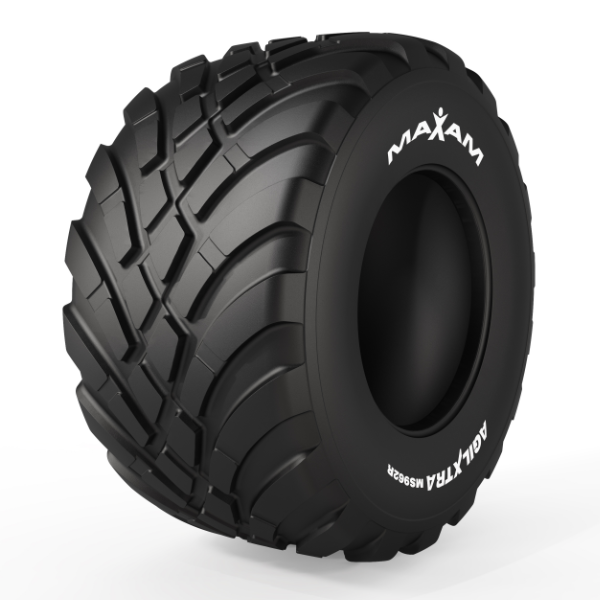
Maxam brings VF technology to Agilxtra tire series


MAXAM tire, a global leader in specialty tire manufacturing is improving farmers’ and growers’ productivity by introducing new VF sizes to the AGILXTRA I-3 implement product series.

MAXAM’s AGILXTRA VF technology solutions deliver the capability to carry heavier loads at high speeds while ensuring both increased tire traction and minimizing soil compaction.

MAXAM continues to focus its efforts on developing VF technology solutions that can meet the challenge of mixed terrains, loads, applications, and high speeds without compromising performance or endurance.

With the ever-increasing demand for more yield and greater food production, the farming market is demanding larger equipment in both size and load capable of operating at higher speeds.

Focused on delivering maximum productivity as well as improved performance, MAXAM’s VF technology tires are engineered to meet the most demanding applications without compromising crop yields.

MAXAM’s AGILXTRA products are radial tires designed with a steel-belted construction utilizing a directional tread design to ensure longer treadwear, improved stability, and high resistance to punctures or field hazards.

Our optimized tread pattern ensures excellent field traction, roading, and self-cleaning while minimizing vibrations at high transport speeds.

Now coupled with VF Technology, our new sizes in the AGILXTRA series will allow implements or tankers to either carry 40% more tire load at normal air pressures or operate at 40% less air pressure for the same tire load significantly reducing ground pressure. T

his technological advantage enables the tires to work in either heavier load or higher speed applications and/or reduce the impact on soil conditions ensuring increased productivity or crop yields.

Backed by a world-class tire warranty, MAXAM is committed to protecting customers’ investments while ensuring exceptional product performance.

“With the AGILXTRA series now available in VF technology, once again MAXAM meets its pledge to design the most capable solutions for the agricultural industry.

The addition of VF technology to our AGRIXTRA family of products and now to our new AGILXTRA I-3 implement products is another symbol of MAXAM’s commitment to delivering business solutions to the global agricultural market and for the future of the industry,” says Greg Gilland, Vice President of Global Agriculture at MAXAM Tire.

Also Read

Continental offers fleets new entry-level solution For digital tire management

Nokian Tyres’ VF tractor tire and VF flotation tire for efficient farming

Mahindra bolsters mechanisation in Kenya with tractor launch


Mahindra has unveiled three new models in Kenya a move which the manufacturer hopes will help bolster farm in mechanisation Kenya as well as strengthen its market share in the the country’s agriculture market.

The Mahindra 2025, Mahindra 6075, and Mahindra 9200, will offer 25 HP, 75 HP, and 92 HP, respectively

Simba Colt Aspire Ltd., a Simba Corporation Ltd. Company has been appointed the main distributor of Mahindra Tractors.

“We are delighted to bring Mahindra Tractors that are simply tough and efficient, to the Kenyan market in partnership with Simba Corporation Ltd.

This collaboration aims to strengthen the accessibility of Mahindra Tractors across Kenya and ensure prompt service and support. We aim to be the top choice of farmers in Kenya,” said Kedar Apte, Chief of International Operations, Farm Equipment Sector, Mahindra & Mahindra Ltd.

The partnership with Mahindra introduces a new era of efficiency, reliability, and innovation to the Kenyan agricultural sector, promising to revolutionize farming practices in the country, according to  Simba Corporation, Motors Division, Group Managing Director, Naresh Leekha.

He revealed that Simba Colt Aspire Ltd has already identified key markets in the western, Nyanza, Narok, Nakuru and Mombasa regions, with immediate roll-out plans in the country that averages about 1,500 tractor sales annually.

In line with the Kenya Vision 2030 agricultural mechanization is expected to play a critical role in putting more land into agricultural production.

The country has not operated with a clearly defined agricultural mechanization policy. This, together with the existing strategies has not sufficiently addressed agricultural mechanization challenges leading to the low level of agricultural mechanization in the country.

While the normal international ratio of tractors per 100 square kilometers being 10%, Kenya’s ration stands at a mere 0.2% against the recommended global average of 25% accessibility to farmers.

Agriculture is key to Kenya’s economy, contributing 33% of GDP and another 27% indirectly through linkages with other sectors.

The sector employs more than 40 % of the total population, more than 70 % being small and medium size farmers in Kenya’s rural areas.

“We believe that our commitment to advancing better agricultural practices in the country through aiding farmers with efficient, reliable, tough, and durable tractors among other farm equipment aligns with the government’s vision of growth and productivity of the sector,” said Simba Corporation Executive Chairman Mr. Adil Popat.

Also Read

African farmers to benefit as Apollo Agriculture gears up for expansion

Bad start for farm machinery dealers in South Africa as sales tumble

Bad start for farm machinery dealers in South Africa as sales tumble

0

South African agriculture equipment dealers could be in for a bad year following poor sales in January 2024.

South Africa’s tractor sales were down 26% year-on-year (y/y) in January 2024, with 353 units sold. At the same time, combine harvesters were down 50% y/y, with eight units sold.

December tractor sales of 531 units were significantly (27%) less than the 729 units sold in December 2022.

For the 2023 calendar year, tractor sales were approximately 9% down on the 2022 calendar year. Thirty-one combine harvesters were sold in December, five more than the 26 units sold in December last year.

Calendar year 2023 combine harvester sales were significantly (35%) higher than those in 2022. With most summer crop plantings having been completed, the market is showing caution as to what will happen weather-wise in the next few weeks.

Initial predictions were that the El Niño phenomenon was likely to result in lower than normal rainfall during the critical January and February months.

Potential buyers of tractors therefore delayed their buying decisions until some degree of certainty in terms of rainfall developed.

“Present rainfall conditions are looking favourable, however, but rain will still be required through to the end of February in most areas.

It is still early in the year to be predicting 2024 calendar year tractor sales,” says Tallie Giessing Chairman of South African Agricultural Machinery Association.

Nevertheless, expectations are that, despite the market being very competitive and this driving sales, calendar year 2024 tractor sales will be of the order of 10% down on last year.

“At face value, this could be viewed as a worrying agricultural machinery sales report, indicating difficulties in the sector.

But we have a different reading of it. This is more of a normalisation after a few years of robust sales,” explains Wandile Sihlobo Agbiz chief economist.

“Generally strong agricultural machinery sales over the past few years were primarily on the back of large grain and oilseed harvests.

In 2023, tractor sales were down marginally from the previous year, while the combine harvester sales held the last year’s momentum. Thus, we think the January 2024 sales begin a correction period.”

Also Read

John Deere turns to satellite technology to boost rural connectivity

New Holland boosts autonomous baling with new technology


New Holland boosts autonomous baling with new technology


New Holland is steering toward autonomous baling with the introduction of IntelliSense™ Bale Automation.

The first technology of its kind, IntelliSense Bale Automation pushes the boundaries of baling innovation and transforms the way customers and operators approach large square baling by delivering a complete automated baling system.

“With laser precision and real-time adjustments, the IntelliSense Bale Automation system changes the way we navigate fields,” says Brad Littlefield, precision marketing manager, dairy and livestock segment for New Holland.

“For large square baling operations, it’s an indispensable asset for their future by improving bale harvesting while helping them meet the operational demands of the evolving agricultural landscape with confidence.”

Lasering in on Windrows With Precision

At its core, IntelliSense Bale Automation provides operators with a complete automated baling system focused on feedrate and swath guidance. It achieves this by combining two operator-assisted baling modes:

  • SmartSteer™ swath guidance acts as autosteering for precise navigation of the tractor and baler along the windrow. This mode allows hands-free driving when the swath is detected. Steering automation can be turned off and on at any time by the push of a button or movement of the steering wheel.
  • IntelliCruise II™ controls tractor speed, responding dynamically to variation in material feedrate into the baler. The operator sets the number of slices per bale target and the maximum speed limit. Once set, the baler will continuously adjust the forward speed to achieve the bale slices target.

The cornerstone of IntelliSense Bale Automation is the industry’s first LiDAR (light detection and ranging) technology. Installed on the front end of a tractor cab roof, it emits laser pulses to calculate distance based on reflections from the windrow.

The LiDAR measures swath cross-section and speed input to prevent overloads and forecast swath changes by detecting 19-26 feet ahead of the tractor, even in low-light or nighttime conditions.

The LiDAR processor determines swath position and shape, relaying this information to the tractor’s ISOBUS steering.

Four Fenceposts Driving Profitability in the Field

With the IntelliSense Bale Automation system, New Holland aims to increase four elements critical to operations and operators: baling productivity, bale quality, fuel efficiency and operator comfort.

Increased baling productivity

The system increases operational productivity by ensuring constant high capacity without exceeding the limit. Baler blockages are prevented, ensuring continuous workflow and maximizing production time.

Improved bale quality

Bale quality is elevated by the system’s ability to eliminate crop leftovers. It also helps maintain a uniform bale shape through regular chamber filling and consistent weight to achieve a standardized bale weight at the desired target level.

Reduced fuel consumption

IntelliSense improves fuel efficiency by optimizing throughputs to reduce fuel consumption, while ensuring the tractor operates at peak performance.

Enhanced operator comfort

Operator comfort and use are central focuses of the system. Less experienced operators can maximize their output by relying on the automated guidance and feedrate control functions of the system.

Traditional baling machinery in low-light environments can pose challenges for operators, affecting visibility and potentially compromising overall efficiency. Another standout benefit of IntelliSense’s LiDAR Technology is reducing operator fatigue during long harvesting days, especially at nighttime.

“The IntelliSense Bale Automation system is not only focused on output and the bottom line but stands out for its prioritization of operator well-being and safety,” Littlefield says.

“At the heart of our design is a commitment to putting operators first and creating technology that addresses their most important needs for a seamless and productive experience.”

The IntelliSense Baler Automation system is compatible with Class 3 ISOBUS tractors — specifically, the T7 LWB, T7 HD and T8 from New Holland — and model year 2022 and model year 2023 New Holland BigBaler Large Square Balers.

Starting in 2025, customers will have the opportunity to place orders for the IntelliSense Bale Automation system as a factory-fit option. Immediate integration for the system is available now as a New Holland dealer-installed accessory option.

Also Read

New Holland wins with CR11 Combine Harvester and T4 Electric Power Tractor

10 world’s best selling tractor brands

African farmers to benefit as Apollo Agriculture gears up for expansion

0

Apollo Agriculture says it has signed a significant financial partnership with Swedfund and ImpactConnect to help in its expansion strategy.

The agri-fintech startup dedicated to helping small-scale farmers across Africa increase their profits and farm more sustainably is upbeat that the combined $10 million debt investment will further accelerates Apollo Agriculture’s rapid growth,

The move will enable increased earnings for farmers, faster adoption of sustainable practices, and increased food security across Africa.

Apollo Agriculture’s machine learning-powered credit models and automated operations technology enable them to scalably serve small-scale farmers to access the high-quality farm products, optimized financing, and digital advice they need to succeed.

Apollo’s technology has enabled it to provide essential farm input products and financial services to over 350,000 small- scale farmers across Kenya and Zambia since its launch.

Financing provided by the Swedish development finance institution and ImpactConnect will be utilized to expand Apollo Agriculture’s activities across Kenya, enabling more small-scale farmers to farm more profitably and sustainably and increase their resilience to climate change.

Eli Pollak, CEO of Apollo Agriculture, expressed enthusiasm about the partnerships, stating,
“This collaboration with Swedfund and ImpactConnect is a significant milestone for Apollo
Agriculture.

The investment positions us to rapidly scale our operations, enabling more farmers to access the essential products and financial services they need to feed their families and communities and adapt to climate change.

This funding unlocks the potential to serve 400,000additional farmers during the loan’s term, accelerating Apollo’s growth.

We are grateful for the trust and confidence that both Swedfund and ImpactConnect have placed in our vision, and we look forward to achieving transformative growth together.”

Also Read

New Holland wins with CR11 Combine Harvester and T4 Electric Power Tractor

The future of crop protection: AI and plant-level spraying

John Deere turns to satellite technology to boost rural connectivity


John Deere says it has entered into an agreement with SpaceX to provide cutting-edge satellite communications (SATCOM) service to farmers.

Utilizing the industry-leading Starlink network, this solution will allow farmers facing rural connectivity challenges to fully leverage precision agriculture technologies.

This partnership, an industry first, will enable John Deere customers to be more productive, profitable, and sustainable in their operations as they continue to provide food, fuel, and fiber for their communities and a growing global population.

“The value of connectivity to farmers is broader than any single task or action. Connectivity unlocks vast opportunities that were previously limited or unavailable,” said Aaron Wetzel, Vice President of Production and Precision Ag Production Systems at John Deere.

“For example, throughout the year, farmers must complete tasks within extremely short windows of time. This requires executing incredibly precise production steps while coordinating between machines and managing machine performance. Each of these areas are enhanced through connectivity, making the entire operation more efficient, effective, and profitable.”

The SATCOM solution will connect both new and existing machines through satellite internet service and ruggedized satellite terminals. This will fully enable technologies such as autonomy, real-time data sharing, remote diagnostics, enhanced self-repair solutions, and machine-to-machine communication, all of which help farmers work more efficiently while minimizing downtime.

“John Deere has led the agriculture equipment industry for more than two decades with satellite-based precision guidance technology,” said Jahmy Hindman, Senior Vice President & Chief Technology Officer at John Deere.

“Now, we are bringing satellite communications service to the farm at scale so farmers with cellular coverage challenges can maximize the value of connectivity to their operations.

The SATCOM solution unlocks the John Deere tech stack so every farmer can fully utilize their current precision agriculture technology in addition to the new innovative solutions they will deploy in the future. We initiated this process with a fierce focus on delivering value to our customers, and this partnership ensures we have a solution that meets their needs today and in the future.”

John Deere’s SATCOM solution will leverage SpaceX’s Starlink satellite internet constellation.  To activate this solution, John Deere dealers will install a ruggedized Starlink terminal on compatible machines, along with a 4G LTE JDLink modem to connect the machine to the John Deere Operations Center.

The SATCOM solution will initially be available through a limited release in the United States and Brazil starting in the second half of 2024.

Also Read

New Holland wins with CR11 Combine Harvester and T4 Electric Power Tractor

Kubota unveils its new agri concept vehicle