Home Blog Page 60

IsDB Group reaffirms commitment to agriculture development in Africa

0

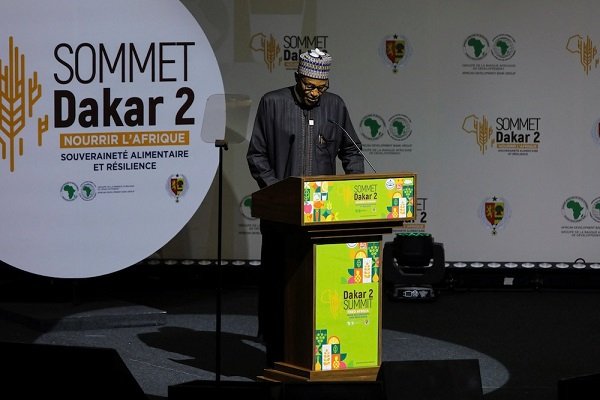
The Islamic Development Bank (IsDB) Group, represented by its President, H.E. Dr. Muhammad Al Jasser, has reaffirmed strong support for the development of agriculture in Africa at the “Feed Africa” Summit held in Dakar, Senegal.

The IsDB Group has long recognized the pressing need to address food insecurity and has taken action to re-establish sustainable livelihoods on the continent.

During the panel, Dr. Al Jasser highlighted the various roles that development organizations can play based on their respective mandates. He emphasized that IsDB Group is providing much-needed finance to the agricultural sector.

Reiterating IsDB Group’s commitment to supporting sustainable and inclusive agricultural value chains in Africa through its various interventions and programs, President Al Jasser underlined the importance of strengthening food sovereignty in Africa by strategically deploying necessary financial investments around three development objectives: self-sufficiency, climate change adaptation/mitigation and sustainability, and farmers’ welfare.

“In doing so, we, at IsDB Group, promote import substitution using localization strategies that play an important role in enabling traditional systems across the food value chain from production to processing, storage, and consumption,” he explained.

Elsewhere in his remarks, President Al Jasser elaborated that IsDB Group has also been supporting the development of Africa into a breadbasket for the world by investing in raising agricultural productivity, supporting infrastructure, and enhancing climate-smart agricultural systems, with private sector investments all along the food value chain. He said:

Dr. Jasser also highlighted specific interventions by the IsDB Group such as the Special Agro-processing Zones Project in Nigeria, where the Bank Group has invested US$ 160 million along with the African Development Bank.

This project aims to support the development of special agro-processing zones in high-food production areas and enable smallholder farmers and community-based service providers, including women and youth, to take advantage of the market demand created by these zones to sustainably enhance their incomes and food security.

Also Read

McKinsey Co-Founds Effort To Transform Agriculture And Food Systems In Africa

Belarus To Ship Over 3,500 Tractors To Zimbabwe

McKinsey co-founds effort to transform agriculture and food systems in Africa

0

Africa is home to roughly 780 million small-scale farmers, with 70 percent of people relying on agriculture and farming for part of their income.

While the African soil is rich, with endowments capable of producing bounties, most farmers struggle economically, consumers spend too much on food, and malnutrition and stunting in children are widespread on the continent, according to UNICEF.

“This does not need to be our reality,” says Omid Kassiri, managing partner in McKinsey’s Nairobi office. “With the right policies, infrastructure, support, and capabilities, we’ve seen that agriculture in Africa can be transformed and make a massive, meaningful difference in people’s lives.”

Change is underway but will take a concerted, multi-stakeholder effort. To bring together public, private, and NGO partners in this work, the African Agricultural Transformation Initiative (AATI) was established.

Hosted by the International Fund for Agricultural Development (IFAD), an international financial institution and specialized United Nations agency dedicated to eradicating poverty and hunger in developing countries, AATI seeks to support African countries in developing and implementing agricultural transformations. McKinsey served as an integral member of the founding coalition.

Co-founded by partners including the Alliance for a Green Revolution in Africa, the Bill & Melinda Gates Foundation, IFAD, and McKinsey, AATI builds on McKinsey’s impact on agriculture and food systems across Africa, including work to increase food production that resulted in 11 million fewer undernourished people, 150,000 fewer deaths from hunger, and one hundred thousand new jobs.

McKinsey brought fact-based and practical support to several issues during these engagements: increasing farmers’ technical knowledge—what to grow, how to grow, what fertilizers to use, what practices and techniques to deploy; increasing their capacity to invest in irrigation methods, fertilizer and crop protection; research and development for crops optimized for the African climate; and creating linkages to markets to name a few.

The results inspired McKinsey to find a way to build on this work, finding a path to help launch AATI through the Fund for Social Good, a pro bono program of multiyear firm support.

“McKinsey is our vital thought leader for tools and methodologies that accelerate agricultural transformation,” says Safia Boly, executive director of AATI. “The role of McKinsey here is knowledge—of working with partners and having the reach to bring partners together, bringing digital solutions, delivery expertise, problem solving, and implementation methodologies, all of which has been essential to the establishment of the AATI.”

AATI is launching its first wave of countries to accelerate effective and sustainable food systems changes based on their needs, priorities, and existing infrastructure.

“When AATI identifies strategies for economic growth and innovation through agriculture, it is key that it be an opportunity for government and private sector,” says Safia. “There should always be a balance between the two because government will establish the environment for the private sector to flourish and drive the economic growth.”

This perspective keeps inclusive growth at its center.

We hope that AATI will grow to become a pillar of transformation across the continent. The goal is for it to be a constant driver for the transformation of the lives of millions and millions of people, country after country.

Omid Kassiri, McKinsey partner

“Our goal is to increase the percentage of small holder farmers who have become entrepreneurs. Because at the end of the day, we are trying to make agriculture a catalyst for economic growth,” says Safia.

By supporting AATI, McKinsey is not just supporting agricultural and food systems transformations. It is creating an institution that will be an enduring catalyst for change in Africa.

“We hope that AATI will grow to become a pillar of transformation across the continent,” says Omid. “The goal is for it to be a constant driver for the transformation of the lives of millions and millions of people, country after country.”

Also Read

Belarus To Ship Over 3,500 Tractors To Zimbabwe

Tractor And Combine Harvesters Sales In South Africa

Tanzania to host the AGRF, Africa’s Food System Forum 2023

0

Tanzania will host the AGRF 2023 Summit, the announcement was made by Her Excellency Samia Suluhu Hassan, the president of the United Republic of Tanzania and H.E Hailemariam Dessalegn, the Chair of the AGRF Partners Group on the sidelines of the U.S. Africa Leaders’ Summit currently taking place in Washington, DC. 

The AGRF, Africa’s Food Systems Forum, is the premier platform for advancing the agriculture and food systems agenda on the continent; from food security to agri-food investments.

The annual Summit convenes leaders, policymakers, scientists, heads of governments and private institutions, farmers, and the youth in the agriculture and food systems landscape to discuss and agree on practical actions and solutions that drive Africa’s food security and better livelihoods for all.

The 2023 Summit aspires to position Africa as the place for innovation, investments, and to advance a stronger more diverse, and resilient food system.

The Summit will look to energize and spotlight continental progress beyond the call for aid. The Summit will showcase Africa’s solutions to Africa’s food systems transformation while spotlighting leadership, accountability, inclusion and investment opportunities in Africa in general and in Tanzania in particular.

Tanzania will be the first country to host the AGRF Summit since the forum was rebranded to Africa’s Food Systems Forum in 2022 as a reflection of the partnerships’ ambition to move forward the transformation of Africa’s food system and sustain engagement year-round.

In her remarks, Her Excellency Samia Suluhu Hassan welcomed agriculture and food systems experts, investors and stakeholders from across Africa and beyond to Tanzania for the Summit and emphasized the importance for Africa to lead on its food security for national and continental development.

She highlighted that Africa’s food security can collectively be attained if all parties join hands to advance localized solutions that drive prosperity for all urging the youth to participate in agriculture to enable faster growth of the continent’s growth.

“I am pleased to announce, that Tanzania has been selected to host the AGRF 2023 Summit. This important Forum will bring together global and local voices, will highlight investment opportunities and will be looking to do business. We must chart ways to  protect our people from the current drought and climate change impacts and we must make it possible for investments to move into this important sector.

“I have no doubt, that this Summit will provide actionable solutions for the continent and our people,” President Samia said.

H.E. Hailemariam Dessalegn congratulated and recognized Tanzania’s leadership in advancing food security and shared his appreciation to President Samia for hosting the AGRF 2023 Summit.

“The AGRF, Africa’s Food Systems Forum 2023, comes at an integral time when the continent, battered by the effects of climate change, is coming together to find solutions that safeguard lives and livelihoods. It is commendable that Tanzania is developing a national blueprint to drive its economy forward and food and agriculture will play a huge role in ensuring the country’s prosperity.

We urge all stakeholders ahead of the Summit to kickstart these vital discussions and conversations while surfacing innovative ideas that can be shared and deployed across the continent.”

The AGRF 2023 builds on the AGRF 2022 hosted by the Government of Rwanda in Kigali. It was attended by more than 2700 delegates In-Person and over 4000 online.

In 2023, the AGRF secretariat and partners will build on the conversations, agreements, and critical decisions from the AGRF 2022 Summit through in-country meetings and roadshows with leaders, farmers, and the youth.

The Summit is expected to convene critical voices in Tanzania with the aim of strengthening Africa’s food systems transformation through consensus.

Also Read

LAMMA 2024: UK’s Premier agricultural machinery and technology showroom

NAMPO Harvest Day (May 2023), Bothaville South Africa

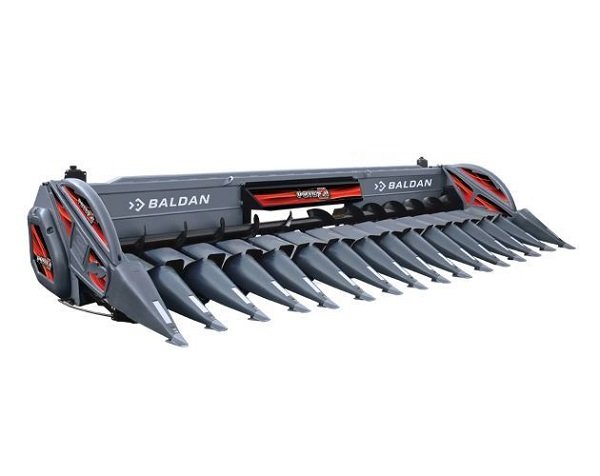
Baldan’s agricultural head for corn harvest is simply efficient


The POTENZA – Agricultural Head for Corn Harvest is deal for many planting conditions, this equipment was designed with first-line technology to deliver the harvest with greater precision, agility and without waste.

It features a lightweight structure and compact design, providing better handling and safety at the time of harvest.

How it works

The mechanical picker snaps the ears from the stalk so that only the grain and cobs are harvested. The standing stalks are guided by shields or snouts to pass between counter-rotating rollers that pull the stalks down and through very sharply, snapping the ears free.

The husking mechanism, consisting of closely spaced, counter-rotating rollers, tears the husks away. Pickers may be pulled behind a tractor and power-takeoff driven or mounted directly on the tractor, one unit on each side, to form a two-row harvester.

About Baldan

Baldan is a Brazilian agriculture machinery manufacturer that specializes in developing products with advanced engineering concepts, which are intended for tillage and planting of various types of crops. It has a product line dedicated to sugarcane farming and also agricultural platform for corn harvesting.


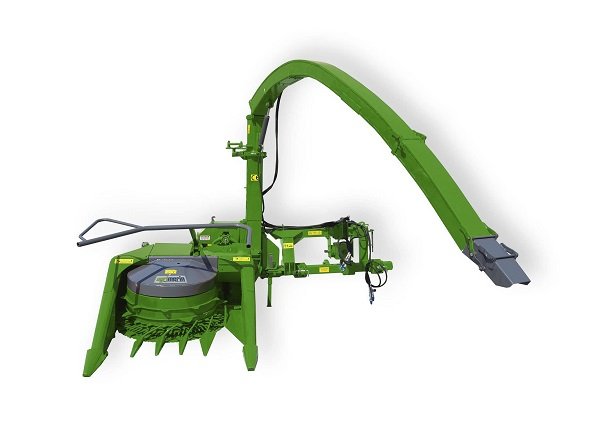
Row Independent Maize Harvester


The cutter and feeder drum carries the maize to the feeding unit. Agrimerin row independent maize chopper’s feeding system is designed to feed the flywheel at right angles for the best quality silage.

The flywheel is equipped with 12 special hardened knives revolving at nearly 540 rpm. There are two feeder drums and two pressure rollers that control the feeding of the maize to the flywheel. One of the pressure rollers is spring loaded and toothed, while the other one is not.

The pressure rollers are vertically mounted right behind the feeder drums so that stems and cobs are always chopped at right angle. This is the secret of the machine’s low power requirement and short length of chop. One of the most important specification of the machine is its foldable chassis.

The chassis can be folded so that the machine stays behind of the tractor. By driving backwards the machine can open a way in the middle of the field in order to decrease the number of turns on the field and decrease the fuel consumption of tractor.

While in operation, height adjustable wheel maintain an even working height thus preventing the intake of earth and stones in bad conditions. Knife grinding is easily carried out with the built-in sharpening device. The height of the machine can be reduced by folding down the upper part of the chute.

Also Read

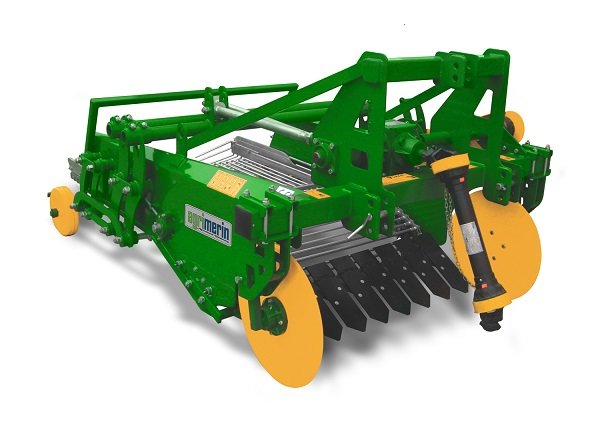
This Potato Harvester from Agrimerin is phenomenon

MF Activa series: Machine you can rely on

This Potato Harvester from Agrimerin is phenomenon


Potato harvester with two rows are produced for harvesting two rows of potatoes with 60-70 cm distance between rows.

The harvester works by removing the potato out of soil and sieves with the help of the rear sifter.

It is more efficient to operate the harvester in a speed between 10-12 km/hr. You must lubricate the machine during use. Simple operation of settings and for maintanance designed for easy harvest even in difficult conditions.

This machine is suitable for small to middle level farmers especially in Africa.

Agrimerin is one of the specialized company, established for worldwide demand of mechanization in agricultural sector to simplify farmer’s responsibility in various farm condition and greater productivity.

Also Read

MF Activa series: Machine you can rely on

Mahindra harvest master 4WD: Tractor mounted combine harvester

NAMPO Harvest Day (May 2023), Bothaville South Africa

0

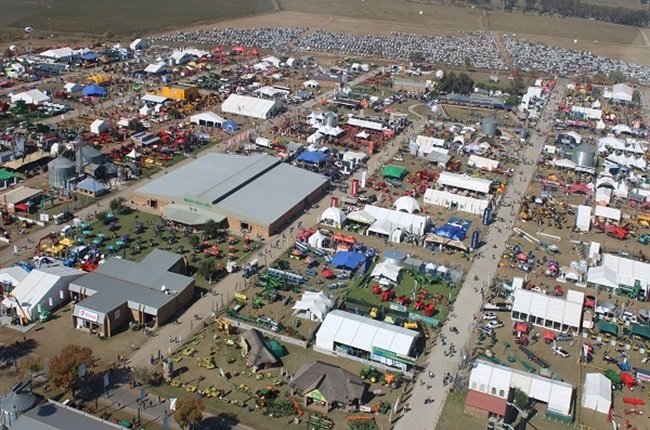
Grain SA’s NAMPO Harvest Day is one of the largest agricultural exhibitions under private ownership in the southern hemisphere and it takes place annually, just outside of the town of Bothaville, in the Free State province of South Africa.

In 2023 it is on the from the 16th to the 19th of May at NAMPO Park, Bothaville.

The first NAMPO Harvest Day was held in 1967, on the farm, Donkerhoek, near Bloemfontein and was attended by 200 producers. Thereafter the Harvest Day was held on various farms until the size of the event started necessitating a more permanent venue.

In 1974 the NAMPO Harvest Day was therefore established on a permanent terrain outside Bothaville, which is today known as NAMPO Park.

Grain SA’s NAMPO Harvest Day enables producers and other role players in the agricultural industry to experience the latest technology and products on offer in the farming industry first-hand and on one terrain. The NAMPO Harvest Day also offers producers the opportunity to obtain knowledge from experts in their various agricultural fields by means of debating and discussion panels.

Event Date May 16th, 2023
End Date May 19th, 2023
Website http://www.grainsa.co.za
Venue NAMPO Park, Bothaville, South Africa


Also Read

LAMMA 2024: UK’s Premier agricultural machinery and technology showroom

Agritechnica 2023 to focus on green productivity

LAMMA 2024: UK’s Premier agricultural machinery and technology showroom

0

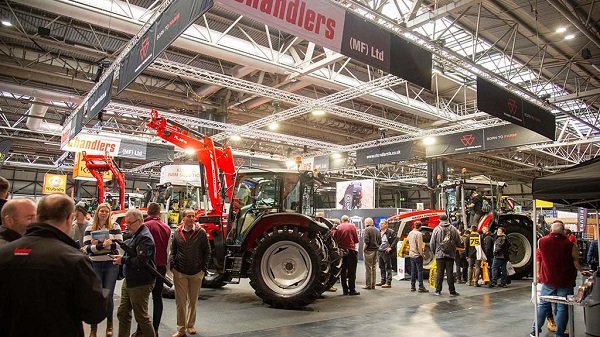
LAMMA 2024 will be on Wednesday 17th January 8.30am – 5.30pm & Thursday 18th January 8.30am – 4.30pm at the NEC Birmingham.

The UK’s premier farm machinery show, LAMMA connects farmers from all sectors with companies who provide cutting-edge machinery, technology and equipment for the farming industry.

Over 600 exhibitors will showcase the latest tractors, combines, arable and grassland machinery, as well as a wide range of new technology, services and tools for every sector.

See machinery launches, UK debuts, global brands and small manufacturers, all together under one roof.

Bring your team to the UK’s largest farm machinery showroom, network and do business.

Also Read

Strong exhibitor demand for Agritechnica 2023

AgroFood 2023,14th – 15th July 2023


MF Activa series: Machine you can rely on


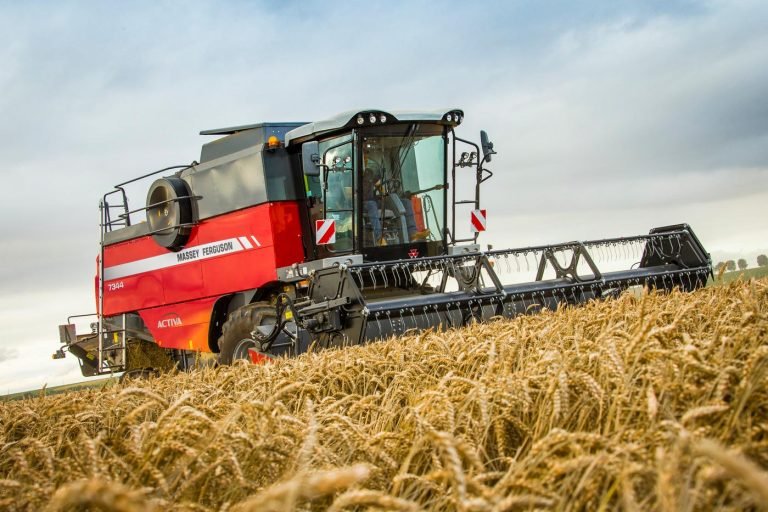
The new MF Activa series provides a choice of high output combine harvesters for farmers who are looking for straightforward and dependable harvesting performance with low running costs.

Built to the highest standards, these versatile machines are ready to work in a wide range of crops and conditions, from small grains to maize, soybeans and rice. Gentle on grain and straw they are the perfect choice for owners and operators with smaller to medium-sized areas to harvest. With combines from the MF Activa range, you can be sure you are making the right choice.

Straw quality

Straw quality is preserved by the gentle threshing system and the even swath is perfect for baling round, small or large square bales. Standard swath gates allow the row width to be set to achieve swaths of the ideal size. Risers can be easily fitted for damp conditions. Conserving the straw in this way makes the fuel consumption figures even lower to further reduce harvesting costs.

High capacity sieve design

The grain pan with an opposed action agitates the material from the concave making two separate layers of grain and chaff to be separated by the powerful volumetric fan. The fully adjustable sieves have a special design with tags which gives a very clean sample whatever the crop, and removing them for cleaning is very simple with a minimum of effort.

Threshing quality

The threshing components have been optimised to suit all crops. A robust cylinder 600mm by 1340mm wide, with eight rasp bars threshes gently and positively. It can handle a wide range of crops from grass seed through small grain to maize.

High separation performance

The long straw walkers feature four steps with ‘active walls’. The 21cm high, vertical sections of the walker steps are made up of permeable grids. These are the highest for any conventional combine. The front steps of the straw walkers are reinforced for maize.

Also Read

New features for Massey Ferguson’s new generation butterfly mower

Kubota unveils LX20 Series Tractor

Mechanizing agriculture is key to food security


An African woman with hoe in hand is the default symbol of agriculture in Africa, according to the late Calestous Juma, African academic and former Harvard Kennedy School professor. Mr. Juma used that image to convey the drudgery-filled farming that women on the continent face.

Women grow 70% of Africa’s food on smallholder farms, a task anchored by physical labour.

Now, with Africa’s population expected to double by 2050, the continent must ditch the hoe in favour of modern technology, which will complete the same tasks far more efficiently.

A transformation from small-scale subsistence farms to mechanised, more commercially viable farms is essential, say experts at the Ghana-based African Centre for Economic Transformation.

Currently, mechanisation levels on farms across Africa are very low, with the number of tractors in sub-Saharan Africa ranging from 1.3 per square kilometre in Rwanda to 43 per square kilometre in South Africa, compared with 128 per square kilometre in India and 116 per square kilometre in Brazil.

According to the Food and Agriculture Organisation (FAO), a UN specialized agency that champions efforts to defeat hunger, Africa overall has less than two tractors per 1,000 hectares of cropland. There are 10 tractors per 1,000 hectares in South Asia and Latin America.

Without mechanized agriculture, productivity suffers drastically, lowering farmers’ earnings, notes the Alliance for a Green Revolution in Africa, an organization funded by the Bill & Melinda Gates and Rockefeller Foundations that seeks to promote agricultural transformation and improve food security in Africa.

Africa currently spends a whopping $35 billion annually on food imports, according to the African Development Bank (AfDB), which projects that if the current trend continues, food imports could rise to $110 billion by 2050. Africa should be the breadbasket of the world, says AfDB president Akinwumi Adesina.

“Technologies to achieve Africa’s green revolution exist but are mostly just sitting on the shelves. The challenge is a lack of supportive policies to ensure that they are scaled up to reach millions of farmers,” Mr. Adesina adds.

The Maputo Declaration

African leaders in 2003 adopted the Maputo Declaration on Agriculture and Food Security, which requires countries to allocate at least 10% of public expenditure to agriculture with the goal of achieving 6% annual growth in the sector.

Yet 16 years later, only 13 countries have achieved at least 6% growth in the agricultural sector, stalling Africa’s dream of a food revolution. Those countries are Benin, Burundi, Cape Verde, Ethiopia, Gambia, Ghana, Liberia, Mali, Niger, Nigeria, Rwanda, Sierra Leone, and Togo.

In addition to the Maputo Declaration, the Malabo Montpellier Panel (MMP), a group of African and international experts, recommended in 2014 that African countries develop national agricultural mechanization investment plans as a critical step to increasing productivity.

In a report in 2018 the MMP listed 12 African countries, including Ethiopia, Malawi, Mali, Morocco, Rwanda, Tanzania and Zambia as having demonstrated strong growth in mechanized agriculture and consequently achieved higher output.

Successful mechanization will be key to tackling major challenges on the continent, the report concludes, from spiraling food import costs to rampant rural unemployment. The report recommends using public-private partnerships to develop local machinery industries to ensure affordable and appropriate technology is in use. It also recommends incentivizing the private sector to invest in mechanization through tax waivers and smart subsidies.

Finally, thanks to advances in renewable energy and digital technology, Africa can leapfrog the stages of technological development other regions have had to undertake, making its mechanization process both swift and extremely lucrative, according to the report.

Dr. Katrin Glatzel, programme leader of the MMP, who is also a research fellow at the International Food Policy Research Institute, a US-based food research organisation, points out that over half the fruits and vegetables produced in sub-Saharan Africa are lost, mostly because of inefficient postharvest handling and lack of processing equipment.

Mechanization, Ms. Glatzel posits, is not only for tilling land, it is also for planting, harvesting, processing and storage of produce.

“Increased levels of mechanization will boost social and economic processes in both on-farm and off-farm roles in rural communities, through reducing drudgery of farm work and improving yields,” Ms. Glatzel tells Africa Renewal.

“Not only will mechanization result in increased employment, it will also improve land management and productivity as well as the quality of the crops that are produced,” she adds.

To achieve these goals, farmers in developing countries must spend more on fertilizer, seeds and agrochemicals, says the FAO.

Some laudable initiatives

Some private sector initiatives have stepped into the breach created by unsuccessful state- and donor-led efforts to promote mechanization.

In Nigeria, Hello Tractor, a technology start-up, is a quickly expanding Uber-like programme that gives farmers temporary access to tractors on demand.

Farmers can request a tractor via a text message to an agent, who aggregates requests. A tech platform pairs available tractors with jobs, and then tracks each piece of equipment as it’s used.

With a tractor, a field that might take 40 days to prepare for planting by hand can be prepped in eight hours. It’s also cheaper to rent a tractor than to hire farm workers, says Jehiel Oliver, the 35-year-old founder of Hello Tractor. “It seems counterintuitive in these markets with relatively low cost of labour, but paying a human being to do this is still much more expensive than a tractor.”

Labor is also increasingly hard to find as more Nigerians move to cities and existing farmers get older. Using a tractor can help farmers plant fields in time for rain. Because planting with a tractor is also more consistent than planting by hand, it can also improve yields.

In Zambia, Rent to Own, a nongovernmental organisation founded in 2010, leases equipment such as pumps, presses, tractors, shellers and bicycles to farmers.

One of the advantages of mechanised agriculture is that it can potentially attract youth to farms and put a dent in Africa’s high youth unemployment, which accounts for about 60% of total unemployed.

The example of Zimbabwe’s young agripreneurs is instructive. Three years ago, the International Maize and Wheat Improvement Center (CIMMYT) loaned Gift Chawara, Shepard Karwizi and Pinnot Karwizi a planter and a sheller with which they started a business.

Their company is now offering shelling and planting services to almost 150 family farms in Mwanga village, northwest of the capital Harare.

They had graduated from an agricultural mechanization training programme managed by CIMMYT. Last season, the trio earned about $7,000 just from shelling over 300 tons of maize, according to CIMMYT.

But these young Zimbabweans could be outliers, asserts Frédéric Baudron, a senior systems agronomist at CIMMYT, who finds mechanization by smallholder famers in Zimbabwe still low.

CIMMYT’s mechanization training programme is implemented under the Farm Mechanization and Conservation Agriculture for Sustainable Intensification project and supported by the Australian Centre for International Agricultural Research. The project has benefitted over a hundred young people from Ethiopia, Kenya, Tanzania and Zimbabwe.

Such efforts, replicated across Africa, could push the frontiers of agricultural productivity. But governments need to increase investments in the sector.

It’s time for the continent to rethink the hoe.

About the Author

Busani Bafana is a versatile development journalist, based in Bulawayo, Zimbabwe. Busani has more than 15 years of experience as a freelance journalist covering mainly environment, agriculture, food security, and climate change issues.

Also Read

How regenerative agriculture can increase Africa’s food production

Sustainable farming holds the key to economic prosperity