


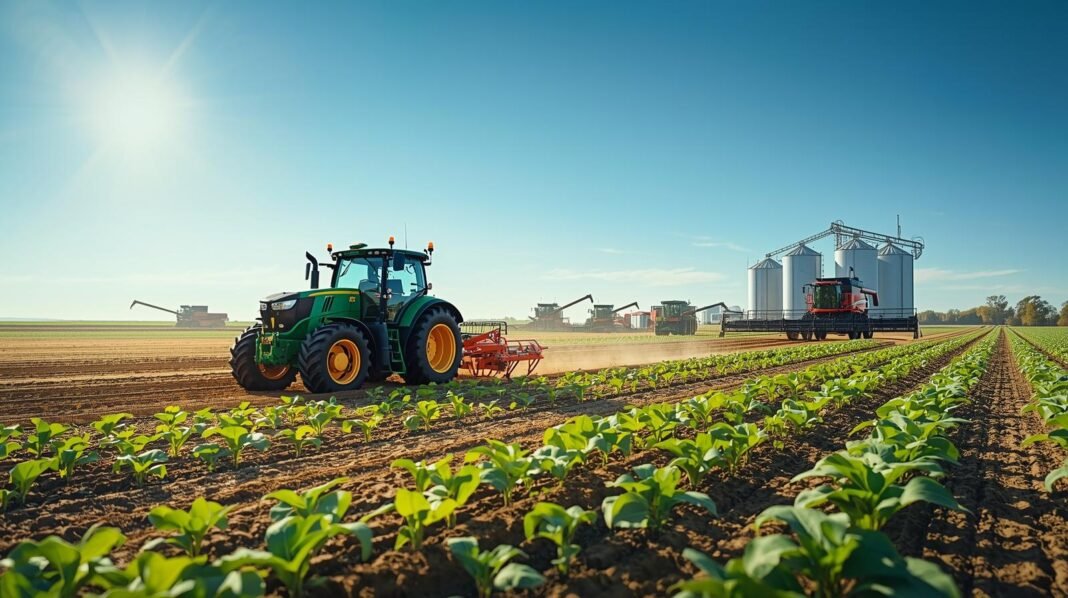

The agricultural industry stands at a transformative crossroads, where cutting-edge technology meets centuries-old farming traditions.
As global food demand surges and climate challenges intensify, farmers are turning to revolutionary machinery and storage solutions that promise to reshape how we cultivate, harvest, and preserve our crops.
From autonomous robots that work tirelessly through day and night to smart grain storage systems powered by artificial intelligence, these innovations are not just improving efficiency—they’re securing our food future.
1. Autonomous Agricultural Robots: The 24/7 Workforce
The era of round-the-clock farming has arrived. Autonomous agricultural robots are transforming farm operations by working continuously without fatigue, dramatically increasing productivity while reducing labor dependency.
The Nexat gantry planter showcased at Agritechnica 2025 features a 28-metre-wide modular design that integrates cultivation, seeding, fertilization, and crop protection into one autonomous system, potentially reducing machinery costs by up to 20%.
Companies like AgXeed have deployed their T2 autonomous robot, which operates at 230 horsepower and can seed, mow, cultivate, and weed using lasers.
At approximately $340,000, these machines represent a significant investment, but early adopters report impressive returns.
Farmers using AgXeed’s autonomous technology report saving up to 90% on labor costs and cutting total operational expenses by 25-35% compared to conventional tractors.
Meanwhile, John Deere’s autonomous 8R tractor and Kubota’s Agri Robo Series are leading the charge in North America and Asia.
Kubota has already shipped around 700 autonomous machines across Japan by 2024, with their Type V and Type S robots showcasing remarkable versatility across different terrain types.
2. AI-Powered Precision Agriculture Tools
Artificial intelligence has moved from the research lab directly into the field. Modern AI-driven decision support systems analyze satellite imagery, soil sensors, and historical yield data to provide actionable insights that transform farm management.
The John Deere Operations Center uses AI to guide farmers on optimal planting, fertilizing, and harvesting schedules, empowering data-driven decisions that improve crop health and maximize yields while minimizing resource waste.
CLAAS is developing a camera-based AI platform for weed detection in grassland management, specifically targeting dock weeds that reduce forage quality.
This system, expected to reach European markets within five years, will help farmers cut input costs, reduce herbicide use, and comply with EU sustainability regulations.
The technology extends beyond crop management. Precision agriculture equipment incorporating AI can boost crop yields by up to 20% through advanced data-driven techniques, according to recent industry analysis.
3. Electric and Hybrid Agricultural Machinery
Sustainability has become more than a buzzword—it’s a operational imperative. Electric and hybrid farm equipment is rapidly gaining market share, driven by environmental concerns and operational cost savings.
Electric tractors offer zero tailpipe emissions, lower operational costs, and reduced noise pollution, with over 40% of commercial farms expected to integrate electric or hybrid power into their machinery fleets by the end of 2025.
CNH Industrial’s R4 Hybrid Power concept robot exemplifies this shift. Designed for vineyards, orchards, and specialty crops, this hybrid diesel-electric system delivers approximately 60 horsepower and can operate sprayers, electric cultivators, and smart implements continuously.
While it may work at a slower pace than traditional tractors, its ability to function 24/7 without operator fatigue offers unprecedented productivity gains.
The transition to electric power also addresses one of agriculture’s most pressing challenges: reducing the carbon footprint of food production. Hybrid engines and battery-assisted systems are minimizing fuel consumption in large-scale fieldwork, contributing to global sustainability goals.
4. Laser Weeding Technology
Chemical-free weed control has long been agriculture’s holy grail. Laser weeding technology is making this dream a reality by combining artificial intelligence with precision targeting.
Companies like Carbon Robotics have developed machinery that uses artificial intelligence and laser beams to identify and eliminate weeds, eliminating the need for herbicides and reducing chemical contamination in soils and crops.
This technology represents a significant advancement for organic farming and environmentally conscious operations.
By removing the need for chemical herbicides, laser weeding systems promote healthier farming practices while addressing growing consumer demand for pesticide-free produce.
The precision of these systems is remarkable—they can distinguish between crop plants and weeds in real-time, delivering targeted laser pulses that destroy weed root systems without affecting surrounding plants.
5. Autonomous Grain Cart Systems
Harvest efficiency is getting a major upgrade with autonomous grain cart technology. After extensive beta testing in 2024, multiple manufacturers are bringing their solutions to market in 2025.
OutRun.Ag, AGCO’s retrofit kit enabling autonomous grain cart operation, is now widely available, alongside New Holland’s OMNiDRIVE Raven grain cart automation kit.
These systems can support up to six combine and tractor combinations operating simultaneously, creating a coordinated harvest ecosystem.
The ROI potential is substantial. By enabling swarming technology where multiple autonomous grain carts work in concert, farmers can capture greater value through continuous harvest operations without the constraints of operator availability or fatigue.
These retrofit solutions are particularly attractive because they allow farmers to upgrade existing equipment rather than purchasing entirely new machinery, making advanced automation more accessible to operations of various sizes.
6. IoT-Enabled Smart Grain Storage Systems
Post-harvest losses represent a critical challenge for global food security, with over 20% of grain losses occurring due to inadequate storage.
Smart grain storage systems are addressing this problem through real-time monitoring and predictive analytics.
Modern grain bin monitoring equipment uses wireless sensors to track real-time data on grain conditions, alerting farmers to moisture spikes or hot spots and providing continuous readings accessible via smartphone or cloud dashboards.
The integration of Internet of Things technology into grain storage has created systems that combine grain bin moisture sensors with temperature probes to give a comprehensive picture of grain health.
Advanced platforms use artificial intelligence to analyze sensor data, predict future risks, and recommend timely interventions.
The global smart grain storage system market was valued at $1.35 billion in 2024 and is projected to reach $1.69 billion by 2032, reflecting growing adoption driven by food security concerns and government initiatives promoting modern agricultural practices.
Companies like AGI have introduced solar-powered aeration control systems integrated with IoT sensors, while PRADO SILOS has deployed smartphone-controlled grain silos across multiple Indian states, bringing advanced monitoring technology to smaller-scale operations.
7. Controlled Atmosphere Storage Innovation
Preserving grain quality over extended periods requires more than just silos—it demands precise environmental control. Controlled atmosphere grain storage represents a quantum leap in preservation technology.
Major companies are prioritizing next-generation storage innovations, including air-supported membrane structures employing rapid-deployment dome designs, automated oxygen control systems, and continuous sensor-based monitoring.
These systems work by carefully managing oxygen levels, temperature, and humidity within storage facilities to slow grain respiration and prevent pest proliferation without relying on chemical fumigants. The result is longer storage life, better grain quality retention, and reduced chemical usage.
China Grain Reserves Group Ltd. and other major agricultural organizations are investing heavily in these technologies, recognizing their potential to reduce the estimated 20% post-harvest losses that plague the industry globally.
8. Advanced Grain Silo Materials and Design
Traditional grain storage infrastructure is undergoing a renaissance through innovative materials science and engineering design. The GSI EVO grain bin exemplifies this evolution.
The GSI EVO features an optimized bolt pattern with fewer bolts, fewer vertical seams, and zinc-coated hardware with water-tight seals, enhancing durability and grain protection while using less steel and improving structural strength.
This innovation addresses critical challenges in grain storage: moisture intrusion, corrosion, and structural integrity. By strategically reducing the number of penetrations in bin walls while maintaining strength, the EVO design creates a near-impenetrable barrier against weather elements.
The global grain silos and storage system market is experiencing robust growth, advancing from $1.65 billion in 2024 to a projected $2.27 billion by 2030, with steel silos featuring IoT-enabled sensors and humidity control systems representing the cutting edge of the industry.
Modern silo innovations also include anti-corrosion coatings specifically designed for tropical climates and modular automation kits that can retrofit legacy silos within 48 hours, bringing smart technology to existing infrastructure.
9. Precision Spraying Drones
Aerial application technology has evolved dramatically from traditional crop dusting. Modern precision spraying drones represent a sophisticated marriage of imaging technology, AI, and targeted chemical delivery.
Precision spraying drones are equipped with advanced imaging technology to identify weeds and diseases, allowing them to apply chemicals with pinpoint accuracy, minimizing chemical usage and reducing environmental impact.
Platforms like the DJI Agras can cover large areas quickly and operate in challenging terrains where traditional ground-based sprayers struggle. This capability is particularly valuable in hilly regions, orchards, and vineyards where conventional machinery faces limitations.
John Deere’s See & Spray technology has demonstrated remarkable results, with farmers achieving an average 59% reduction in herbicide usage across corn, soybean, and cotton operations.
This dramatic decrease in chemical application not only saves money but also addresses growing regulatory pressure and consumer demand for sustainably produced food.
10. AI-Driven Grain Quality Assessment
Maintaining grain quality throughout storage requires vigilance and expertise. Artificial intelligence is now providing both, transforming how farmers monitor and manage stored grain.
AI applications in grain storage include pest and insect damage detection, grain classification, crop disease detection, mycotoxin contamination identification, and supply chain management, supported by innovative approaches including edge computing, digital twins, and blockchain technology.
TeleSense has made notable strides with its predictive analytics platform that uses machine learning to prevent grain spoilage before it occurs.
By analyzing patterns in temperature, moisture, and gas emissions within storage facilities, these systems can identify potential problems days or even weeks before they would be visible to human inspectors.
The integration of AI with blockchain technology is also revolutionizing grain traceability, enabling transparent supply chain management from field to market.
This capability is increasingly important for verifying organic certification, ensuring food safety compliance, and meeting consumer demands for transparency.
Looking Ahead: The Future of Agricultural Innovation
The agricultural machinery and grain storage industries stand at an inflection point. The convergence of robotics, artificial intelligence, IoT connectivity, and sustainable design principles is creating farming systems that our grandparents could scarcely imagine.
The numbers tell a compelling story: the agricultural equipment market is projected to grow from $120.1 billion in 2024 to $169 billion by 2031, with the autonomous farm equipment segment experiencing particularly rapid expansion.
The agricultural robotics market alone is expected to balloon from $7.34 billion in 2024 to potentially $48 billion by 2030.
These innovations aren’t just technological marvels—they’re practical solutions to real-world challenges. Labor shortages, climate volatility, rising input costs, and increasing regulatory requirements are pushing farmers toward automation and smart technology.
The farms that embrace these innovations are finding not just survival but prosperity, with some reporting operational cost reductions of 25-35% and labor savings approaching 90%.
However, challenges remain. High initial investment costs, the need for reliable internet connectivity in rural areas, and the learning curve associated with new technology can create barriers to adoption, particularly for small and medium-sized operations.
Farm-as-a-Service models, retrofit solutions, and government support programs are emerging to address these challenges, making advanced technology more accessible across farm sizes and economic situations.
As we move deeper into 2025 and beyond, the agricultural sector will continue its digital transformation.
The innovations highlighted here represent just the beginning of what’s possible when human ingenuity meets technological capability in service of feeding a growing world sustainably and efficiently.
Whether you’re a large commercial operation looking to maximize efficiency or a smaller farm seeking competitive advantages, these ten innovations offer pathways to improved productivity, sustainability, and profitability.
The future of farming is here—and it’s more exciting, more capable, and more sustainable than ever before.
Also Read
Smart Technologies Transforming Grain Handling Systems Across Africa
The future of crop storage: Advanced solutions for post-harvest loss reduction
