Home Blog Page 3

Why Tractor Sales Are Rising in Nigeria in 2026


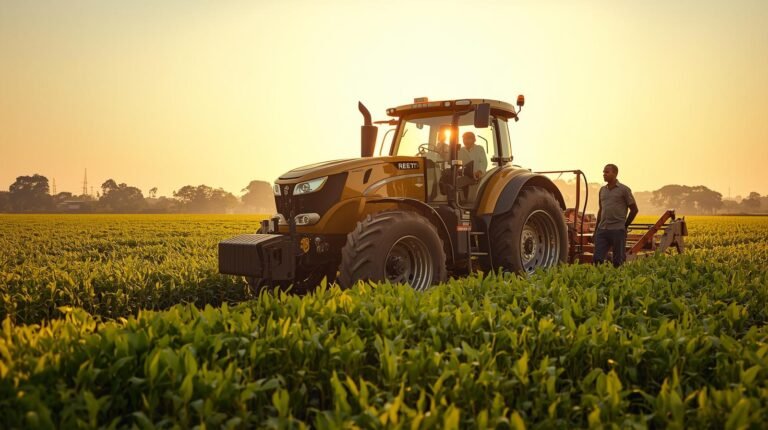
Nigeria’s agricultural sector is undergoing a quiet but significant transformation. Across farms in the North Central plains, the Niger Delta, and the savannah belts of the North West, the rumble of tractor engines is becoming increasingly familiar.

Tractor sales in Nigeria are on an upward structural trajectory in 2026 — driven by government policy, population pressure, rising food demand, and a growing recognition that manual farming can no longer feed a nation of over 220 million people.

This article explores the key forces behind this trend, the challenges that remain, and what it means for Nigeria’s agricultural future.

1. Government Mechanisation Programmes Are Injecting Demand

One of the most direct drivers of tractor sales is federal government spending. The Federal Executive Council approved the procurement of 2,000 tractors, 4,000 disc ploughs, 1,200 tractor trailers, and other equipment under the National Agricultural Mechanisation Programme (NAMP) — a flagship initiative aimed at boosting food security through modern farming tools.

This kind of large-scale public procurement not only puts machines in farmers’ hands; it also signals to private suppliers, dealers, and investors that Nigeria is serious about mechanisation.

In late 2023, the government announced John Deere’s intention to establish a tractor assembly plant in Nigeria — a development that, if fully realised, would reduce reliance on costly imports and expand access to equipment locally.

2. The Food Security Imperative

Nigeria is the most populous country in Africa, with a population projected to exceed 250 million by 2030. Feeding this population — with a large proportion living in rural areas and depending on subsistence agriculture — requires dramatically higher productivity per farm.

Manual and animal-powered farming, which still dominates smallholder agriculture, simply cannot meet this demand.

Tractors and mechanised equipment allow farmers to cultivate larger areas in less time, reduce post-harvest losses, and achieve more consistent yields. As food inflation bites and the government prioritises domestic food production over imports, mechanisation has become a national imperative rather than a luxury.

3. Rising Demand Across the Agricultural Value Chain

Tractor demand in Nigeria is not just about tillage. The Nigeria Agricultural Tractor Market is growing across multiple segments of the agricultural value chain, including:

  • Land development — clearing and preparing new farmland
  • Sowing and planting — mechanised seeding for key crops like maize, rice, and sorghum
  • Harvesting — combine harvesters and tractor-linked equipment reducing post-harvest losses
  • Transportation — tractor trailers moving produce from farm to market

This broad utility makes tractors one of the most versatile investments in agriculture, driving demand from large commercial farms and cooperatives alike.

4. Africa’s Wider Agricultural Mechanisation Boom

Nigeria’s rise in tractor adoption is part of a broader continental trend. Africa’s agricultural tractor market was valued at $1.9 billion in 2025 and is projected to reach $2.6 billion by 2030, representing a compound annual growth rate (CAGR) of 6.5%.

Nigeria, as Africa’s largest economy and most populous nation, is a key contributor to this growth.

International manufacturers and investors are paying attention. The establishment of local assembly partnerships — such as the John Deere initiative — reflects growing confidence that West Africa, and Nigeria in particular, represents a long-term growth market for agricultural equipment.

5. A Temporary Dip in 2024 — and the Recovery

The story has not been without turbulence. In 2024, Nigeria’s tractor market experienced a sharp decline, with its market value dropping by approximately 35% to around $275 million.

This dip was largely tied to Nigeria’s broader macroeconomic challenges: the dramatic devaluation of the naira following the removal of fuel subsidies, soaring inflation, and higher import costs for equipment denominated in foreign currency.

However, this contraction was a price effect rather than a demand collapse — underlying consumption of tractors and farm equipment actually increased.

As the naira stabilises and government support programmes expand, the market is expected to recover and resume its growth trajectory through 2026 and beyond.

6. Key Challenges That Must Be Addressed

Despite the positive momentum, several obstacles continue to slow the pace of tractor adoption in Nigeria:

Access to Finance: Most smallholder farmers — who make up the majority of Nigeria’s agricultural workforce — cannot afford tractors outright.

Commercial lending rates remain high, and agricultural finance products are underdeveloped. Expanding tractor hire services, equipment leasing, and cooperative purchasing models will be critical.

Import Duties and Costs: Many tractors are still imported, and high tariffs and logistics costs push prices beyond the reach of small and medium-scale farmers. Local assembly initiatives can help, but they take time to scale.

Rural Infrastructure: Poor roads, inadequate storage, and unreliable power supply in rural areas make it difficult to deploy and maintain equipment effectively. Without supporting infrastructure, the impact of mechanisation is limited.

Technical Capacity: Farmers and technicians need training to operate and maintain modern equipment. Investing in agricultural extension services and vocational training is essential to sustain the mechanisation wave.

7. What This Means for Nigeria’s Agricultural Future

The rise in tractor sales is more than a commercial milestone — it is a signal of structural change in how Nigeria feeds itself.

A more mechanised agricultural sector means higher productivity, reduced food imports, more competitive export potential for crops like sesame, cashew, and cocoa, and better livelihoods for millions of rural Nigerians.

For investors, equipment dealers, financiers, and policymakers, the message is clear: the window of opportunity in Nigeria’s agricultural mechanisation story is open, and 2026 represents a pivotal moment in that journey.

Tractor sales in Nigeria are rising because the country has no alternative. Population growth, food security demands, government investment, and the economics of scale all point in the same direction: farming in Nigeria must modernise.

The challenges are real, but so is the momentum.

As government programmes expand, local manufacturing takes root, and financial products evolve to serve farmers, Nigeria’s tractor market is poised for sustained and meaningful growth in the years ahead.

Also Read

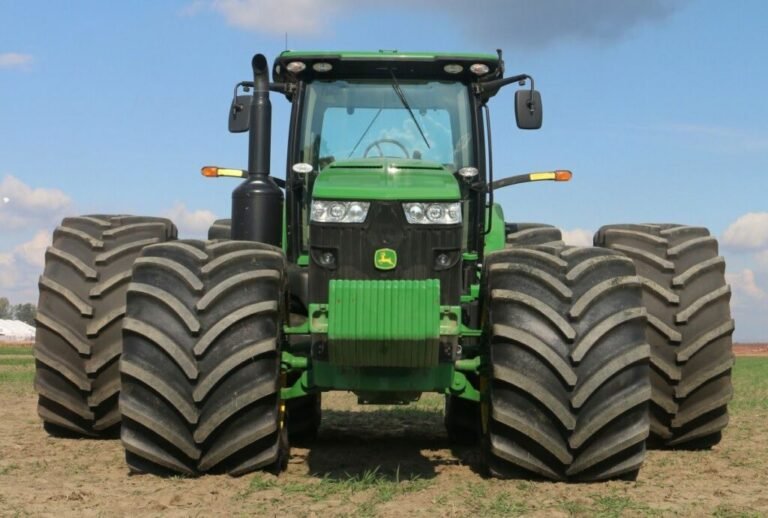
How Wide Tyres Help Reduce Soil Compaction in Modern Farming

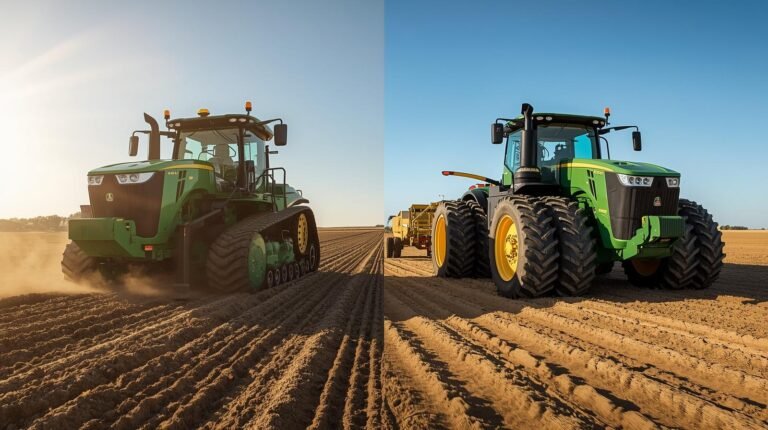
Tracked vs Wheeled Tractors: Which Performs Better in Heavy Fields?

Big Bud’s Tyre Is Coming to British Farms — Goodyear’s Giant LSW Gets UK Accreditation


LONDON, United Kingdom — March 7, 2025 | The world’s largest commercially available agricultural tyre has just been cleared for use on British soil — and for high-horsepower operators, it could change everything.

Goodyear Farm Tires, part of Titan International, has secured ECE accreditation for the LSW1400/30R46 — a tyre so large it was famously fitted to the Big Bud 16V-747, widely regarded as the world’s biggest tractor, when Goodyear showcased the machine at last year’s Farm Progress Show in the USA.

That same tyre is now road-legal in the UK and across Europe.


What Is the LSW1400/30R46?

At 1.4 metres wall to wall, the LSW1400/30R46 is not a tyre you’re going to miss. Designed for the largest machines in modern farming — think the Case IH Steiger and John Deere 9000 Series articulated tractors, as well as high-output combines — this is a tyre built for serious acreage and serious horsepower.

Machines of this size are part of a growing trend toward ultra-high horsepower tractors transforming modern agriculture, where larger equipment is used to cover more land efficiently while reducing field passes.

It’s available in Goodyear’s Custom Flo Grip tread pattern, featuring deep R-2 lugs set at 45 degrees, engineered to perform in the wet and muddy conditions that British and European farmers know all too well.


What Makes LSW Technology Different?

At the heart of the LSW1400/30R46 is Titan’s proprietary Low Sidewall (LSW) Technology. Unlike a conventional agricultural tyre, the LSW design pairs a larger-than-normal rim diameter with a shorter sidewall. The result is a significantly wider contact patch with a lower, more stable profile.

The practical benefits are considerable:

  • Up to 40% lower inflation pressures than a standard tyre, drastically cutting soil compaction

  • Superior flotation on wet and waterlogged ground, spreading machine weight across a far wider footprint

  • Reduced power hop in high-horsepower tractors, a persistent problem with conventional fitments

  • Minimised road lope during field-to-field transport

  • No between-tyre rutting — a direct advantage over traditional dual-wheel setups

Lower pressure and wider footprints are increasingly important as farmers look for ways to reduce soil compaction caused by heavy farm machinery while maintaining high productivity in large-scale operations.

For UK farmers working heavy soils or carrying out late-season fieldwork, that combination of flotation and compaction reduction is a compelling proposition.


Why ECE Accreditation Matters

ECE (Economic Commission for Europe) type approval is the regulatory hurdle that allows agricultural tyres to be used legally on public roads across the UK and Europe. Without it, even the best-performing tyre cannot legally leave the farm gate in many configurations.

Securing this accreditation for the LSW1400/30R46 opens the door for UK dealers and distributors to stock and sell the tyre through Goodyear Farm Tires’ European dealer network — meaning what was previously a US-market product is now a genuine option for British large-scale operators.

Natalie Dukes, Marketing Manager for Goodyear Farm Tires Europe, called it a landmark moment for the brand:

“To have approval for the European market for the biggest tyre of them all is fantastic news. Those farmers who have the machinery to utilise the LSW1400/30R46 will see a long list of unrivalled benefits.”

She also pointed to Goodyear’s growing investment in European LSW development, including a Low Sidewall Technology Development Centre that opened in France two years ago.


Who Is It For?

Let’s be clear — this is not a tyre for the average mixed farm. The LSW1400/30R46 is built for the upper tier of UK agriculture: large-scale arable and contracting operations running the biggest articulated and four-wheel drive tractors on the market.

Operators running machines like the John Deere 9RX or the Case IH Steiger will particularly benefit from the tyre’s flotation advantages during harvest or heavy tillage work.

Farmers comparing tyre setups may also want to consider tracked tractors versus wheeled tractors in heavy field conditions when choosing the best traction system for large equipment.


The Bottom Line

The arrival of the Goodyear LSW1400/30R46 in the UK market is a genuine milestone. It represents the cutting edge of agricultural tyre technology — a product that has already proven itself in the demanding conditions of North American large-scale farming, now adapted and approved for British and European use.

For UK operators with the machinery to match it, the LSW1400/30R46 offers a compelling alternative to dual wheels: wider flotation, lower compaction, better stability, and one less gap between your tyres to create a rut.


Also Read

Tracked vs Wheeled Tractors: Which Performs Better in Heavy Fields?


Few decisions carry more weight on a large arable operation than choosing between a tracked and a wheeled tractor.

The wrong call can mean lost days in the field, higher fuel bills, premature soil compaction, and a depreciation curve that catches you off guard at trade-in time.

Both technologies have matured dramatically over the past decade — rubber-track systems now account for a growing share of high-horsepower tractor sales, while tyre manufacturers have responded with IF- and VF-rated radials that push the limits of what a wheeled machine can do on soft ground.

So which platform genuinely performs better when the soil turns heavy?

The answer, as with most things in agriculture, is nuanced — but the data points to clear winners in specific scenarios.

Understanding the Fundamental Difference

The core engineering distinction between the two platforms comes down to how each distributes the machine’s weight across the soil surface.

A conventional wheeled tractor concentrates load onto four discrete tyre contact patches, while a tracked tractor spreads that same weight along a continuous rubber or steel belt stretched between a drive wheel and an idler. The result is a dramatically larger footprint — and a very different relationship with the ground beneath it.

Where a top-spec radial tyre on a large equal-wheel tractor — such as a Michelin AxioBib IF 800/70R38 — provides roughly 1.5 m² of contact area at field pressures, a tracked machine can deliver substantially more.

That additional contact area is the foundational argument for tracks in heavy-field conditions, but it is not the whole story.

Traction and Flotation in Heavy, Wet Soils

This is where tracked tractors hold their clearest advantage, and it is why they became standard equipment on large arable farms across northern Europe and the heavy clay belts of the American Midwest.

When soils are saturated or close to field capacity, a tracked machine’s lugs are planted firmly in the soil and push the undercarriage forward rather than relying on friction alone.

The practical result is dramatically lower slippage under load — field observations of two-track tractors running at 2–3% slip in conditions that would force a wheeled machine to park are well-documented among farmers.

Challenger, one of the leading manufacturers of rubber-belt tractors, notes that the larger contact area makes a significant difference in high-draft situations such as primary cultivations or towing a large seed drill on heavy soils.

Crucially, the tracked system is also simpler to set up for optimum performance: there are no tyre pressures to adjust or ballast strategies to calculate. The machine arrives at the headland ready to work.

Wheeled tractors can close the gap meaningfully with the right tyres and a Central Tyre Inflation System (CTIS).

inflation to as low as 6–7 psi in the field increases the contact patch and reduces peak soil stress, and modern VF-rated tyres can carry 40% more load at the same inflation pressure as a conventional radial — or the same load at 40% less pressure.

Research in Iowa found that tractors running tyres at 6–7 psi outperformed both over-inflated wheeled tractors and tracked machines on compaction metrics in certain conditions, underlining that tyre management is every bit as important as tyre technology.

Soil Compaction: Busting the Track Myth

One of the most persistent misconceptions in agricultural engineering is that tracks always cause less compaction than wheels. The science tells a more complicated story.

Firestone Ag, which has published peer-reviewed research with the American Society of Agricultural and Biological Engineers (ASABE), found that:

  • When tyre inflation is below 20 psi, properly managed tyres transmit less contact pressure to the soil than tracks.
  • Between 20 and 35 psi, wheeled and tracked systems are broadly comparable.
  • Only above 35 psi — common in over-inflated road transport scenarios — do track systems gain a clear compaction advantage.

A Tekscan pressure mapping study comparing John Deere’s 9620R wheeled tractor against the 9620RX track tractor found the wheeled machine delivered 16% lower average soil contact pressure and 38% lower peak pressure than the tracked equivalent.

This counterintuitive result occurs because a track’s load is not spread evenly across its entire footprint — it concentrates beneath the bogie and idler wheels, creating high-pressure hot spots.

The absence of visible ruts has led many farmers to assume no compaction is occurring, but rutting and compaction are not the same thing, and wet soils will compact regardless of whether the machine uses wheels or tracks.

Fuel Efficiency: A Closer Race Than You Think

The University of Nebraska-Lincoln’s Tractor Test Lab conducted one of the most rigorous head-to-head fuel efficiency comparisons, pitting a Case Steiger 600 against a Case Steiger 600 QuadTrac across multiple surface and load conditions. The key findings:

  • On hard surfaces (asphalt/concrete): the wheeled tractor delivered 17.52 hp-hours per gallon vs 16.70 for the tracked machine — a clear win for wheels.
  • On dry wheat stubble at 21,000 lb drawbar load: the wheeled machine managed 14.79 hp-hr/gal vs 13.76 for tracks — still favourable for wheels.
  • On tilled, moist ground at 21,000 lb: tracks edged ahead at 13.3 vs 12.71 hp-hr/gal.
  • At heavier loads in wet conditions, the gap between the two narrowed further.

Separately, a John Deere comparison of the 9620R and 9620RX found the wheeled tractor consuming approximately 15% less fuel overall.

The reason is mechanical: a rubber track must bend tightly around drive components at least twice during each revolution, and the energy needed to flex a belt reinforced with steel cables is simply lost as heat.

This internal resistance reduces the net drawbar power available and burns fuel regardless of the field condition.

The takeaway is clear: in most field conditions, wheels have a fuel efficiency advantage. Tracks claw back that advantage only in the most demanding, heavy, wet-soil cultivation work — which is precisely where many farmers justify their purchase.

Versatility and Road Transport

If traction in wet fields is the tracked tractor’s ace card, versatility is the wheeled machine’s trump.

A rubber-track tractor is purpose-built for cultivation and drilling. It struggles on roads — many models are restricted to 25 mph or less, generate significant heat at sustained road speeds, and present a logistical challenge when fields are widely dispersed.

Farmers who need to shuttle between distant blocks may face real productivity losses or additional haulage costs.

Wheeled tractors, by contrast, handle grain carting, straw haulage, fertiliser spreading, and contract work with equal ability. A 300+ hp wheeled machine with CTIS can theoretically cover as many roles as two or three smaller tractors.

The Farmers Weekly notes that while a tracked tractor can be pressed into service on a grain chaser before post-harvest cultivation begins, it is really only in its element for tilling and drilling.

That operational narrowness is a real cost — and it is why many operations run a single track machine alongside a fleet of wheeled tractors rather than replacing the entire fleet.

One underappreciated advantage of tracked machines, however, is road width. A two-track or four-track tractor can be as narrow as 3 metres — significantly narrower than a large wheeled tractor fitted with dual tyres — making road travel less hazardous and eliminating the need for an escort in some regions.

Cost of Ownership: The Numbers Farmers Often Underestimate

Tracks command a 14–21% purchase price premium over comparable wheeled tractors, and the total cost of ownership diverges further over a machine’s working life.

Track system maintenance is genuinely more complex: correct track tension is critical to prevent premature wear; bogie wheels and idler wheels require regular greasing and eventual replacement; and rubber tracks average around 1,200 working hours before replacement is needed.

Exposing track steel cabling — through abrasive stubble or poorly maintained road edges — is the equivalent of seeing tyre cord and requires immediate action.

Wheeled tractor maintenance is simpler and supported by a far denser dealer and tyre supply network. A blowout in a remote field is inconvenient; a track failure can mean a lengthy wait for a specialist engineer.

As tracked machines accumulate hours and track components approach end of life, used values can fall sharply — a factor worth modelling carefully when calculating total cost of ownership over a 10–15 year horizon.

That said, well-maintained tracked tractors from manufacturers such as Case IH and Challenger have shown strong value retention at auction, and the resale premium can help offset the higher upfront cost for operations that trade regularly.

The Emerging Wildcard: Super Single Tyres

The competitive landscape shifted further with the introduction of ultra-wide single tyres — most notably the Goodyear LSW1250/35R46 and LSW1400/30R46.

These tyres are designed to match the flotation of a track system while retaining all the advantages of a wheeled machine: full road speed, lower mechanical losses, simplified maintenance, and greater operational flexibility.

Tyre industry commentators have noted a meaningful market trend away from tracks and toward super singles among large arable operators, and OEMs are actively evaluating these fitments for future model ranges.

Whether this disrupts the tracked tractor’s position in heavy-field work remains to be seen, but it underlines the fact that the technology gap is narrowing.

So Which Is Right for Your Operation?

There is no universal answer, but the following framework covers the most common scenarios:

  • Heavy clay soils, frequent wet-weather working windows, large single-field operations: A tracked tractor justifies its premium. Flotation, traction, and the ability to work when wheeled machines cannot translate directly into harvested yield.
  • Mixed operations with significant road travel, livestock haulage, or contracting work: A wheeled tractor — especially one equipped with CTIS and modern VF tyres — offers better all-round value.
  • Large arable farms with dispersed fields: Consider a hybrid fleet — one high-horsepower track machine for primary cultivations and drilling, supported by wheeled tractors for all other tasks.
  • Budget-constrained operations on moderately heavy soils: A wheeled tractor with proper tyre selection and inflation management can close much of the performance gap at a fraction of the cost.

Tracked tractors win outright in the specific conditions they were designed for — deep, wet, cohesive soils demanding maximum traction and flotation.

But the narrative that tracks universally outperform wheels on compaction, fuel efficiency, and total cost is not supported by the data.

Modern radial tyre technology, CTIS, and the emergence of super single fitments have significantly closed the performance gap, giving wheeled machines a compelling case in a wider range of conditions than ever before.

Ultimately, the best tractor is the one matched to your soil type, field layout, operational calendar, and budget — not the one with the most impressive specification sheet.

Invest time in honest self-assessment of your working conditions, total hours on heavy ground versus road, and the true cost of ownership across a machine’s full working life.

That analysis, rather than brand preference alone, will point you to the right platform.

Also Read

How Wide Tyres Help Reduce Soil Compaction in Modern Farming

Used agricultural tyres: The definitive guide to finding quality solutions

How Wide Tyres Help Reduce Soil Compaction in Modern Farming


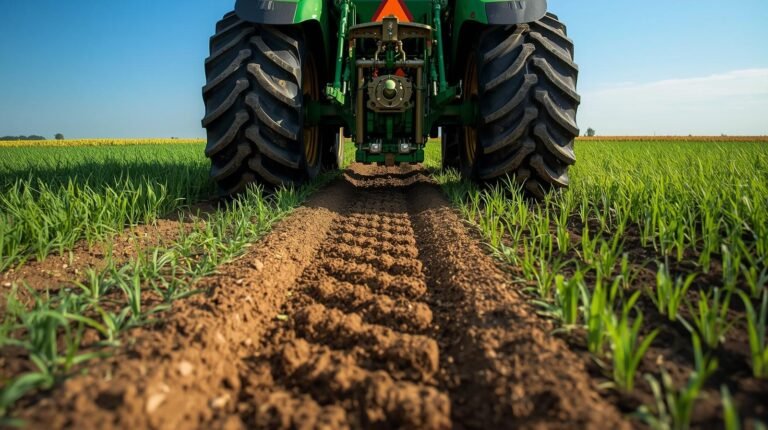
Every time a tractor rolls across a field, it leaves more than just tyre tracks. Invisible to the naked eye, the pressure exerted by heavy agricultural machinery compresses the soil beneath, squeezing out the air and water that crops depend on to thrive.

Soil compaction is one of the most damaging — and most underestimated — threats to modern agricultural productivity. The good news? One of the most effective weapons against it is already sitting under your tractor: the right set of wide tyres.

This article explores the science behind soil compaction, why tyre width matters more than many farmers realise, and how modern wide and ultra-flexion tyre technology is giving growers a practical, cost-effective route to healthier soils and higher yields.

What Is Soil Compaction and Why Does It Matter?

Soil compaction occurs when soil particles are pressed together, reducing the pore space between them.

These pores are not empty — they are filled with air and water, and they serve as the highway system through which plant roots travel, water drains, and beneficial microorganisms live.

When compaction crushes these channels, the consequences cascade rapidly through the entire farming system.

The key effects of compacted soil include:

  • Reduced water infiltration, causing increased runoff, surface waterlogging, and erosion
  • Poor root penetration, limiting a plant’s access to nutrients and moisture deeper in the profile
  • Decreased soil aeration, which starves roots of oxygen and suppresses microbial activity
  • Increased disease risk, as waterlogged and poorly aerated soil creates ideal conditions for pathogens
  • Substantially reduced crop yields — a multi-state study found that deep compaction depressed corn and soybean yields by approximately 5% for over a decade after just a single compaction event

Compaction occurs in two zones. Surface compaction (the top 0–15 cm) is driven primarily by tyre inflation pressure and is the zone most influenced by tyre choice.

Subsoil compaction (15–60 cm and below) is driven largely by axle load and is far harder — sometimes impossible — to reverse without deep mechanical intervention. Getting tyre selection right is therefore most critical for protecting that vital upper soil layer.

The economic stakes are significant. Independent UK research from Adas estimates soil compaction damage costs between £600 and £1,200 per hectare — money spent on extra cultivations, fuel, remediation work, and lost yield potential.

With surveys suggesting 40–60% of UK soils are already in a moderate or degraded condition, the problem is industry-wide, not farm-specific.

The Physics of Pressure: Why Tyre Width Changes Everything

The relationship between tyre width and ground pressure is governed by straightforward physics: pressure equals force divided by area.

A tractor carrying a 4,000 kg rear axle load across a narrow tyre concentrates that enormous weight onto a small contact patch, driving intense pressure into the soil beneath.

Fit a wider tyre carrying the same load, and that force is spread across a much larger footprint — meaning each square centimetre of soil receives far less pressure.

Wide and large-volume tyres are engineered specifically to exploit this principle. Their purpose is to reduce ground pressure at the same load while providing equal or better traction, and to do so without altering the tractor’s overall rolling circumference or gearing.

In practical terms, this means a farmer can upgrade from standard tyres to wide-profile tyres without any drivetrain modifications — yet dramatically reduce the damage being done with every pass.

A wider tyre also produces a footprint that is longer and shallower rather than narrow and deep. This elongated contact patch distributes the load more like a caterpillar track than a knife blade, limiting both the depth and intensity of soil compression.

The result is less rutting, reduced structural damage to the upper soil horizon, and a field that requires less remediation work.

From Standard to Wide: A Practical Comparison

To put the numbers in context, consider a 200 hp tractor carrying a rear axle load of around 4,000 kg per tyre.

A conventional standard tyre running at field-appropriate pressures may exert 1.6 bar or more on the soil surface. Switch to a wide or large-volume tyre on the same axle — say, moving from a 480/70 R38 to a 600/65 R38 or 650/75 R38 — and that same load can be carried at pressures approaching 1.0 bar or below, a reduction of 30–40%.

The footprint grows, the ruts shrink, and the soil survives another season in better shape.

Manufacturers such as Michelin, Bridgestone, Continental, BKT, and CEAT now offer dedicated wide-volume series — names like OmniBib, MultiBib, MachXBib, and VT-Tractor — that pair increased width with strengthened casing construction.

These tyres are designed to hold their shape and load-carrying capacity even when run at reduced pressures, ensuring that the wider footprint is achieved without compromising durability or road performance.

IF and VF Tyres: Taking Wide Technology Further

Wide tyres are one part of the solution. Paired with Increased Flexion (IF) and Very High Flexion (VF) tyre technology, they become even more powerful tools for soil protection.

IF and VF tyres feature a reinforced single bead wire construction that allows the tyre sidewalls to flex far more than a conventional tyre.

This additional flex serves two purposes. First, it enables the tyre to carry significantly higher loads at the same inflation pressure — VF tyres can carry 40% more load than a comparable standard tyre at identical pressures.

Second, and more usefully for soil protection, it means the tyre can be run at dramatically lower pressures while carrying the same load.

VF tyres can operate at inflation pressures as low as 0.6–0.8 bar in field conditions, compared to 1.6 bar or more for standard tyres doing the same job.

That pressure reduction translates directly into a larger, flatter footprint and dramatically less soil stress.

Research by Harper Adams University in the UK, running from 2013 to 2017, demonstrated that VF tyre technology with properly optimised inflation pressures produced agronomic yield improvements of between 2% and 6% for key crops including wheat, corn, and soybeans.

Similar studies in Illinois and Brazil confirmed these findings. A 4% yield improvement across a large arable operation represents a genuinely meaningful return on a tyre investment.

A further advantage of VF tyres for sprayers and implements is that they eliminate the need to re-inflate between a full and empty tank.

Standard tyres must be inflated to handle the maximum loaded weight, which means they are over-pressured — and therefore more damaging — when the tank is half-full or empty. VF tyres have sufficient flex to carry the full load safely at a single low pressure throughout the entire operation.

The Compaction-Yield Connection: What the Research Shows

The scientific link between reduced soil compaction and improved crop performance is now well-established.

A comprehensive review published in the Journal of Biosystems Engineering found that over 20 years of field research consistently showed that lower tyre inflation pressure, wider tyre profiles, and reduced machinery weight improved soil structure, root development, and ultimately crop yield across diverse farming systems worldwide.

Crucially, research has shown that approximately 70–80% of compaction damage occurs on the very first pass of machinery across a field. After that first contact, the soil’s load-bearing capacity increases but its structure has already been disrupted.

This means that the right tyre setup is most valuable on the first pass — whether that is a tractor pulling a planter, a laden sprayer, or a grain cart following the combine at harvest.

The combine harvester deserves particular attention. Machines weighing between 25 and 40 tonnes — especially when the grain tank is full — are responsible for 50 to 85% of total field compaction across a cropping season, depending on soil type and moisture.

\Fitting combine headers and grain carts with wide flotation tyres, VF technology, or even dual-tyre configurations on heavily loaded axles is one of the highest-return investments a large arable farm can make.

Tyre Width vs. Tracks: Choosing the Right Solution

A common question is whether rubber tracks are preferable to wide tyres for compaction reduction.

The answer, as with most agronomic questions, is nuanced. Tracks do provide excellent flotation in very wet, muddy conditions and spread load across a longer contact area.

However, track machines are typically 20–30% heavier than their wheeled equivalents, and the load under the drive and idler wheels remains concentrated — tracks do not distribute weight uniformly.

Research from the University of Minnesota found that tractor tyres inflated to 6–7 psi (roughly 0.4–0.5 bar) ranked better for compaction management than tracked tractors in certain field comparisons.

Equally, a harvester fitted with 28-inch wide tyres inflated to 15 psi delivered minimal compaction in Ohio trials.

The conclusion is not that tracks are inferior, but that properly selected, wide, low-pressure tyres — particularly IF and VF variants — can match or outperform tracks in many real-world compaction scenarios, at considerably lower capital cost.

For deep subsoil compaction caused by very heavy axle loads, neither wide tyres nor tracks are a complete solution — reducing machine weight and axle loads through careful machinery specification remains essential.

But for the surface and upper subsoil compaction that wide tyres directly address, the evidence strongly supports investment in tyre width and low-pressure technology ahead of the heavier, more expensive track option.

Practical Steps for Farmers: Getting the Most from Wide Tyres

Switching to wider tyres is only effective if the wider footprint is actually achieved in the field. Here are the key practices to follow:

  • Run the lowest safe inflation pressure for field operations. Many experts recommend staying below 10 psi (0.7 bar) for in-field work where tyre technology allows. Consult the tyre manufacturer’s load-pressure tables for your specific axle weight.
  • Increase pressure for road transport. Running at field pressures on tarmac degrades tyre life rapidly and reduces handling. Central Tyre Inflation (CTI) systems automate this adjustment on the move.
  • Avoid field operations on saturated soil. No tyre, however wide, can fully protect soil at or near field saturation point. If the field is too wet, the most effective tool is patience.
  • Follow the same tracks where possible. Tramline or controlled traffic farming concentrates compaction to defined sacrifice zones and protects the rest of the field surface.
  • Monitor with a penetrometer. A simple cone penetrometer measures soil resistance in the field and helps you see where compaction is occurring and at what depth — invaluable data for justifying tyre investments.
  • Prioritise the heaviest machines. Combine harvesters, fully laden grain carts, and heavy sprayers cause the most damage. Upgrading the tyres on these machines delivers the largest compaction benefit.

 Invest in Your Tyres, Invest in Your Soil

Soil is the single most valuable asset on any farm. It takes decades to build and only one wet harvest to degrade.

Wide tyres — especially when combined with IF or VF flexion technology and disciplined inflation management — are not merely a tyre purchasing decision.

They are a soil management decision, a yield protection decision, and increasingly, an environmental compliance decision as regulators in many countries begin to scrutinise machinery-induced soil degradation.

The investment case is compelling. Wider tyres reduce compaction on the first pass — when it matters most.

VF technology cuts field inflation pressures by up to 40%. Multi-year field trials show yield gains of 2–6% from optimised tyre technology alone. And the savings on remediation — fewer cultivations, less fuel, less subsoiler time — begin accumulating from the very first season.

Modern farming is under pressure from every direction: input costs, weather variability, environmental regulation, and margin squeeze.

Wide tyre technology is one of the rare solutions that simultaneously addresses soil health, productivity, fuel efficiency, and sustainability.

If your current tyre setup is leaving compaction damage in every field it enters, the cost of upgrading may be far lower than the cost of doing nothing.


Key Takeaway
Research consistently shows that 70–80% of soil compaction happens on the first pass.
Fitting your heaviest machines with wide, low-pressure tyres — particularly
VF-rated technology — is the most cost-effective single action to protect
your soil and maintain long-term yield potential.

Also Read

Top Ultra High-Horsepower Tractors Reshaping Global Agriculture

Used Combine Harvester for Sale: What Farmers Should Check Before Buying

Top Ultra High-Horsepower Tractors Reshaping Global Agriculture


When the ground needs to turn in a single pass — across thousands of hectares, in shrinking weather windows, with fewer hands available — ultra high-horsepower tractors are no longer a luxury. They are the machinery of necessity.

Defined broadly as tractors rated at 400 horsepower and above, this elite class has exploded in capability over the past decade, with today’s flagship models pushing rated outputs beyond 800 hp and peak figures cresting 900 hp.

The companies building them — John Deere, Case IH, Fendt, New Holland, Versatile — are locked in one of the most technically sophisticated horsepower races in the history of farming.

This article profiles the most powerful production tractors available globally, examining their specifications, technologies, and the real-world economics that make them compelling choices for the world’s largest farming operations.

Why Ultra Horsepower Matters: The Case for Extreme Power

The argument for extreme horsepower is rooted in arithmetic. Modern farming operations — particularly in North America, Australia, Ukraine, and Brazil — frequently span several thousand hectares. Wider implements, faster field speeds, and fewer passes directly translate to lower cost per acre.

According to market analysts, mechanization enables plowing, sowing, and harvesting efficiency gains of 25 to 40 percent over manual alternatives, while advanced engines can reduce fuel consumption per hectare by up to 10 percent.

Labor shortages are accelerating this shift. In regions from the U.S. Corn Belt to the vast steppes of Eastern Europe, the pool of skilled farm operators is shrinking, making each machine — and each hour of optimal working conditions — more valuable.

Ultra high-horsepower tractors address this challenge by multiplying what a single operator can accomplish in a day, pulling wider implements, running at higher speed, and completing tasks that would otherwise require multiple smaller machines running simultaneously.

The global high-horsepower tractor market (typically defined as tractors above 250 HP) was valued at approximately USD 14.6 billion in 2024 and is projected to reach USD 23.6 billion by 2032, growing at a compound annual growth rate of 6.19 percent.

The broader agricultural tractor market, meanwhile, is on course to exceed USD 100 billion within the decade — a testament to how deeply mechanization has penetrated global food production.

1. John Deere 9RX 830 — The World’s Most Powerful Series-Production Tractor

No machine commands attention in modern agriculture quite like the John Deere 9RX 830. Unveiled at the 2024 Commodity Classic in Houston, Texas, it holds the title of the most powerful production tractor John Deere has ever built — and, at the time of writing, the most powerful series-production tractor in the world.

Specifications at a Glance

Rated horsepower: 830 hp | Peak horsepower: 913 hp | Engine: 18-litre JD18X inline-six | Torque: 4,234 Nm (3,123 lb-ft) | Transmission: e21 PowerShift or optional AutoPowr CVT | Track system: Four belts (30- or 36-inch options) | Maximum ballasted weight: 38,100 kg (84,000 lbs) | Price range: approximately USD 900,000 to $1.1 million

The 9RX 830 is built around the Stage V-compliant JD18X engine, a unit notable for operating without Diesel Exhaust Fluid (DEF) — relying instead on an Exhaust Gas Recirculation (EGR) system. For operators in remote regions, the elimination of AdBlue infrastructure is a practical advantage worth highlighting.

The four-track layout distributes the machine’s 25-tonne operating weight across a massive footprint, reducing ground pressure well below what many lighter wheeled tractors impose — a feature soil scientists and agronomists increasingly cite when arguing for track machines on prime arable land.

In the cab, operators find a fully digitized environment: a 12.8-inch G5 Plus CommandCenter, StarFire 7500 RTK receiver, JDLink telematics modem, AutoTrac automated steering, Section Control, and Variable Rate application technology.

The tractor ships as autonomy-ready, meaning John Deere’s second-generation autonomous kits — enabling 360-degree obstacle detection and remote monitoring via JDLink — can be fitted without major modifications.

In North America, a single 9RX 830 can pull a 24-row maize planter at 12 km/h; in Australia it drives 24-metre air seeders across paddocks that would take days longer with conventional equipment.

2. Case IH Steiger 785 Quadtrac — Tractor of the Year 2025

Case IH has long held a commanding presence in the ultra-high-horsepower segment, and the Steiger 785 Quadtrac — the newest and most powerful model in the Steiger lineup — underlines that heritage emphatically.

With a peak output of 853 horsepower, it sits directly behind the John Deere 9RX 830 in the production tractor rankings, and it carries the Tractor of the Year 2025 award in the HighPower Category, won at EIMA International 2024 in Bologna, Italy.

Case IH Steiger 715 Quadtrac — Proven Flagship

Before the 785 arrived, the Steiger 715 Quadtrac had redefined expectations in the segment. Rated at 715 hp with a peak output of 778 hp, its heart is the FPT Industrial C16 TST — a twin-stage turbine engine developed in direct collaboration with Case IH, delivering 15 percent more power than its predecessor. The fuel tank holds up to 520 gallons, maximizing field time between stops.

The Quadtrac system — now in its third decade of continuous development — uses four individually driven, positive-drive oscillating tracks.

The 2025 model year introduced a new heavy-duty suspended undercarriage, improving both operator comfort and weight distribution while boosting maximum roading speed to 26.5 mph.

AccuGuide auto-steering, AccuTurn autonomous headland management, and dual Pro 1200 displays complete a precision agriculture package designed for operations running the machine across multiple shifts and operators.

3. Fendt 1167 Vario MT — European Engineering at Its Peak

From AGCO’s German marque Fendt comes the 1167 Vario MT — the most powerful tractor in Fendt’s history, and the machine that has set the benchmark for European engineering sophistication in the super-high-horsepower class.

Rated at 664 hp continuous power, it is powered by a MAN six-cylinder engine displacing 16.2 litres, paired with Fendt’s legendary stepless Vario transmission.

What truly distinguishes the 1167 Vario MT from its rivals is the VarioDrive system, which distributes power independently between left and right tracks in real time, effectively eliminating slip and maximising tractive efficiency across uneven terrain.

The FendtONE control concept — encompassing three touchscreens, a freely assignable joystick, smartphone-style tile menus, and cloud connectivity — turns the cab into what Fendt describes as a digital workplace.

A particularly notable feature is TIM: Tractor Implement Management. Through TIM, a connected drill can actively control tractor speed to ensure optimal seed placement, removing human variability from one of the most precision-sensitive tasks in arable farming.

For operations focused on minimizing inputs while maximizing yield consistency, the 1167 Vario MT represents the current state of the art in European agricultural engineering.

The broader Fendt 1100 Vario MT Series spans four models from 511 to 673 hp, all powered by a 15.2-litre engine, giving large farming operations a genuine choice of power level within a consistent, familiar technology platform.

4. John Deere 9RX 620 and 9RX 770 — Tier Entry into the Four-Track World

Not every operation needs 830 rated horsepower. John Deere’s 9RX 620 (620 hp) and 9RX 770 (770 hp rated, 847 hp peak) serve as the entry and mid points to the four-track world, sharing the same chassis, hydraulics, and structural components as the flagship 830 model.

The 9RX 620 uses a proven Cummins QSX 15 engine and has become, in many markets, the first four-track tractor operators purchase — valued for its more moderate transport width, relatively lower price, and full access to John Deere’s smart farming ecosystem.

The 9RX 770 shares the new JD18X engine of the 830, with different mapping and fuel calibration.

Both models are capable of pulling 60-foot high-speed disks and are shipped as autonomy-ready platforms, forward-compatible with John Deere’s ongoing autonomous guidance systems.

5. Versatile 620 and 620DT — North American Heritage Power

Winnipeg-based Versatile occupies a distinctive position in the ultra-high-horsepower landscape.

Its wheeled 620 model delivers 616 hp through a Cummins X15 engine mated to a Caterpillar TA22 powershift transmission — a combination celebrated by North American farmers for mechanical simplicity and long-term durability.

The tracked DeltaTrack 620DT brings that same powertrain to a twin-track chassis for operations prioritising soil protection.

Versatile’s philosophy has always centred on straightforward, operator-serviceable engineering, and this distinguishes it from European and American rivals that increasingly embed deep software dependency into their drivetrain and precision ag systems.

For large grain and oilseed producers in the Canadian Prairies and the northern U.S., Versatile remains a compelling alternative to the dominant brands.

6. New Holland T9.700 — The Versatile Blue Giant

New Holland’s T9 Series represents CNH Industrial’s answer to the ultra high-horsepower challenge within its blue brand portfolio.

The T9.700 — the flagship — offers 645 hp from a cursor engine, available in both wheeled and tracked (T9.700 SmartTrax) configurations.

The T9 Series now ships with PLM Intelligence, New Holland’s suite of precision farming tools that encompasses auto-guidance, variable rate technology, fleet management, and connectivity with the Precision Land Management ecosystem.

For 2025, New Holland expanded T9 autonomy-compatible features, making its models capable of interfacing with third-party autonomous grain cart systems, a growing priority as labour-saving automation moves from the cab into the broader farmyard operation.

The Technology Race: Beyond Horsepower

Raw horsepower ratings, while headline-grabbing, tell only part of the story. The real competition among ultra-high-horsepower tractors is increasingly fought in the domains of precision guidance, telematics, autonomous operation, and data management.

All major producers now offer sub-inch RTK GPS guidance as either standard or optional equipment.

Autonomous headland turning — the ability of a tractor to reverse direction at the end of a field row without operator input — is available across John Deere, Case IH, and Fendt platforms, shaving meaningful time from each field pass.

John Deere’s second-generation autonomy kit, available as a retrofit for 2022 and newer 9R and 9RX tractors, brings 360-degree obstacle detection and enables unattended tillage operation on select field tasks — a development that has attracted significant attention from farm management companies running large-scale operations.

On the transmission front, continuously variable and stepless transmissions — Fendt’s Vario, John Deere’s AutoPowr, and New Holland’s Dual Command CVT — have matured into highly refined systems that maintain optimal engine load across variable terrain without driver intervention.

These transmissions work in concert with GPS and load-sensing hydraulics to ensure every litre of diesel is converted into effective field work rather than wasted in unnecessary gear changes or wheel spin.

Telematics platforms — JDLink, Case IH FieldOps, FendtONE — now allow fleet managers to monitor fuel consumption, idle time, fault codes, and field progress in real time from any connected device.

As farm operations scale and shift-based working becomes standard on flagship tractors, these data layers are no longer optional conveniences; they are operational necessities.

The Economics of Extreme Horsepower

The upfront cost of an ultra high-horsepower tractor is formidable. A John Deere 9RX 830 lists at approximately USD 1 million; a Fendt 1167 Vario MT at around EUR 650,000; a Case IH Steiger 715 Quadtrac at roughly USD 1.067 million. These are not figures that invite casual purchasing decisions.

Yet the economic case, spread across sufficient acreage, is compelling. Analysts suggest that on operations of 5,000 hectares or more, operating costs for a flagship four-track tractor land between USD 85 and USD 110 per hectare when calculated across a ten-year horizon — comparable to running three mid-size tractors with double the labour requirement.

Residual values on well-maintained track tractors remain robust beyond 10,000 operating hours, and manufacturer leasing programmes with strong buy-back provisions have made these machines accessible to a wider range of operations than ownership economics alone would suggest.

Some manufacturers now offer warranty packages covering up to 5,000 hours with no material cost contributions from the operator — a significant reduction in lifecycle financial uncertainty for what is often the most expensive single piece of equipment on a farm.

Global Market Outlook: Who Is Buying and Why

North America remains the home market for ultra-high-horsepower tractors, driven by Corn Belt operations averaging 600 hectares or more, where wider implements and labour productivity are the dominant decision factors.

John Deere reported an 18 percent year-over-year increase in high-horsepower tractor deliveries in recent fiscal years, capturing demand created by expansion in planter and combine widths that require greater drawbar pull.

Europe’s interest is shaped differently: Stage V emissions compliance, the European Green Deal’s target of a 25 percent reduction in agricultural emissions by 2030, and precision agriculture mandates are driving adoption of CVT-equipped, telematics-rich machines.

Germany and France jointly account for approximately 42 percent of European high-horsepower tractor shipments.

In the Southern Hemisphere, Australia’s vast grain-growing regions — where a single paddock can span what would be an entire farm in many European countries — represent some of the highest utilisation environments in the world for flagship tractors.

Ukrainian and Russian large-scale agricultural operations have historically been significant consumers of ultra-high-horsepower equipment, though geopolitical disruption has reshaped procurement patterns considerably since 2022.

Brazil’s expanding agricultural frontier, particularly in the Cerrado and Mato Grosso regions, is seeing increasing adoption of high-horsepower four-wheel drive and tracked machines as soybean and maize production scales to meet global demand. Latin America as a whole is emerging as one of the faster-growing markets for this equipment class.

Conclusion: Power with Purpose

The ultra high-horsepower tractor is not a vanity product. It is a calculated response to the compounding pressures of labour scarcity, input cost volatility, shrinking planting windows, and the relentless demand for more food from a finite amount of productive land.

The John Deere 9RX 830, Case IH Steiger 785 Quadtrac, Fendt 1167 Vario MT, Versatile 620DT, and New Holland T9.700 represent the current pinnacle of what production engineering can achieve in this space — machines that combine jaw-dropping power with sophisticated digital intelligence.

The horsepower race is far from over. Manufacturers are already integrating autonomous capabilities, hybrid powertrains, and AI-assisted precision agriculture into tractors that will make today’s flagships look conservative within a generation.

What will not change is the fundamental equation: in large-scale agriculture, time is the scarcest resource of all, and the machines that compress the most productive work into the fewest hours will continue to define the future of global food production.

Also Read

Top 10 Tractors of 2026: A Comprehensive Guide

Kenya’s Walking Tractor Revolution: Affordable Mechanization for Smallholder Farmers

South Africa’s Farm Equipment Market Braces for a Tale of Two Halves in 2026


Johannesburg, South Africa — March 6, 2026-South Africa’s agricultural machinery sector has opened 2026 on a confident note, but the industry’s own leadership is urging caution: what lies ahead may be determined less by balance sheets than by rainclouds.

The South African Agricultural Machinery Association (SAAMA) is forecasting a year split firmly down the middle — a strong first half buoyed by last season’s momentum, followed by a second half whose fate rests almost entirely on how well the current summer crops come in.

“We are optimistic that we can continue on this path through 2026, as the cost of capital remains affordable and the sector is likely to deliver another year of ample harvests,” SAAMA chairperson Willie Human said in late 2025. But as the new year unfolds, the qualification to that optimism is growing louder.


A Record Year Sets a High Bar

To understand why 2026 feels precarious, it helps to appreciate just how exceptional 2025 was.

South Africa sold 7,668 tractors in 2025 — a 19% jump on 2024 — while combine harvester sales rose 3% to 207 units.

The numbers capped a remarkable turnaround for a sector that had been battered by drought, rising input costs, and weak commodity prices through much of 2024, when poor harvests and mounting farmer debt had caused tractor purchases to slump sharply.

The recovery was driven by a confluence of favourable forces: two consecutive bumper harvests, interest rate cuts that made equipment financing more accessible, improved port efficiencies, and stronger farmer balance sheets following solid crop revenues.

January 2026 kept the momentum alive, with 517 tractors sold — 13% more than January 2025.

“The strong start to 2026 follows a robust performance in 2025,” said Wandile Sihlobo, chief economist at the Agricultural Business Chamber of South Africa (Agbiz), noting that expanded summer grain and oilseed plantings — covering 4.54 million hectares, up 2% from the previous season — had supported continued investment confidence.


The “Mixed Bag” Problem

Yet even as the January data landed positively, Human’s language had shifted to something more cautious.

The 2025-26 summer cropping season, he said, had been “a mixed bag.” Uneven rainfall distribution across regions had produced starkly different planting outcomes.

Some farmers were well placed; others were still waiting. “Overall, the summer crops are looking good, but farmers will only know their production once these crops have been harvested,” he said in February.

That uncertainty matters enormously for machinery sales — and it explains SAAMA’s split-year forecast.

The first half of 2026 is well supported. Farmers who enjoyed a strong 2024-25 season are entering the year with improved cash flows, and the pipeline of deferred investment decisions from the lean years of 2023 and 2024 continues to feed demand.

Equipment dealers are reporting healthy stock levels across multiple categories, and competition among manufacturers remains intense, which is keeping pricing competitive.

But the second half is a different calculation altogether.


Why the Second Half Is Hostage to the Harvest

For South Africa’s commercial farming sector, machinery purchasing decisions are deeply cyclical — and they are made, above all, when farmers know what their crops have yielded and what commodity prices have paid them for it.

The harvest outcome determines cash flow. Cash flow determines whether a farmer upgrades a tractor, replaces a worn combine, or sits on their hands for another season.

The Crop Estimates Committee’s first official forecast for the 2025-26 summer season, released in late February, gave the market its first concrete data point — and it was sobering.

South Africa’s maize harvest is projected at 16.13 million metric tons, down 3% from the 16.65 million tons harvested the previous season.

The decline reflects mixed yield conditions across key producing provinces including the Free State, Mpumalanga, and North West, where some regions have experienced dry spells that have curtailed yield potential.

Importantly, a harvest of 16.13 million tons remains well above South Africa’s domestic maize requirement of around 12 million tons annually, meaning the country will still export surplus grain.

But it is a step back from the historic high of the previous season — and in a market as sentiment-driven as farm equipment, a “slightly lower than last year” harvest can translate quickly into “let’s hold off on that new tractor.”

Softening commodity prices add another layer of complexity. Global crop prospects have been broadly favourable, which has weighed on grain prices internationally.

For South African farmers who saw excellent volumes in 2025 but received lower prices per ton, the net income picture is more complicated than the raw production numbers suggest.


The Variables That Could Tip the Scale

Human has outlined three factors that will largely determine whether 2026 fulfils or disappoints SAAMA’s cautious optimism:

Harvest size. The summer crops are still being harvested. Each monthly revision from the Crop Estimates Committee through April and May will sharpen the picture. If yields recover from early estimates, farmer confidence will recover with them.

Commodity prices. Maize, soybeans, sunflower, and wheat prices on both local and international markets will determine how much money flows back to farmers after harvest. Softening prices can erode the benefit of a good yield, while any supply disruption globally could quickly swing things back in farmers’ favour.

Interest rates. The South African Reserve Bank’s rate cycle has been a significant tailwind for the sector.

Affordable financing has allowed farmers to take on equipment purchases they might have deferred in tighter credit conditions. Any reversal — or stalling — of the rate-cutting cycle could dampen demand in the second half.

There is also the external wildcard of trade policy.

Agbiz’s Sihlobo welcomed the extension of the African Growth and Opportunity Act (AGOA) through December 2026, describing it as important support for South African agricultural exports, even as he acknowledged that US tariff measures have complicated some of the agreement’s benefits for local farmers.


What the Dealers Are Watching

On the ground, equipment dealers are navigating a fine balance between the momentum of 2025 and the uncertainty of 2026’s second half.

Stock levels in some machinery categories remain elevated — a legacy of the aggressive restocking that occurred as the 2025 boom took hold.

Human noted as early as October 2025 that “strong competition in the market, with stock levels in some machinery categories remaining high,” had characterised the trading environment.

That inventory overhang means dealers have less pricing power than they might otherwise enjoy, and any softening of demand could create pressure on margins.

At the same time, the underlying structural case for investment remains compelling. South Africa’s agricultural machinery market is projected to grow from around $910 million in 2025 to $1.21 billion by 2030.

The precision farming technology wave — GPS-guided machinery, telematics, autonomous systems — is driving a replacement and upgrade cycle that is not entirely dependent on any single season’s harvest outcome.


The Historical Lesson

SAAMA’s caution is informed by recent memory. The 2023-2024 cycle was a vivid reminder of how quickly the sector’s fortunes can reverse.

“We had an excellent 2023, and during the October planting season, things looked promising,” Human told Farmer’s Weekly in September 2025. “But then we had the drought in February 2024… This led to a big decrease in tractor sales because of poor harvests and debt.”

The lesson the industry drew from that episode is that no upswing should be taken for granted — and that the gap between a good first quarter and a strong full year can be bridged, or broken, by weather events that no one can fully predict.


The Verdict

South Africa’s farm equipment market enters 2026 in a position of relative strength — but also relative vulnerability. The first half looks solid, underpinned by strong 2025 momentum, healthy farmer balance sheets, accessible financing, and growing planting ambitions.

The second half is an open question, suspended between a harvest that is still being collected and commodity markets that remain volatile.

SAAMA’s split-year forecast is, in essence, an honest acknowledgment that in South African agriculture, the machines follow the rain — and the rain, as ever, has its own schedule.

South Africa’s next tractor sales data from SAAMA is expected in early April 2026, covering February and March figures.

Also Read

New Holland Unveils Autonomous R4 Robot Series, Signaling a New Era for Specialty Crop Farming

Fendt Unveils 800 Vario Gen5: A New Era for High-Horsepower Tractors

Fendt Unveils 800 Vario Gen5: A New Era for High-Horsepower Tractors

0

Cape Town, South Africa — March 6, 2026 — Fendt has officially launched the 800 Vario Gen5 — the most comprehensively redesigned tractor in the brand’s history — at Agritechnica 2025 in Hanover, Germany.

The all-new fifth generation of the iconic 800 series represents a ground-up reinvention, introducing technologies previously reserved for Fendt’s larger flagship models and pushing the boundaries of what farmers and contractors can expect from a tractor in the 260 to 343 horsepower class.

Three models make up the new lineup — the 826, 829, and 832 Vario — each available in Power+, Profi, and Profi+ specifications.

With a power boost of up to 23 hp on demand via Fendt’s DynamicPerformance system, the range effectively spans all the way to 343 hp, making it one of the most versatile tractor families on the market.

A Brand-New Engine at the Heart of It All

The Gen5’s most significant technical achievement is its powertrain. The 800 Vario Gen5 is the first tractor in the world to be equipped with the new AGCO Power CORE80 engine — an 8.0-litre, six-cylinder unit that represents a clean-sheet design built with future fuels firmly in mind.

The CORE80 produces a maximum of 252 kW (343 hp) and a staggering 1,680 Nm of torque, available from just 1,200 rpm.

The rated engine speed is a low 1,700 rpm, but the real-world working range sits between 1,100 and 1,400 rpm — a philosophy Fendt calls the iD low-speed concept. This approach delivers high torque at lower revs, reducing fuel consumption, cutting noise, and lowering engine wear simultaneously.

On the road, the numbers are equally impressive. The 800 Gen5 reaches 40 km/h at just 950 rpm, 50 km/h at 1,200 rpm, and its top speed of 60 km/h at only 1,450 rpm.

The CORE80 is also approved for HVO100 and alternative fuels under DIN 15940, positioning the tractor as a forward-thinking investment for farmers who want to reduce their carbon footprint without compromising on performance.

VarioDrive Comes to the 800 Series — A First

Perhaps the most headline-grabbing mechanical upgrade is the arrival of VarioDrive in the 800 series for the very first time.

Originally introduced on the flagship Fendt 1000 Vario back in 2014, VarioDrive is a single-stage continuously variable transmission featuring permanent, independent four-wheel drive.

Unlike conventional systems, VarioDrive independently drives the front and rear axles, eliminating the need for manual shifting between field and road and delivering maximum traction in all conditions.

A notable benefit is the pull-in turn effect: the independently driven front axle actively pulls the machine into turns, reducing the turning circle and cutting compaction. Fendt’s VarioGrip tyre pressure control system adds further ground protection.

Impressive Payload and Practical Capability

The Gen5’s engineers have also prioritised real-world practicality. The tractor has a low operating weight of 9.9 tonnes but a permissible overall weight of up to 17.5 tonnes, delivering a payload of 7.6 tonnes — one of the best in its class.

This opens up implement combinations that were previously off-limits, including working legally with a precision seed drill and front tank combination, or transporting a front-rear mower combination.

Hydraulic capability is equally strong. The new generation features a system with up to eight valves (6+2) and a flow rate of up to 385 litres per minute.

Profi and Profi+ models can run up to six rear hydraulic control units, with up to two additional front units.

Safety and Handling: Raising the Bar

Fendt has packed the 800 Gen5 with a comprehensive suite of safety and chassis technology.

Fendt Reaction self-centring steering, Fendt Stability Control (FSC), and a Trailer Brake Assistant (TBA) work together to keep operators safe across demanding terrain.

The TBA is particularly noteworthy: when coupled to a sprayer or pneumatically braked trailer, it actively prevents jack-knifing and drifting on undulating land.

A new HighSpeed Guidance system allows for cruise control at speeds up to 40 km/h, while an optional exhaust brake — used in conjunction with the hydraulic auxiliary brake — gives added confidence on steep descents.

A Cab Built for the Modern Operator

The interior of the Gen5 has been substantially overhauled. The new SuperComfort Titanium leather seat — electrically adjustable in multiple dimensions — offers climate control, multi-stage heating, four-way lumbar support, adjustable side bolsters, and a massage function.

It is a seat designed not just for comfort, but for the physical demands of long working days.

Apple CarPlay integration is also coming to the tractor’s software, slated for a June 2026 update — a clear signal that the boundaries between agricultural machinery and consumer technology are continuing to blur.

The cab is available in two lighting variants — Vision and UltraVision — with eight or twelve roof-mounted LED spotlights respectively.

The full UltraVision package delivers a remarkable 114,700 lumens across a 360-degree field of illumination, with GroundVision LED spotlights in the fenders specifically targeting the rear implement area. For operators working through the night, visibility has never been better.

Availability and Pricing

The Fendt 800 Vario Gen5 was made available to order from autumn 2025. In the UK market, list prices start at £313,403 for the 826, rising to £326,893 for the 829, and £341,950 for the top-specification 832.

These figures reflect the tractor’s positioning as a premium machine — one engineered to compete at the very top of the market.

For contractors and large arable operations looking for a machine that combines cutting-edge technology, genuine fuel efficiency, and a transformed operator environment, the Fendt 800 Vario Gen5 will be difficult to ignore.

Also Read

New Holland Unveils Autonomous R4 Robot Series, Signaling a New Era for Specialty Crop Farming

Africa’s Largest Tire Factory Could Reshape Agricultural Equipment Supply Chains Across the Continent


New Holland Unveils Autonomous R4 Robot Series, Signaling a New Era for Specialty Crop Farming

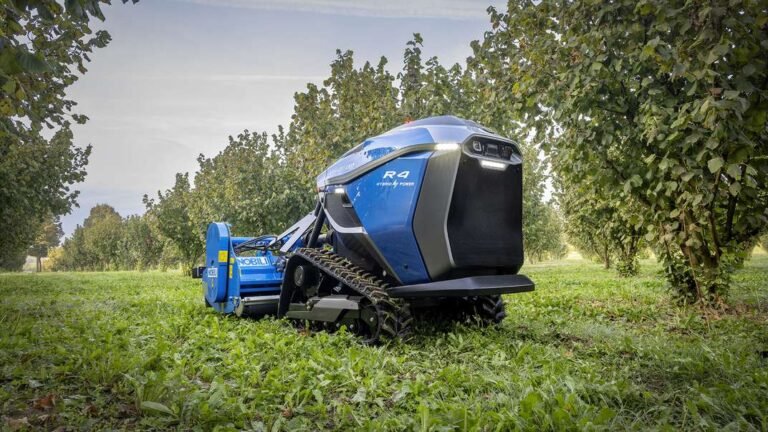
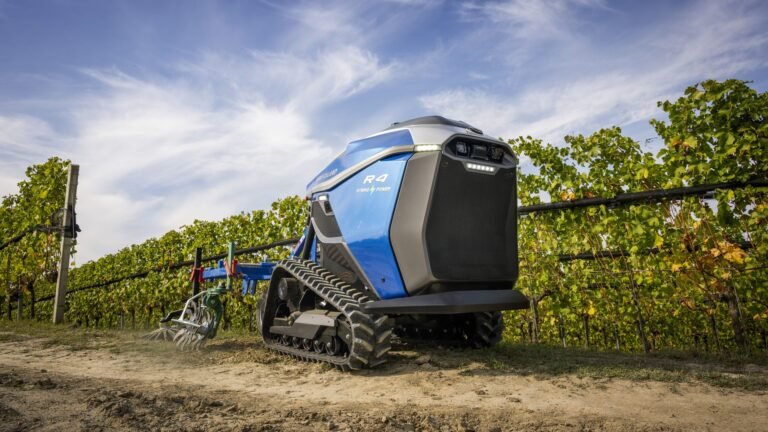
New Holland has introduced its Autonomous R4 Robot Series, a next-generation agricultural robotics platform designed to tackle labour shortages, reduce emissions, and transform farming operations in vineyards, orchards, and specialty crop sectors.

The unveiling of the R4 concept highlights the accelerating shift toward driverless farm machinery, a trend that could redefine how high-value crops are produced globally.

Two Autonomous Robots for Modern Farming

The R4 platform consists of two models tailored for different farming environments:

  • R4 Electric Power – a compact, fully electric robot designed for narrow vineyards

  • R4 Hybrid Power – a hybrid diesel-electric machine built for orchards and larger specialty crop farms

Both machines are designed to perform repetitive tasks such as mowing, tillage, and spraying without a human operator, allowing skilled workers to focus on higher-value activities like crop management and data analysis.

Advanced Autonomous Technology

The R4 robots are controlled via a mobile application and rely on a combination of GPS, LiDAR, and vision cameras for navigation and precision task execution.

This sensor fusion enables the machines to operate autonomously in complex environments such as vineyards with narrow rows and orchards with dense canopy structures.

New Holland says the robots can integrate with existing implements and use an intelligent electric drivetrain to power tools without hydraulic oil, reducing maintenance needs and environmental impact.

Key Technical Features

R4 Electric Power

  • Powered by a 40 kWh battery pack

  • Compact design for 1.0–1.5 m row spacing

  • Weighs about 1 tonne

  • Zero-emission operation for sustainable agriculture

R4 Hybrid Power

  • Combines a 59 hp diesel engine with electric generator technology

  • Can run on vegetable-oil-based fuels to cut carbon emissions

  • Offers extended autonomy and double-pass coverage for large orchards

  • Capable of fully electric operation for quiet, zero-emission tasks

Both models feature rubber-track drive systems to reduce soil compaction and improve traction, a critical factor for specialty crops.

Addressing Labour and Sustainability Challenges

The R4 Robot Series was developed to help farmers overcome key industry challenges such as skilled labour shortages and the demand for more sustainable food production.

New Holland says high-value crops require intensive, repetitive labour, especially during peak seasons, making them ideal candidates for automation.

By automating routine operations, growers can reduce operational costs while improving consistency and productivity.

A Step Toward Fully Autonomous Farms

Although initially targeted at vineyards and orchards, the technology behind the R4 robots could eventually expand to row-crop farming, including cereals and oilseeds.

Industry experts believe autonomous platforms like R4 could complement or even replace traditional tractors in specific tasks, especially in precision agriculture environments.

New Holland has showcased the R4 robots at major agricultural technology events, where they have attracted strong interest from growers and agri-tech stakeholders worldwide.

What This Means for African Agriculture

For Africa, where labour shortages, rising fuel costs, and sustainability pressures are increasing, autonomous robots could offer a transformative solution—particularly for high-value export crops such as grapes, avocados, and citrus.

However, high upfront costs, infrastructure needs, and technical skills requirements may limit immediate adoption, suggesting a gradual rollout starting with commercial farms and agribusiness estates.

Also Read

Robots Replacing Tractors: The Future of Autonomous Farming

Top Smart Irrigation Systems for African Farms

Robots Replacing Tractors: The Future of Autonomous Farming


For more than a century, the tractor has been the defining symbol of modern agriculture.

It replaced the ox and the draft horse, multiplied the productive capacity of a single farm worker, and enabled the industrialization of food production at a global scale.

Yet despite its enduring dominance, the tractor — and the human operator sitting in its cab — is no longer the apex of agricultural innovation.

A new generation of autonomous farming robots is emerging from research labs, Silicon Valley startups, and the R&D divisions of the world’s largest agritech companies. These machines do not merely automate tractor functions.

They fundamentally reimagine how fields are monitored, managed, and harvested — operating continuously, gathering granular data, and executing precision interventions that no human-driven machine can match.

According to a 2023 report by the Food and Agriculture Organization of the United Nations (FAO), global food demand is projected to increase by roughly 50 percent by 2050, while arable land and freshwater resources remain constrained.

Meanwhile, agricultural labor shortages are accelerating across North America, Europe, and parts of Asia. These converging pressures are creating an urgent and commercially viable market for autonomous farming technology.

This article examines how agricultural robotics is evolving, what technologies are powering the transition, which players are leading the industry, and what the shift from tractors to robots means for farmers, rural economies, and global food security.

From Tractors to Robots: The Evolution of Farm Machinery

The Tractor’s Reign

The internal combustion tractor, commercialized in the early twentieth century, was itself a disruptive technology.

It displaced millions of farm workers and draft animals, enabling a small number of operators to cultivate vast acreages. By the mid-twentieth century, mechanization had transformed agriculture in the developed world, dramatically raising yields and reducing the cost of food production.

Subsequent decades brought incremental improvements: diesel engines, hydraulic systems, GPS auto-steer, and telematics.

John Deere’s introduction of precision agriculture tools in the 1990s marked a turning point, embedding data and connectivity into farm equipment for the first time. Yet these advances all shared a common assumption — that a skilled human operator would remain in the cab, making real-time decisions.

The Shift to Autonomy

The limitations of that assumption have become increasingly apparent. Human operators fatigue, require rest periods, and command rising wages.

They are also prone to suboptimal decision-making under the cognitive load of managing complex, variable field conditions across long working days.

And for routine, repetitive tasks — applying herbicides, scouting for disease, thinning fruit — human labor is simultaneously expensive, slow, and insufficiently precise.

Three technological breakthroughs have converged to make autonomous farm machinery viable at commercial scale: the maturation of artificial intelligence and computer vision capable of interpreting field conditions in real time; the availability of centimeter-accurate GPS positioning through Real-Time Kinematic (RTK) systems; and the dramatic cost reduction of sensors, processors, and actuators that followed the consumer electronics and automotive industries’ investment in autonomous vehicle technology.

The result is a rapidly maturing ecosystem of autonomous farming robots that spans everything from fully driverless tractors to centimeter-scale weeding robots operating as coordinated swarms.

Types of Autonomous Farming Robots

Autonomous Tractors and Retrofit Kits

The most straightforward category of agricultural robotics involves removing the human operator from the tractor cab while preserving the machine’s established utility.

John Deere’s 8R Autonomous Tractor, commercially released in 2022, uses six pairs of stereo cameras combined with machine learning to navigate fields, avoid obstacles, and execute tillage and planting tasks without a driver.

Operators monitor and manage the machine remotely via a smartphone application.

CNH Industrial, the parent company of Case IH and New Holland, has pursued a parallel strategy through its Project Monarch concept — a compact, electric autonomous tractor designed to execute specialized tasks in orchards and vineyards.

Startup Monarch Tractor (no relation to CNH’s project) has commercialized a 40-horsepower electric autonomous tractor aimed at specialty crop producers, pairing autonomy with an emissions-free drivetrain.

For farmers unable or unwilling to invest in new autonomous hardware, retrofit autonomy kits offer an alternative.

Companies including Sabanto, Raven Industries (acquired by CNH), and Naio Technologies offer hardware-software packages that can be installed on existing tractors, adding GPS-guided autonomous operation without replacing the underlying machine.

Small Field Robots: Weeding, Spraying, and Harvesting

Some of the most technically sophisticated autonomous farming robots are not large machines at all. Small field robots — typically weighing between 50 and 500 kilograms — operate between crop rows, performing tasks that benefit from precision at the individual plant level.

Carbon Robotics’ LaserWeeder uses AI-guided lasers to destroy weed plants at a rate of up to 100,000 per hour without herbicides.

The machine can distinguish target crops from weeds with accuracy exceeding 99 percent, according to the company’s published field trial data. Fendt’s Xaver system deploys swarms of small, seed-planting robots that distribute field operations across dozens of lightweight units simultaneously.

In harvesting, companies including Abundant Robotics (apple picking), Agrobot (strawberries), and FFRobotics have developed robotic arms capable of identifying and picking ripe fruit without damaging the crop.

While harvesting robotics remains technically challenging — fruit identification and gentle manipulation are computationally and mechanically demanding — commercial deployments are increasing, particularly in labor-scarce markets.

Swarm Robotics

Swarm robotics, in which large numbers of small autonomous agents coordinate to complete field-scale tasks, represents one of the more transformative concepts in agricultural robotics. Rather than using one large machine, swarm systems distribute work across many small units operating in parallel.

This approach offers several advantages: smaller robots compact soil less than heavy tractors, individual unit failures do not halt operations, and the system can adapt dynamically to changing field conditions.

The Small Robot Company, based in the United Kingdom, has pioneered a swarm-based approach it calls ‘per plant farming.’

Its Tom, Dick, and Harry robots handle scouting, non-chemical weeding, and micro-dosing respectively — a division of labor across specialized machines that mirrors modern industrial production logic applied to crop management.

Vineyard and Orchard Robots

Specialty crop environments — vineyards, orchards, and berry fields — present unique challenges for autonomous machinery due to irregular terrain, fragile crops, and complex canopy structures.

New Holland’s NHDrive autonomous concept and dedicated vineyard robots from companies including Naïo Technologies, Vitirover (autonomous mowing), and Pek Automotive have been developed specifically for these environments.

New Holland’s R4 concept tractor, designed for vineyard operations, pairs autonomous navigation with modular tool attachment systems capable of executing multiple tasks — canopy management, spraying, soil cultivation — in sequence without manual intervention.

Pilot deployments in European wine regions have reported labor cost reductions of 30 to 40 percent for routine vineyard operations.

Key Technologies Powering Autonomous Farming

Artificial Intelligence and Machine Vision

At the core of autonomous farming robots is the ability to perceive and interpret the agricultural environment.

Modern field robots use convolutional neural networks and transformer-based vision models trained on millions of labeled agricultural images to distinguish crop species, identify disease symptoms, assess fruit ripeness, and detect obstacles in real time.

The training data for these models has improved dramatically as commercial deployments have expanded.

Carbon Robotics’ LaserWeeder, for example, draws on a proprietary dataset of more than a billion plant images accumulated across commercial field deployments — a competitive moat that makes its models significantly more accurate than those of newer entrants.

GPS and RTK Navigation

Reliable autonomous navigation in agricultural fields requires positioning accuracy to within a few centimeters — far beyond what standard GPS can provide.

RTK (Real-Time Kinematic) GPS systems achieve this by comparing signals from a moving receiver against those from a fixed base station, correcting for atmospheric and satellite errors in real time.

Combined with inertial measurement units and wheel odometry, RTK positioning enables autonomous tractors to maintain sub-inch accuracy across field transects — a precision that is, in practice, superior to human-guided operation.

LiDAR and Sensor Fusion

LiDAR (Light Detection and Ranging) sensors generate high-resolution three-dimensional maps of the environment around an autonomous machine, enabling obstacle detection, terrain modeling, and crop canopy analysis.

When combined with RGB cameras, multispectral sensors, and thermal imaging in a sensor fusion architecture, LiDAR data gives autonomous robots a comprehensive situational awareness that exceeds human perceptual capabilities, particularly in low-light or dusty conditions.

Electric Drivetrains and Robotics Platforms

The shift from diesel to electric powertrains is enabling a new generation of autonomous farming robots characterized by lower operational costs, reduced noise and vibration (which can disrupt sensor readings and animal welfare), and compatibility with precision actuators that require stable electrical power.

Battery technology improvements and the emergence of on-farm solar charging infrastructure are gradually extending the operational range of electric field robots to commercially viable levels.

Cloud-Based Farm Management and Data Analytics

Autonomous farming robots generate enormous volumes of field data — crop health indices, soil moisture readings, weed pressure maps, yield estimates.

The commercial value of this data depends on the ability to aggregate, analyze, and translate it into actionable management recommendations.

Cloud-based farm management platforms, including those offered by Climate Corporation (now part of Bayer), Trimble Agriculture, and CNH’s AFS Connect, are evolving to serve as the operational intelligence layer above autonomous hardware — synthesizing field data with weather forecasts, commodity price signals, and agronomic models to optimize planting, irrigation, and harvest decisions.

Benefits of Robots Over Traditional Tractors

Labor Savings and Productivity Gains

Agricultural labor costs have risen sharply across major farming economies over the past decade.

In the United States, the average hourly wage for farm workers has increased by more than 50 percent since 2010, according to USDA data.

Autonomous robots address this pressure directly: a single operator can supervise multiple autonomous units simultaneously, multiplying effective output per labor dollar.

A McKinsey Global Institute analysis of automation potential in agriculture estimates that 40 to 60 percent of existing farm labor tasks are technically automatable using technologies that are either currently available or in late-stage development.

Autonomous robots do not take breaks, do not require overtime pay, and can operate through the night — advantages that translate directly into higher throughput during time-critical planting and harvest windows.

Precision Agriculture and Reduced Chemical Use

Perhaps the most economically and environmentally significant advantage of autonomous farming robots is their ability to apply inputs — seed, fertilizer, pesticide, water — with a precision that large, human-operated machinery cannot match.

While a conventional tractor-mounted sprayer blanket-applies herbicide across entire fields, autonomous weeding robots treat individual weed plants.

Carbon Robotics estimates that its LaserWeeder reduces herbicide application by up to 95 percent compared with conventional broadcast spraying on fields where it is deployed.

This precision has cascading benefits: lower input costs, reduced chemical runoff into waterways, smaller environmental regulatory exposure, and — increasingly — premium market access for produce grown with documented reduced-chemical protocols.

24/7 Operations and Efficiency

Planting and harvest windows are often narrow, determined by weather patterns and crop physiology. The inability to operate continuously through these windows can materially reduce yields and revenue.

Autonomous robots, which do not require rest periods, can execute field operations around the clock during critical periods — a capability that is particularly valuable in regions with unpredictable growing seasons.

Sustainability and Lower Emissions

Electric autonomous robots emit no direct greenhouse gases during operation.

Their lighter weight relative to conventional tractors reduces soil compaction, which degrades soil structure and reduces water infiltration over time — a long-term yield penalty that conventional farming systems rarely quantify but that agronomists have documented extensively.

The combination of lower emissions and reduced soil compaction positions autonomous robotic farming as a structural contributor to agricultural sustainability strategies.

Challenges and Barriers to Adoption

High Upfront Costs

The primary barrier to autonomous farming robot adoption is cost. John Deere’s 8R autonomous tractor system carries a list price exceeding $500,000 — an investment that is uneconomical for all but the largest row crop operations.

Small field robots, though less expensive individually, require multiple units to achieve field-scale coverage, and the cumulative cost of a swarm deployment can be similarly prohibitive.

Cost reduction is occurring — battery costs, sensor costs, and processing costs have all declined materially over the past five years — but the pace of decline in agricultural robotics lags that of consumer electronics.

Deloitte’s 2024 AgTech Investment Outlook report projects that autonomous farming hardware costs will fall by 30 to 40 percent by 2030 as manufacturing volumes increase, but parity with conventional tractor economics remains a medium-term rather than near-term prospect for most farm types.

Infrastructure and Connectivity Requirements

Autonomous farming robots depend on reliable high-speed connectivity for remote monitoring, software updates, and cloud-based analytics.

In many agricultural regions, particularly in emerging markets and remote rural areas of developed economies, cellular and broadband connectivity remains inadequate.

Low-Earth orbit satellite networks, including Starlink and Amazon’s Kuiper, are beginning to address this gap, but widespread agricultural connectivity is still years away in many markets.

Regulatory and Safety Concerns

Autonomous agricultural machinery operates in environments shared with farm workers, livestock, and members of the public.

Regulatory frameworks governing the safe operation of autonomous field robots are nascent and inconsistent across jurisdictions.

In the United States, the EPA and USDA have begun developing guidance frameworks, but comprehensive autonomous agricultural machinery regulations comparable to those governing autonomous highway vehicles do not yet exist.

This regulatory uncertainty creates liability exposure for early adopters and slows commercial deployment.

Farmer Trust and the Skills Gap

Agriculture is culturally conservative. Farmers who have operated tractors for decades are, understandably, cautious about delegating field operations to machines they do not fully understand and cannot easily repair themselves.

Autonomous robots require software expertise, data literacy, and familiarity with digital farm management platforms — skills that are not uniformly distributed across the farming population.

Leading agritech companies are responding with intensive training programs and support networks, but the skills gap remains a material adoption barrier, particularly among older farmers and in regions with limited access to technical education.

Cybersecurity and Data Ownership

Autonomous farming robots generate detailed operational data about fields, crops, and farming practices.

Questions about who owns this data — the farmer, the robot manufacturer, or the platform provider — remain contested and are subject to evolving legal frameworks.

The cybersecurity exposure of networked autonomous farm machinery is also a legitimate concern: a compromised autonomous fleet could be disabled during a critical harvest window, with significant economic consequences.

Impact on Farmers and Rural Economies

Workforce Transformation

The displacement of farm labor by autonomous robots is a societal reality that the agricultural industry and policymakers must address proactively.

Estimates of the scale of displacement vary widely. A 2022 Oxford Economics study projected that up to 1.5 million agricultural jobs in OECD countries could be automated by 2035, while creating significant demand for new roles in robot operation, maintenance, data analytics, and precision agronomy.

The transition is unlikely to be frictionless. Seasonal farm workers — often among the most economically vulnerable members of rural communities — face the most immediate displacement risk.

Workforce reskilling programs, supported by agritech companies, agricultural universities, and government agencies, will be essential to managing the social consequences of this transition.

Smallholder Farmers in Emerging Markets

The narrative of robots replacing tractors is largely framed around large-scale commercial farming in developed economies.

But the implications for the 500 million smallholder farms that account for approximately 70 percent of global food production — primarily in Africa, South Asia, and Latin America — are arguably more consequential.

Smallholder farmers typically lack access to even basic mechanization; the leap to autonomous robotics appears economically implausible.

Yet service-based deployment models — in which farmers lease access to autonomous robot fleets managed by agritech service providers, rather than purchasing equipment outright — are emerging as a potentially viable pathway.

Companies including Hello Tractor in Nigeria (which operates a tractor-sharing marketplace) and Mahindra’s agritech ventures in India are early indicators of service model innovation in emerging markets.

If autonomous robot fleets can be deployed economically as a service in smallholder contexts, the productivity gains could be transformative.

FAO estimates that closing the yield gap between smallholder and commercial farming operations could increase food supply in sub-Saharan Africa by 30 to 50 percent — a contribution that autonomous precision agriculture could meaningfully accelerate.

The Rise of Agritech Service Companies

The robot-as-a-service model is reshaping the competitive landscape of the agricultural equipment industry. Companies that previously competed on hardware — horsepower, reliability, dealer networks — are evolving toward software-defined service businesses.

John Deere’s strategic pivot toward data and autonomy services, articulated publicly by CEO John May, reflects the industry’s recognition that the long-term value in agricultural technology will accrue to companies that own the data layer, not just the hardware.

Future Outlook: Will Robots Fully Replace Tractors?

A Hybrid Future Through 2035

The complete replacement of tractors by autonomous robots is not imminent. For heavy tillage operations, large-scale grain harvesting, and tasks requiring significant drawbar pull, purpose-built large machinery will remain the economically rational choice for the foreseeable future.

The more accurate near-term prediction is a hybrid future: autonomous large tractors executing primary tillage and planting, complemented by fleets of small autonomous robots managing crop monitoring, weeding, spraying, and selective harvesting.

This division of labor plays to the comparative strengths of each platform type. Large autonomous tractors are efficient at covering ground rapidly with high-power implements. Small autonomous robots excel at precision interventions at the plant level.

The combination delivers productivity and precision advantages that neither system achieves independently.

Predictions for 2030–2040

Industry analysts project significant market expansion over the next fifteen years.

Allied Market Research estimates the global agricultural robot market will grow from approximately $12 billion in 2023 to more than $47 billion by 2030, representing a compound annual growth rate of around 21 percent.

By 2040, multiple analyst projections anticipate that autonomous equipment will account for the majority of new agricultural machinery sales in North America, Europe, and Australia.

The technological capabilities enabling this growth are on a clear improvement trajectory. AI model accuracy for crop and weed identification is improving rapidly. Battery energy density is increasing and cost is declining.

Sensor miniaturization is enabling capabilities in smaller, cheaper robots. And the accumulation of operational field data is compounding the accuracy and reliability of autonomous systems with each passing season.

AI-Driven Decision-Making and Fully Autonomous Farms

Looking further ahead, the integration of large language model reasoning with field sensor data and agronomic knowledge bases is beginning to enable a qualitatively new level of farm management autonomy.

Systems capable of synthesizing real-time field conditions, multi-season yield histories, weather forecasts, soil biology data, and commodity market signals to make end-to-end crop management decisions — without human involvement at the operational level — are in early development at several leading agritech research institutions.

Fully autonomous farms — in which AI systems manage the complete agronomic cycle from soil preparation through post-harvest storage — may be technologically feasible within fifteen to twenty years.

Whether they are socially, economically, and regulatorily viable within that timeframe is a more open question.

The barriers are less technical than institutional: data governance frameworks, liability regimes, rural workforce transition support, and public trust in autonomous food production systems will determine the pace of adoption as much as engineering capability.

The Intelligent Field

The tractor will not disappear. But the tractor as a symbol of agricultural modernity — a human-operated machine that imposes mechanical force on the land at scale — is giving way to a new paradigm: autonomous platforms that sense, reason, and act with a precision and continuity that redefines what a farming machine can be.

The transition from tractors to autonomous farming robots is not a single technological event but a multi-decade structural transformation, driven by the convergence of artificial intelligence, precision navigation, advanced sensing, and electric propulsion.

Its pace will be shaped by cost trajectories, regulatory development, connectivity infrastructure, workforce readiness, and the quality of business model innovation — particularly service-based deployment models that make autonomous technology accessible to farms of all sizes.

For agribusiness companies, the strategic implication is clear: the competitive landscape of agricultural equipment is being permanently reorganized around software, data, and autonomy.

Companies that treat robots and AI as extensions of existing hardware businesses will be outpaced by those that recognize the depth of the structural shift underway.

For farmers, the message is equally clear: autonomous farming technology is not a distant prospect but an accelerating commercial reality.

Engaging with it — through pilot deployments, service partnerships, and investments in digital farm management capabilities — is becoming a prerequisite for long-term competitiveness.

And for policymakers, the challenge is to ensure that the transformation delivers its economic and environmental benefits broadly — that smallholder farmers in emerging markets are not left further behind, that rural workforce transitions are managed with adequate support, and that the data and intelligence generated by autonomous farm systems serve the public interest as well as the private interests of the companies that develop them.

The field is changing. The machines that work it are becoming intelligent. And the farmers, companies, and governments that understand this transformation most clearly will be best positioned to shape what comes next.

Also Read

Precision planting: How seed drills supercharge maximum crop yield

The rise of smart farming: Precision tools for African Farms

Top 10 Agricultural Machinery & Grain Storage Innovations to Watch in 2025


The agricultural industry stands at a transformative crossroads, where cutting-edge technology meets centuries-old farming traditions.

As global food demand surges and climate challenges intensify, farmers are turning to revolutionary machinery and storage solutions that promise to reshape how we cultivate, harvest, and preserve our crops.

From autonomous robots that work tirelessly through day and night to smart grain storage systems powered by artificial intelligence, these innovations are not just improving efficiency—they’re securing our food future.

1. Autonomous Agricultural Robots: The 24/7 Workforce

The era of round-the-clock farming has arrived. Autonomous agricultural robots are transforming farm operations by working continuously without fatigue, dramatically increasing productivity while reducing labor dependency.

The Nexat gantry planter showcased at Agritechnica 2025 features a 28-metre-wide modular design that integrates cultivation, seeding, fertilization, and crop protection into one autonomous system, potentially reducing machinery costs by up to 20%.

Companies like AgXeed have deployed their T2 autonomous robot, which operates at 230 horsepower and can seed, mow, cultivate, and weed using lasers.

At approximately $340,000, these machines represent a significant investment, but early adopters report impressive returns.

Farmers using AgXeed’s autonomous technology report saving up to 90% on labor costs and cutting total operational expenses by 25-35% compared to conventional tractors.

Meanwhile, John Deere’s autonomous 8R tractor and Kubota’s Agri Robo Series are leading the charge in North America and Asia.

Kubota has already shipped around 700 autonomous machines across Japan by 2024, with their Type V and Type S robots showcasing remarkable versatility across different terrain types.

2. AI-Powered Precision Agriculture Tools

Artificial intelligence has moved from the research lab directly into the field. Modern AI-driven decision support systems analyze satellite imagery, soil sensors, and historical yield data to provide actionable insights that transform farm management.

The John Deere Operations Center uses AI to guide farmers on optimal planting, fertilizing, and harvesting schedules, empowering data-driven decisions that improve crop health and maximize yields while minimizing resource waste.

CLAAS is developing a camera-based AI platform for weed detection in grassland management, specifically targeting dock weeds that reduce forage quality.

This system, expected to reach European markets within five years, will help farmers cut input costs, reduce herbicide use, and comply with EU sustainability regulations.

The technology extends beyond crop management. Precision agriculture equipment incorporating AI can boost crop yields by up to 20% through advanced data-driven techniques, according to recent industry analysis.

3. Electric and Hybrid Agricultural Machinery

Sustainability has become more than a buzzword—it’s a operational imperative. Electric and hybrid farm equipment is rapidly gaining market share, driven by environmental concerns and operational cost savings.

Electric tractors offer zero tailpipe emissions, lower operational costs, and reduced noise pollution, with over 40% of commercial farms expected to integrate electric or hybrid power into their machinery fleets by the end of 2025.

CNH Industrial’s R4 Hybrid Power concept robot exemplifies this shift. Designed for vineyards, orchards, and specialty crops, this hybrid diesel-electric system delivers approximately 60 horsepower and can operate sprayers, electric cultivators, and smart implements continuously.

While it may work at a slower pace than traditional tractors, its ability to function 24/7 without operator fatigue offers unprecedented productivity gains.

The transition to electric power also addresses one of agriculture’s most pressing challenges: reducing the carbon footprint of food production. Hybrid engines and battery-assisted systems are minimizing fuel consumption in large-scale fieldwork, contributing to global sustainability goals.

4. Laser Weeding Technology

Chemical-free weed control has long been agriculture’s holy grail. Laser weeding technology is making this dream a reality by combining artificial intelligence with precision targeting.

Companies like Carbon Robotics have developed machinery that uses artificial intelligence and laser beams to identify and eliminate weeds, eliminating the need for herbicides and reducing chemical contamination in soils and crops.

This technology represents a significant advancement for organic farming and environmentally conscious operations.

By removing the need for chemical herbicides, laser weeding systems promote healthier farming practices while addressing growing consumer demand for pesticide-free produce.

The precision of these systems is remarkable—they can distinguish between crop plants and weeds in real-time, delivering targeted laser pulses that destroy weed root systems without affecting surrounding plants.

5. Autonomous Grain Cart Systems

Harvest efficiency is getting a major upgrade with autonomous grain cart technology. After extensive beta testing in 2024, multiple manufacturers are bringing their solutions to market in 2025.

OutRun.Ag, AGCO’s retrofit kit enabling autonomous grain cart operation, is now widely available, alongside New Holland’s OMNiDRIVE Raven grain cart automation kit.

These systems can support up to six combine and tractor combinations operating simultaneously, creating a coordinated harvest ecosystem.

The ROI potential is substantial. By enabling swarming technology where multiple autonomous grain carts work in concert, farmers can capture greater value through continuous harvest operations without the constraints of operator availability or fatigue.

These retrofit solutions are particularly attractive because they allow farmers to upgrade existing equipment rather than purchasing entirely new machinery, making advanced automation more accessible to operations of various sizes.

6. IoT-Enabled Smart Grain Storage Systems

Post-harvest losses represent a critical challenge for global food security, with over 20% of grain losses occurring due to inadequate storage.

Smart grain storage systems are addressing this problem through real-time monitoring and predictive analytics.

Modern grain bin monitoring equipment uses wireless sensors to track real-time data on grain conditions, alerting farmers to moisture spikes or hot spots and providing continuous readings accessible via smartphone or cloud dashboards.

The integration of Internet of Things technology into grain storage has created systems that combine grain bin moisture sensors with temperature probes to give a comprehensive picture of grain health.

Advanced platforms use artificial intelligence to analyze sensor data, predict future risks, and recommend timely interventions.

The global smart grain storage system market was valued at $1.35 billion in 2024 and is projected to reach $1.69 billion by 2032, reflecting growing adoption driven by food security concerns and government initiatives promoting modern agricultural practices.

Companies like AGI have introduced solar-powered aeration control systems integrated with IoT sensors, while PRADO SILOS has deployed smartphone-controlled grain silos across multiple Indian states, bringing advanced monitoring technology to smaller-scale operations.

7. Controlled Atmosphere Storage Innovation

Preserving grain quality over extended periods requires more than just silos—it demands precise environmental control. Controlled atmosphere grain storage represents a quantum leap in preservation technology.

Major companies are prioritizing next-generation storage innovations, including air-supported membrane structures employing rapid-deployment dome designs, automated oxygen control systems, and continuous sensor-based monitoring.

These systems work by carefully managing oxygen levels, temperature, and humidity within storage facilities to slow grain respiration and prevent pest proliferation without relying on chemical fumigants. The result is longer storage life, better grain quality retention, and reduced chemical usage.

China Grain Reserves Group Ltd. and other major agricultural organizations are investing heavily in these technologies, recognizing their potential to reduce the estimated 20% post-harvest losses that plague the industry globally.

8. Advanced Grain Silo Materials and Design

Traditional grain storage infrastructure is undergoing a renaissance through innovative materials science and engineering design. The GSI EVO grain bin exemplifies this evolution.

The GSI EVO features an optimized bolt pattern with fewer bolts, fewer vertical seams, and zinc-coated hardware with water-tight seals, enhancing durability and grain protection while using less steel and improving structural strength.

This innovation addresses critical challenges in grain storage: moisture intrusion, corrosion, and structural integrity. By strategically reducing the number of penetrations in bin walls while maintaining strength, the EVO design creates a near-impenetrable barrier against weather elements.

The global grain silos and storage system market is experiencing robust growth, advancing from $1.65 billion in 2024 to a projected $2.27 billion by 2030, with steel silos featuring IoT-enabled sensors and humidity control systems representing the cutting edge of the industry.

Modern silo innovations also include anti-corrosion coatings specifically designed for tropical climates and modular automation kits that can retrofit legacy silos within 48 hours, bringing smart technology to existing infrastructure.

9. Precision Spraying Drones

Aerial application technology has evolved dramatically from traditional crop dusting. Modern precision spraying drones represent a sophisticated marriage of imaging technology, AI, and targeted chemical delivery.

Precision spraying drones are equipped with advanced imaging technology to identify weeds and diseases, allowing them to apply chemicals with pinpoint accuracy, minimizing chemical usage and reducing environmental impact.

Platforms like the DJI Agras can cover large areas quickly and operate in challenging terrains where traditional ground-based sprayers struggle. This capability is particularly valuable in hilly regions, orchards, and vineyards where conventional machinery faces limitations.

John Deere’s See & Spray technology has demonstrated remarkable results, with farmers achieving an average 59% reduction in herbicide usage across corn, soybean, and cotton operations.

This dramatic decrease in chemical application not only saves money but also addresses growing regulatory pressure and consumer demand for sustainably produced food.

10. AI-Driven Grain Quality Assessment

Maintaining grain quality throughout storage requires vigilance and expertise. Artificial intelligence is now providing both, transforming how farmers monitor and manage stored grain.

AI applications in grain storage include pest and insect damage detection, grain classification, crop disease detection, mycotoxin contamination identification, and supply chain management, supported by innovative approaches including edge computing, digital twins, and blockchain technology.

TeleSense has made notable strides with its predictive analytics platform that uses machine learning to prevent grain spoilage before it occurs.

By analyzing patterns in temperature, moisture, and gas emissions within storage facilities, these systems can identify potential problems days or even weeks before they would be visible to human inspectors.

The integration of AI with blockchain technology is also revolutionizing grain traceability, enabling transparent supply chain management from field to market.

This capability is increasingly important for verifying organic certification, ensuring food safety compliance, and meeting consumer demands for transparency.

Looking Ahead: The Future of Agricultural Innovation

The agricultural machinery and grain storage industries stand at an inflection point. The convergence of robotics, artificial intelligence, IoT connectivity, and sustainable design principles is creating farming systems that our grandparents could scarcely imagine.

The numbers tell a compelling story: the agricultural equipment market is projected to grow from $120.1 billion in 2024 to $169 billion by 2031, with the autonomous farm equipment segment experiencing particularly rapid expansion.

The agricultural robotics market alone is expected to balloon from $7.34 billion in 2024 to potentially $48 billion by 2030.

These innovations aren’t just technological marvels—they’re practical solutions to real-world challenges. Labor shortages, climate volatility, rising input costs, and increasing regulatory requirements are pushing farmers toward automation and smart technology.

The farms that embrace these innovations are finding not just survival but prosperity, with some reporting operational cost reductions of 25-35% and labor savings approaching 90%.

However, challenges remain. High initial investment costs, the need for reliable internet connectivity in rural areas, and the learning curve associated with new technology can create barriers to adoption, particularly for small and medium-sized operations.

Farm-as-a-Service models, retrofit solutions, and government support programs are emerging to address these challenges, making advanced technology more accessible across farm sizes and economic situations.

As we move deeper into 2025 and beyond, the agricultural sector will continue its digital transformation.

The innovations highlighted here represent just the beginning of what’s possible when human ingenuity meets technological capability in service of feeding a growing world sustainably and efficiently.

Whether you’re a large commercial operation looking to maximize efficiency or a smaller farm seeking competitive advantages, these ten innovations offer pathways to improved productivity, sustainability, and profitability.

The future of farming is here—and it’s more exciting, more capable, and more sustainable than ever before.


Also Read

Smart Technologies Transforming Grain Handling Systems Across Africa

The future of crop storage: Advanced solutions for post-harvest loss reduction