


Whether you’re a small-scale potato grower, organic farmer, or serious gardener expanding your operations, choosing between a new and used one row potato harvester is a significant investment decision.
This comprehensive guide will help you understand the cost differences, evaluate your options, and know exactly what to inspect before making your purchase in 2025.
Understanding One Row Potato Harvesters
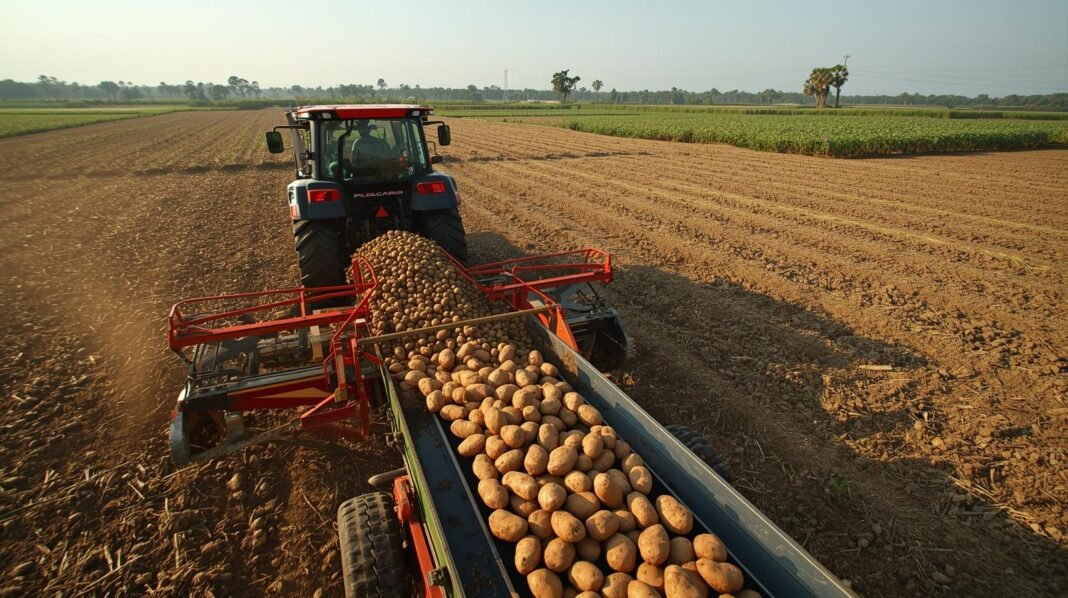
A one row potato harvester is a compact agricultural machine designed to efficiently extract potatoes from the soil while minimizing crop damage.
These machines typically use a vibrating digging plowshare that penetrates the soil, followed by a sieve system that separates potatoes from dirt and deposits them in an accessible row for collection.
Modern one row harvesters are perfect for operations with 5-50 acres of potato production, offering a practical middle ground between manual harvesting and large-scale commercial equipment. They work with tractors ranging from 20-30 horsepower, making them accessible for smaller farming operations.
New One Row Potato Harvester: Cost Analysis 2025
Entry-Level Models ($2,000-$2,500)
Basic new one row potato harvesters from brands like MechMaxx and Farm-Maxx currently retail between $2,000 and $2,500. These models typically feature:
- PTO-powered operation (540 RPM)
- Category 1 three-point hitch compatibility
- 18-19 inch working width
- Adjustable digging depth and angle
- Basic vibrating sieve systems
- Steel construction with replaceable blades
The MechMaxx PH19, for example, is priced at $2,199 (reduced from $2,499), making it one of the most affordable new options on the market. These machines are ideal for first-time buyers or those transitioning from manual harvesting methods.
Mid-Range Models ($8,000-$15,000)
Mid-tier one row harvesters offer enhanced features including:
- Improved separation systems
- Wider working areas
- Heavy-duty construction
- Better soil handling capabilities
- Enhanced potato protection mechanisms
These models suit established growers who need reliability and better throughput during harvest season.
Professional-Grade Models ($30,000-$40,000)
Premium options like the Spedo Junior Harvester retail around $38,999, with current promotional pricing at approximately $31,549. These professional machines include:
- Elevator-sieving belts (600mm+)
- Manual selection platforms
- Container support systems
- Hydraulic oil coolers
- Superior potato handling to prevent bruising
- Trailer compatibility for transport
Used One Row Potato Harvester: Market Pricing
Recent Models (1-3 Years Old)
Expect to pay 60-75% of the original retail price for lightly used one row harvesters. A machine originally priced at $2,500 might sell for $1,500-$1,875 if it’s been properly maintained with minimal operating hours.
Mid-Age Equipment (4-8 Years Old)
These harvesters typically sell for 40-60% of their original value, depending on condition, maintenance history, and brand reputation. A well-maintained harvester can still provide excellent value in this category.
Older Equipment (8+ Years)
Prices for older used potato harvesters can start as low as €930 (approximately $1,000) for basic models. However, these require careful inspection and may need immediate repairs or component replacements.
Cost Comparison: New vs Used
Initial Investment
New Equipment:
- Entry-level: $2,000-$2,500
- Mid-range: $8,000-$15,000
- Professional: $30,000-$40,000
- Includes manufacturer warranty (typically 1 year)
- No immediate repair costs
- Known operating history
Used Equipment:
- Recent models: $1,500-$20,000
- Mid-age: $1,000-$8,000
- Older models: $500-$2,000
- Limited or no warranty
- Potential immediate repair needs
- Unknown wear patterns
Total Cost of Ownership
When calculating true costs, consider:
Operating Costs:
- Fuel consumption (similar for both new and used)
- PTO requirements and tractor compatibility
- Labor savings compared to manual harvesting
Maintenance Expenses:
- New machines: Minimal first 2-3 years, covered under warranty
- Used machines: Immediate parts replacement possible, including blades, chains, bearings, and hydraulic components
Depreciation:
- New machines: 20-30% loss in first year, 10-15% annually thereafter
- Used machines: Slower depreciation, sometimes holding value if well-maintained
Replacement Parts: Replacement blades for models like the PH19 cost around $99-$129, while linkages run approximately $299-$349. Factor these ongoing costs into your budget regardless of which option you choose.
Critical Inspection Checklist for Used Potato Harvesters
Before purchasing any used one row potato harvester, conduct a thorough inspection using this comprehensive checklist:
Structural Components
Frame and Body:
- Examine for cracks, excessive rust, or structural damage
- Check all welds and connection points
- Verify frame alignment (warping indicates hard use or improper storage)
- Look for evidence of repairs or modifications
Three-Point Hitch:
- Test attachment points for wear
- Ensure pins and bushings fit snugly
- Check for bending or cracking in mounting brackets
- Verify category compatibility with your tractor
Digging System
Plowshare/Blade:
- Inspect for visible damage or wear, as these components are critical for effective digging
- Measure blade thickness (excessive wear reduces performance)
- Check for bending or warping
- Verify mounting bolts and brackets are secure
- Confirm replacement parts are available and affordable
Depth Adjustment Mechanism:
- Test full range of motion
- Check for smooth operation without binding
- Inspect hydraulic cylinders if equipped
- Verify locking mechanisms function properly
Separation and Sieving System
Chains and Belts:
- Inspect belts, chains, and hoses for any signs of wear or damage
- Look for loose or missing links
- Check tension adjustment capability
- Examine sprockets for tooth wear
- Test all moving parts for smooth operation
Vibrating Mechanism:
- Operate the machine (if possible) to test vibration
- Listen for unusual noises or grinding
- Check mounting points for excessive wear
- Inspect eccentric bearings and bushings
Drive System
PTO Shaft:
- Verify spline count matches your tractor (typically 6 or 21 spline)
- Check universal joints for play or wear
- Inspect safety shields (crucial for operator safety)
- Test quick-release mechanisms
- Ensure proper length for your tractor model
Gearbox:
- Check for leaks of oil, fuel, or hydraulic fluid, as these could indicate underlying issues
- Inspect seals and gaskets
- Verify oil level and quality
- Listen for grinding or excessive noise during operation
Wheels and Axles
Support Wheels:
- Check tire condition and air pressure
- Inspect bearings for play or roughness
- Verify wheel alignment
- Examine axle condition and mounting
Gauge Wheels:
- Test adjustment mechanism
- Check for worn bearings
- Ensure smooth rotation
Hydraulic System (If Equipped)
Cylinders and Hoses:
- Inspect for leaks around seals
- Check hose condition (cracking, bulging, or weather damage)
- Test hydraulic functions if possible
- Verify coupling compatibility with your tractor
Electrical Components
Wiring:
- Check for frayed, damaged, or exposed wires
- Test any electrical controls or sensors
- Verify proper grounding
Operational Testing
Whenever possible, request a field demonstration:
- Start-up Test: Run the machine for at least 15 minutes to check for overheating, leaks, or unusual sounds
- Digging Performance: Test in actual soil conditions similar to your fields
- Separation Efficiency: Observe how effectively it separates potatoes from soil
- PTO Engagement: Ensure smooth engagement and disengagement
- Vibration Patterns: Check that vibration is consistent and effective
What Records to Request from Sellers
For Used Equipment:
- Maintenance logs and service records
- Original purchase documentation
- Hour meter readings (if available)
- Previous repair invoices
- Operator manual (essential for maintenance)
- Parts diagrams and specifications
- History of any accidents or damage
Questions to Ask:
- How many acres has it harvested annually?
- What soil types was it primarily used in?
- Why is the owner selling?
- What maintenance has been performed recently?
- Are there any known issues or needed repairs?
- Will the seller demonstrate it operating in the field?
Making the Final Decision: New or Used?
Choose New If:
- You need reliability during critical harvest windows
- You prefer warranty coverage and guaranteed performance
- You’re expanding operations and need dependable equipment
- You have access to favorable financing terms
- You want the latest technology and efficiency improvements
- You plan to keep the equipment 10+ years
Choose Used If:
- You have mechanical skills for maintenance and repairs
- You’re starting small-scale operations
- You have backup equipment or flexible harvest schedules
- You’ve found a well-maintained machine with documented service history
- You’re experienced in evaluating used farm equipment
- Budget constraints are significant
- You can inspect the equipment thoroughly or hire a mechanic to do so
Financing and Purchase Considerations
Warranty Coverage
New machines typically include:
- 1-year manufacturer warranty on the complete machine
- Extended warranty options (1-2 additional years)
- Parts and labor coverage during warranty period
Used machines may offer:
- Limited dealer warranty (30-90 days common)
- Private sales typically “as-is”
- Optional third-party equipment warranties available
Delivery and Setup
Factor in these additional costs:
- Shipping fees (can range from $200-$800 depending on distance)
- Assembly requirements (some models ship partially disassembled)
- Initial setup and adjustment time
- Operator training or familiarization
Seasonal Timing for Best Deals
Best Times to Buy:
- Late Fall/Winter: Dealers clear inventory for new models, motivated sellers post-harvest
- Early Spring: Some flexibility remains before planting season
- Off-season promotions: Watch for manufacturer sales and dealer incentives
Avoid:
- Late Spring/Early Summer: Peak demand before harvest
- During harvest season: Limited inventory and higher prices
Conclusion
Choosing between a new or used one row potato harvester depends on your specific situation, budget, and risk tolerance.
New equipment offers peace of mind, warranty coverage, and modern efficiency, with prices starting around $2,000 for basic models. Used equipment can provide substantial savings, often 40-60% off original pricing, but requires careful inspection and carries more risk.
Regardless of which path you choose, thorough research, careful inspection, and honest assessment of your operational needs will help ensure you make the right investment.
A well-maintained potato harvester—new or used—can serve your farm efficiently for many seasons, transforming your harvest operation from labor-intensive manual work into a streamlined, productive process.
Remember that the cheapest option isn’t always the best value. Factor in total cost of ownership, including maintenance, repairs, and downtime, when making your final decision.
With the right equipment properly maintained, you’ll maximize your harvest efficiency and potato quality for years to come.
Ready to make your purchase? Use this guide’s inspection checklist when evaluating options, and don’t hesitate to bring a knowledgeable mechanic for a second opinion on used equipment.
Your investment in the right potato harvester will pay dividends through improved efficiency, reduced labor costs, and better crop quality.
Also Read
Top 7 small potato harvesters for smallholder farmers
Harvesting Success: Exploring Cutting-Edge Potato Harvesting Technology
