


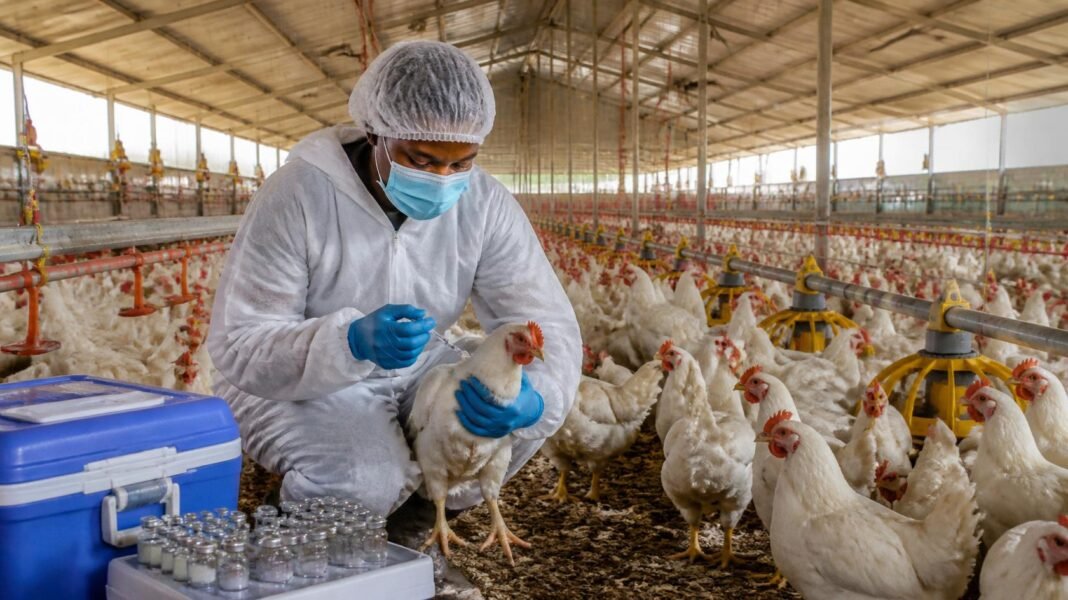

When South Africa’s Department of Agriculture announced on June 3, 2026, that it would formalize a Highly Pathogenic Avian Influenza (HPAI) vaccination framework, most coverage led with the obvious headline: the country is finally moving away from mass culling toward vaccination.
That framing isn’t wrong, but it misses the more useful story for anyone running or advising an agribusiness on this continent.
The real story is about leverage — specifically, what it actually took to get a cautious regulator to move after years of industry pressure had failed to do so.
A Policy Shift Born From a Legal Objection, Not a Change of Heart
South Africa’s poultry sector had been asking for a vaccination pathway for years. Global experts had been saying the same thing publicly for months before the policy changed — vaccination needed to shift from being treated as a last resort to becoming a standard part of disease control.
None of that pressure moved the needle on its own.
What actually forced the department’s hand was a formal objection filed by the South African Poultry Association (SAPA) under Section 23 of the Animal Diseases Act.
That objection didn’t just ask for a policy review — it identified a specific administrative failure: the department’s directorate of animal health had not provided farmers with affordable, practical alternatives to culling.
In other words, SAPA didn’t lobby. It built a legal case that the regulator was failing its statutory obligations, and it filed it through the formal channel the Act provides for exactly that purpose.
Agriculture Minister John Steenhuisen then acted on the recommendations of an independent investigation committee triggered by that objection, moving to amend the Animal Diseases Regulations and shift the state’s approach from a reactive “stamping-out” model to a managed vaccination framework.
The distinction matters: this wasn’t a minister waking up to new evidence.
It was a regulator responding to a legal process that industry had to initiate itself.
Why the Trigger Point Is the Real Story
For a B2B agriculture audience, the headline “vaccines are now allowed” is operationally useful but strategically thin.
The more valuable question is: what does it take to move a regulator that has strong institutional reasons to prefer the status quo?
Stamping-out policies exist for good reasons — they’re simpler to audit, they align with historic international trade expectations, and they don’t require regulators to build new monitoring and compliance infrastructure.
Shifting to vaccination means the department now has to oversee ongoing surveillance, laboratory testing, and vaccine efficacy monitoring, while still proving to trading partners that South Africa’s poultry meets international animal health standards.
That’s a heavier, more permanent administrative burden than periodically approving cull-and-compensate operations.
Regulators generally don’t take on that kind of ongoing complexity voluntarily, especially not for an industry already stretched thin. What changed the calculus in South Africa wasn’t better data or louder lobbying.
It was a formal legal mechanism that put the department on the record as having failed a statutory duty.
That’s a fundamentally different kind of pressure than a stakeholder letter or a media campaign, and it’s the part of this story that other producer associations across the continent should be paying attention to.
The Cost of the Delay Was Already Paid
It’s worth being precise about what “regulatory lag” cost the industry while this played out. The catastrophic 2023 avian flu outbreak — the worst in South African history, driven by both the global H5N1 strain and the domestic H7N6 strain — cost the industry more than R10 billion in stock losses alone.
In Gauteng, roughly 90% of birds in affected operations were lost. Nationally, close to 9.5 million birds were culled, representing an estimated 20–30% of the country’s total chicken stock at the time.
By the time the new framework was announced in mid-2026, the sector was still operating below capacity — weekly slaughter numbers were sitting around 21.5 million birds against a 22.5 million capacity ceiling, years after the outbreak that triggered the crisis.
That gap is a direct, measurable consequence of the years spent without a legal vaccination pathway.
It’s also worth noting the department had already quietly tested the waters: in 2025, it issued its first vaccination permit to Astral Foods for a single broiler breeder farm, effectively piloting the approach a full year before the wider framework existed.
The infrastructure to move faster existed. The legal and political will to generalize it didn’t, until SAPA forced the issue.
That’s the number producer associations elsewhere should hold onto: the cost of regulatory inertia isn’t abstract.
It shows up in culled stock, disrupted supply chains, and, ultimately, higher food prices for consumers. A multi-year delay in adopting a known, internationally used disease-control tool has a quantifiable price tag, and in this case it ran well into the billions of rand.
What This Means Beyond South Africa’s Borders
South Africa is not the first country to permit avian influenza vaccination as part of an HPAI control strategy — the practice is already used elsewhere. What’s distinctive here is the mechanism that finally unlocked the policy change domestically.
For agribusiness operators, industry associations, and policy teams working in other African markets with similarly conservative animal health regulators, the transferable lesson isn’t “vaccines work.”
It’s this: informal advocacy has a ceiling, and formal legal or statutory objection processes — where they exist in national legislation — may be a far more effective lever than continued lobbying through conventional channels.
That’s a strategic insight, not just a compliance update. Any producer association operating under animal disease legislation with a built-in objection or review mechanism should be asking whether it has documented, on the record, where its regulator has failed to provide practical alternatives to costly default measures.
That documentation is what eventually became South Africa’s investigation committee report — the report Steenhuisen was formally acting on when he announced the shift.
What Comes Next
The framework itself is still taking shape. The Department of Agriculture has committed to amending the Animal Diseases Regulations, or issuing a formal Section 9 control measure, to set out exactly how poultry operations must manage an HPAI outbreak going forward under the new model.
SAPA has welcomed the shift but has been explicit that success depends on clear regulations, scientifically validated vaccines, and effective monitoring systems — vaccination, the association has stressed, is not a silver bullet on its own.
There’s also an unresolved tension worth watching: South Africa’s poultry exports depend on maintaining international animal health standards, and not every trading partner treats vaccinated-flock status the same way as disease-free status.
How the department balances a domestic vaccination rollout against export market access requirements will likely become the next flashpoint in this story — and probably the subject of the next article worth writing.
For now, the lesson stands on its own: in African livestock policy, waiting for a regulator to act voluntarily can cost an industry billions.
Forcing the question, through the legal channels the legislation already provides, apparently works faster.
Also Read
Heatwave kills hundreds of thousands of poultry in France, overwhelming farms and carcass services
Poultry Equipment Suppliers to Watch in 2026: Trends and Forecasts
