

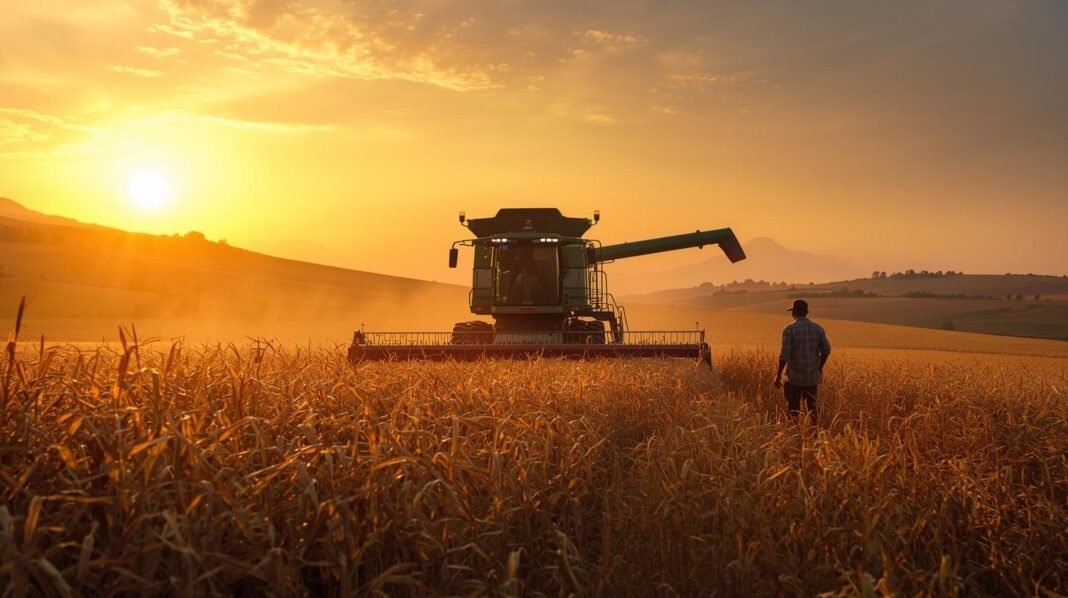

For smallholder farmers across Africa, harvest season represents both the culmination of months of hard work and a critical window for securing annual income.
Yet traditional manual harvesting methods continue to plague farmers with excessive labor costs, significant post-harvest losses, and missed market opportunities.
The solution? Combine harvesters that integrate reaping, threshing, and cleaning into a single operation, transforming what once took weeks into a matter of days.
As Africa’s agricultural sector rapidly modernizes, combine harvesters are no longer exclusive to large commercial operations.
With government subsidies supporting over 41% of combine harvester sales in developing markets, and manufacturers increasingly focusing on affordable, compact models suited to smaller plots, mechanized harvesting has become accessible to cooperative farms and progressive smallholders across the continent.
Why Smallholder Farmers Are Turning to Combine Harvesters
The shift toward mechanization in African agriculture isn’t merely about keeping pace with technology—it’s an economic imperative.
Over 66% of agricultural areas report labor shortages, making manual harvesting increasingly unsustainable.
Combine harvesters address this crisis head-on by reducing harvesting time by up to 45% while increasing grain efficiency by approximately 32%.
Beyond speed and efficiency, combine harvesters deliver tangible financial benefits. For maize, wheat, rice, and barley farmers, mechanization through combine harvesters can significantly reduce labor costs, minimize post-harvest losses, and increase efficiency—particularly critical during peak harvesting seasons when timing can mean the difference between profit and loss.
The mathematics are compelling: while manual harvesting might require 15-20 laborers working several days to clear a few hectares, a single combine harvester operated by one trained person can accomplish the same task in hours, with better grain quality and minimal losses.
Top Combine Harvester Brands for African Smallholders
LOVOL: The Budget-Conscious Champion
LOVOL is one of China’s largest agricultural equipment manufacturers and has become an affordable mechanization solution for many African farms.
What sets LOVOL apart for smallholder farmers is its strategic positioning—delivering modern features at nearly half the cost of premium Western brands.
Best For: Agricultural cooperatives, small to medium-scale farmers transitioning from manual to mechanized harvesting
Why Choose LOVOL:
- Reinforced chassis designed for rough field conditions
- Easy-to-operate controls requiring minimal training
- Strong parts availability due to strategic trade ties across West and East Africa
- Ideal for price-sensitive markets without compromising on durability
Countries including Nigeria, Ghana, and Tanzania have seen increasing adoption of LOVOL machines, particularly for scalable maize and wheat production.
The brand’s growing popularity stems from partnerships with local distributors and extensive field testing under actual African farm conditions.
YTO: Entry-Level Excellence
For farmers completely new to mechanized harvesting, YTO represents an accessible starting point.
Similar to LOVOL in its value proposition, YTO combines affordability with reliability, making it particularly attractive to community-run farms, public agricultural training institutions, and NGO-supported rural farming initiatives.
Best For: Farmers unfamiliar with heavy equipment, first-time mechanization adopters
Key Advantages:
- Simple maintenance requirements
- Lower initial investment
- Suitable for cooperative ownership models
- Strong support network in developing markets
Kubota: Small-Scale Specialist
Yanmar is ideal for small-scale and wetland harvesting, but Kubota has carved an equally impressive niche in the compact harvester market. Kubota’s machines like the DC-105X and DC-70 Plus are celebrated for their durability, energy efficiency, and user-friendly operation—critical factors for smallholder farmers with limited mechanical expertise.
Best For: Rice farmers, small grain operations, wetland conditions
Standout Features:
- Compact design suitable for smaller plots
- Excellent fuel efficiency reducing operational costs
- Strong after-sales support network
- Versatile across multiple grain types
Massey Ferguson: Versatility Meets Affordability
Under the AGCO umbrella, Massey Ferguson focuses specifically on making mechanization accessible to both small and large-scale farms.
Their focus on affordability and user-friendliness makes them a popular choice, with models like the MF Activa 7344 designed explicitly for small to medium farms requiring versatility and efficiency.
Best For: Multi-crop farmers, medium-sized cooperative farms
Why It Works:
- Versatile across cereals, maize, soybeans, and rice
- Updated cab design for operator comfort during long harvesting days
- Hydrostatic transmission for easier operation
- Competitive pricing within reach of progressive smallholders
New Holland and John Deere: Premium Options with Growing Accessibility
While traditionally positioned at the premium end, both New Holland and John Deere have expanded their dealer networks across East, West, and Southern Africa, making service and parts more accessible to smallholder farmers who can afford the initial investment or access financing.
John Deere is known for durability and wide dealer network, making it a solid long-term investment despite higher upfront costs. New Holland’s CR series showcases fuel efficiency and cutting-edge technology, appealing to farmers prioritizing operational cost savings over time.
Making Combine Harvesters Affordable: Financing and Cooperative Models
The elephant in the room for most smallholder farmers is cost. New combine harvesters can range from $15,000 for compact Chinese models to well over $100,000 for premium Western brands. However, innovative financing mechanisms are making these machines increasingly accessible.
Agricultural Financing Options
Agricultural loans from commercial banks, leasing arrangements from cooperatives or input suppliers, and NGO and donor support, particularly for youth and women in agribusiness have opened new pathways to mechanization. Banks across Africa, including Equity Bank, KCB, and Cooperative Bank in Kenya, now offer specialized agri-loans with favorable terms for equipment purchases.
Cooperative Ownership: Strength in Numbers
Perhaps the most practical approach for smallholder farmers involves cooperative or machinery pool ownership.
Local farmers may get together to form a machinery pool that purchases the necessary equipment for all the members to use jointly. This model dramatically reduces individual financial burden while ensuring equipment utilization remains high enough to justify the investment.
Successful cooperative models operate across Africa, where 10-20 farmers contribute to purchase a single combine harvester, then schedule its use during harvest season. Some cooperatives even generate additional revenue by offering contract harvesting services to non-members, helping offset operational costs and generate returns for members.
The Used Equipment Market
For farmers unable to access financing for new equipment, the used harvester market presents viable alternatives.
When buying used harvesters, ensure it has verified service history, operational hours under 3,000, and confirm that parts are still available locally. Refurbished models from Europe or Asia, available through agricultural machinery importers, can offer significant savings while still providing years of reliable service.
Key Factors When Choosing Your Combine Harvester
1. Match Machine to Farm Size and Crop Type
Focus on crop type, field size, terrain, local fuel availability, parts support, and your ability to manage maintenance when evaluating options.
A 2-hectare rice farm requires vastly different specifications than a 20-hectare wheat cooperative.
Consider cutting width, grain tank capacity, and throughput rates. Smaller farms (2-10 hectares) should prioritize compact models with 1.5-2.5 meter cutting widths, while larger operations (10-50 hectares) benefit from machines offering 3-5 meter cutting widths and larger grain tanks to reduce unloading frequency.
2. Prioritize Parts Availability and Service Networks
The most affordable combine harvester becomes expensive if replacement parts require months of importation or if no local technicians understand its systems. LOVOL and YTO models are affordable, compact, and reliable—making them ideal for small farms and cooperatives, partly because both brands have established strong parts distribution networks across Africa.
Before purchasing, verify that your region has authorized dealers or certified service centers. Agricultural shows like the Nairobi International Trade Fair provide excellent opportunities to meet dealers, examine machines firsthand, and negotiate service agreements.
3. Assess Terrain and Operating Conditions
African farms present diverse challenges—from rocky soils in Ethiopia to wetlands in Uganda. Select machines engineered for your specific conditions. Some harvesters offer hillside compensation for sloped terrain, while others excel in wet paddy conditions.
Fuel efficiency deserves special attention given Africa’s fuel costs and supply challenges. Models offering 20-30% better fuel economy can save thousands of dollars annually, quickly offsetting any price premium at purchase.
4. Training and Operator Skill Requirements
The most sophisticated machine delivers poor results without proper operation. Prioritize brands offering comprehensive training programs.
Many manufacturers and dealers now provide operational training as part of purchase agreements, teaching proper field assessment, maintenance schedules, and troubleshooting.
Simpler machines with intuitive controls reduce training time and minimize operator errors—crucial considerations when your operator might be a cooperative member rotating through the role rather than a dedicated professional.
Maximizing Your Investment: Best Practices
Proper Maintenance Extends Machine Life
Combine harvesters represent major investments requiring protection through diligent maintenance. Establish rigorous pre-season, daily, and post-season maintenance schedules. Simple practices—cleaning grain residue after each use, checking belt tension, lubricating moving parts, and storing machines under cover—can extend operational life by years.
Cooperative owners should designate specific members responsible for maintenance, possibly rotating the role to build institutional knowledge while preventing neglect.
Seasonal Strategies Improve Efficiency
Timing harvester use to coincide with peak harvest periods maximizes efficiency. Coordinate with weather patterns and crop maturity to ensure optimal harvesting conditions. Harvesting too early or too late both reduce grain quality and increase losses.
For cooperatives owning shared equipment, develop clear scheduling systems preventing conflicts while ensuring fair access. Digital booking systems using SMS or mobile apps have proven successful in several African countries, allowing farmers to request, schedule, and prepay for services efficiently.
Generate Additional Revenue Through Contract Services
Farmers or cooperatives owning combine harvesters can offset costs by offering contract harvesting services to neighboring farmers.
This approach improves equipment utilization while generating additional income during harvest season.
Pricing should cover fuel, maintenance, operator wages, and equipment depreciation while remaining competitive with manual harvesting labor costs. Many contract operators charge per hectare or per ton of grain harvested, with rates varying by region and crop type.
The Future of Mechanization for African Smallholders
The trajectory is clear: mechanization will continue expanding across Africa’s smallholder farming sector. Over 62% of equipment providers now offer financing and leasing, making advanced machines more accessible than ever before.
Technology continues advancing with GPS guidance, yield mapping, and automation features increasingly available even on mid-range models. These innovations help farmers optimize field operations, track productivity, and make data-driven decisions for future seasons.
Government support remains crucial. Subsidies, tax incentives for agricultural equipment imports, and investments in rural infrastructure enabling equipment delivery and service networks will determine how quickly mechanization reaches remote farming communities.
Making the Right Choice for Your Farm
Selecting the best combine harvester for your operation requires balancing immediate affordability with long-term value.
While LOVOL and YTO offer accessible entry points for budget-conscious smallholders and cooperatives, farmers able to invest more might find better long-term value in Massey Ferguson’s versatile mid-range options or even premium brands offering superior durability and resale value.
Regardless of brand choice, prioritize machines with strong local support networks, verify parts availability, and ensure operator training programs are included or accessible.
Consider cooperative ownership models to reduce individual financial burden while maintaining access to mechanization benefits.
The harvest season waits for no one. As labor shortages intensify and global markets demand higher quality grain, smallholder farmers equipped with appropriate combine harvesters will increasingly outcompete those relying solely on manual methods.
The question isn’t whether to mechanize, but rather which harvester best fits your specific circumstances—and how quickly you can make it happen.
Ready to transform your harvest? Research local dealers, explore financing options, and perhaps most importantly, connect with neighboring farmers to discuss cooperative purchasing arrangements. The investment you make today in the right combine harvester could determine your farm’s profitability for the next decade.
Also Read
Combine Harvester Prices in Kenya (2025): A General Buyer’s Guide
How to maintain your combine harvester for optimal performance
