



There is a mill in Maidstone, KwaZulu-Natal, that has been grinding sugarcane since 1903.
It outlasted two world wars, apartheid, and South Africa’s turbulent post-democracy transition.
But today, in the middle of a crushing season, it sits at the centre of the most consequential corporate collapse the South African sugar industry has ever seen — and the question is no longer whether Tongaat Hulett will survive, but whether it can be killed slowly enough to save the communities that grew up in its shadow.
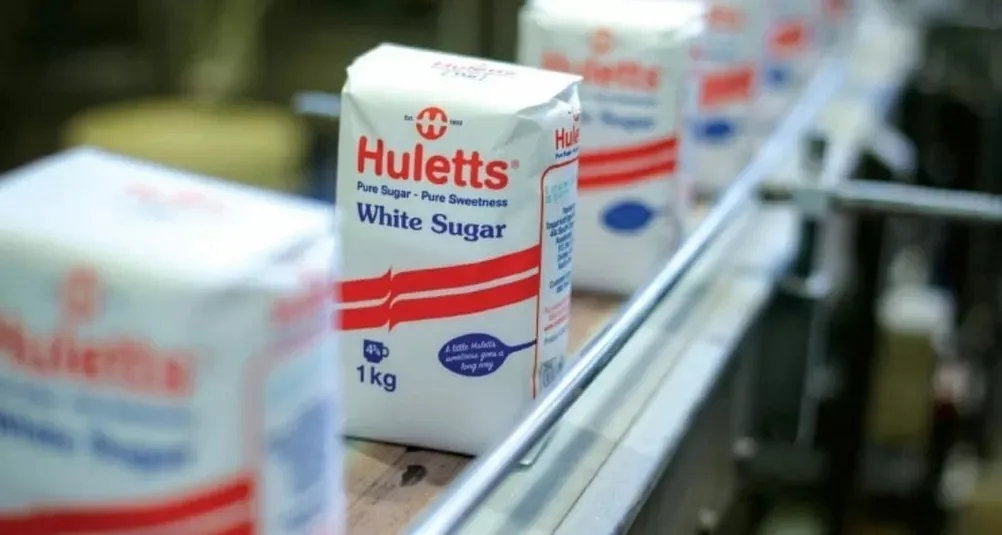
Tongaat Hulett is not just another distressed South African company. It is the country’s largest producer of white refined sugar — the kind that goes into every can of Coca-Cola, every biscuit, and every sweet on supermarket shelves nationwide.
Its three KwaZulu-Natal mills process over 4.8 million tonnes of sugarcane a year. More than 18,000 cane growers — the overwhelming majority of them small-scale black farmers — depend on those mills to buy their harvest.
And on 17 and 18 June 2026, the Durban High Court will hear arguments that could order the company’s liquidation — a decision that would send shockwaves through rural KwaZulu-Natal, the South African food supply chain, and the fragile political consensus around agricultural transformation.
“Saving Tongaat Hulett is not merely about preserving a business; it is about safeguarding the entire sugar industry and rural stability within South Africa.” — SA Canegrowers Chairman Higgins Mdluli
COMPANY AT A GLANCE
| Founded | 1892 — Over 130 years in operation |
| Primary Product | White refined sugar (Huletts brand) |
| Annual Crush Capacity | 4.8 million tonnes of sugarcane |
| Mills | Maidstone (1903), Amatikulu (1907), Felixton (new-build) |
| Dependent Growers | 18,000+ direct (17,500 small-scale) |
| Value Lost | R12 billion in shareholder value |
| Business Rescue | Commenced 2022 (Metis Strategic Advisors) |
| Interim Funding (IDC) | R2.5 billion Post-Commencement Facility |
| Court Date | 17–18 June 2026, Durban High Court |
A CENTURY OF SUGAR, A DECADE OF TROUBLE
Tongaat Hulett’s roots stretch back to 1892, when the Hulett family began milling sugarcane in what was then Natal Colony.
Over the following century, the company expanded steadily along the north KwaZulu-Natal coast, eventually becoming the dominant player in white refined sugar — a premium product that commands higher margins and greater supply-chain influence than raw sugar.
At its peak, Tongaat Hulett was a diversified agribusiness conglomerate with operations in Zimbabwe, Mozambique, Botswana, Swaziland, and Namibia.
It owned vast tracts of land in the Durban metro and north coast corridor that became integral to post-apartheid urban development. Its annual reports were studied by institutional investors across the continent.
The Accounting Scandal That Changed Everything
The company’s collapse traces directly to a forensic audit completed in 2019, which uncovered a systematic overstatement of profits stretching back years.
Revenue had been inflated, land valuations had been manipulated, and executive bonuses had been paid on the basis of fictional earnings.
The restatement wiped billions from the balance sheet, triggering a governance crisis that swept out the old leadership and invited in a string of new management teams who each faced a hole that kept getting bigger.
By 2022, with debt spiralling and no buyer willing to pay a realistic price for the non-sugar assets, Tongaat entered formal business rescue — a South African insolvency tool designed to allow distressed companies to restructure under court supervision while continuing to trade.
Business rescue, by South African law, is meant to achieve one of two outcomes: a rescue plan that returns the company to solvency, or an orderly wind-down that delivers better returns to creditors than immediate liquidation. Four years later, neither has been achieved.
“Over 17,500 small-scale growers would lose essential income in areas with few other economic prospects.” — SA Canegrowers Association
THE THREE MILLS — AND THE TOWNS THEY BUILT
To understand the human stakes of this crisis, you have to understand what a sugarcane mill means to a rural South African town. These are not just factories. They are the original reason the towns exist, the largest local employers, the anchor for every fuel station, hardware store, school, and church in a 30-kilometre radius.
Maidstone — The Original
Established in 1903 on the banks of the uThongathi River, the Maidstone mill was the first industrial sugar mill in KwaZulu-Natal.
Today it can crush approximately 440 tonnes of cane per hour across two parallel extraction plants.
The surrounding town of Tongaat — from which the company takes its historic name — grew up entirely in service of this facility. Retailers, transport operators, seasonal workers, and input suppliers all cluster around its operational rhythm.
Amatikulu — A Grower’s Mill
The Amatikulu mill, opened in 1907, now processes approximately 385 tonnes of cane per hour.
In its early decades it was a proving ground for increasing small-scale grower integration into the commercial sugar industry — a legacy that makes its potential closure especially painful given South Africa’s current transformation policy commitments.
The surrounding community is overwhelmingly rural and has virtually no alternative industrial employer.
Felixton — Modern Capacity, Old Roots
Felixton represents Tongaat’s most recent capital investment — a purpose-built facility on the Mhlatuze River, capable of processing 600 tonnes of cane per hour through two extraction lines.
It replaced older, ageing infrastructure in the 1980s and 1990s as cane supply expanded. Despite its relative modernity, Felixton is not immune to the financial paralysis gripping the company.
All three mills depend on a continuous flow of cane during the crushing season — typically running from April to November.
Unlike most industrial operations, sugar mills cannot simply pause, restart, and pause again.
Sugarcane begins to deteriorate rapidly after cutting. The entire cane-to-mill supply chain must function as one tightly coordinated system.
Any disruption — late payments to growers, inability to procure fuel or chemicals, loss of a key technical operator — can cascade into a season-wide failure.
THE NUMBERS: WHERE THE MONEY WENT
The financial picture at Tongaat Hulett in mid-2026 is stark. The company has lost more than R12 billion in shareholder value since the accounting scandal surfaced.
Its remaining assets — the mills, the Huletts brand, the Durban refinery, and the VoermolFeeds animal feed operation — are substantial in operational terms but encumbered by debt.
The most immediate lifeline is a Post-Commencement Funding (PCF) facility from the Industrial Development Corporation (IDC), the South African state development finance institution.
The IDC initially committed R2.3 billion to keep operations running during business rescue. As the June court date approached, it extended that facility to R2.5 billion — enough to fund operations through to 30 June 2026.
The question now is what happens on 1 July. If the court does not grant a provisional liquidation — or if a credible rescue plan materialises — the IDC would need to continue its support through the remainder of the crushing season.
If the court does order liquidation, there are calls from the industry for a ‘funded liquidation,’ in which bridge financing is provided specifically to allow the mills to finish the current season before assets are disposed of.
The distinction is not merely semantic. An unfunded liquidation — in which the liquidator has no working capital — could cause the mills to go dark mid-season.
Approximately 18,000 growers would find their cane unsellable with no alternative crushing facility within viable transport distance.
For a small-scale grower who has already incurred the costs of planting, harvesting, and cutting, mid-season abandonment is not a financial setback — it is economic ruin.
PARLIAMENT, GOVERNMENT, AND THE IDC: A POLITICAL CRISIS TOO
The Tongaat Hulett situation has moved beyond the courts and into parliamentary politics. On 3 June 2026, the Portfolio Committee on Trade, Industry and Competition heard an update on the Sugar Value Chain Master Plan — the industry rescue framework signed in 2020 — and committee chairperson Mzwandile Masina made clear that the collapse of Tongaat would undermine years of hard-won progress.
The master plan had achieved measurable results. Sugar sales increased from 1.25 million tonnes annually to 1.55 million tonnes under its first phase. Transformation funding for the 12,000 small-scale growers had expanded.
Regulatory amendments to protect the local industry against cheap imports had been finalised in 2025.
The plan’s second phase, signed in April 2026, centres on long-term competitiveness, diversification into bio-ethanol and biofuels, and structural reforms for inclusive growth.
Allowing Tongaat’s liquidation at the precise moment this second phase launches would be politically difficult to explain — and practically devastating for transformation goals.
The SA Canegrowers Association has written directly to Trade, Industry and Competition Minister Zuko Godlimpi, requesting direct government intervention.
The IDC, already the primary financier of the business rescue, is reportedly weighing whether to deepen its exposure. Whether that constitutes sound development finance or throwing good money after bad is a debate that is now playing out at the highest levels of economic policy.
“Allowing Tongaat to collapse would undermine the gains of the Sugar Value Chain Master Plan.” — Portfolio Committee Chairperson Mzwandile Masina
INDUSTRY IMPLICATIONS: WHO ELSE PAYS IF TONGAAT FALLS?
The impact of a Tongaat liquidation would ripple far beyond the three mill towns. Consider the downstream effects:
- Refined white sugar supply: Tongaat’s Durban refinery is the primary source of refined white sugar in South Africa. A sudden shutdown would force manufacturers of soft drinks, confectionery, baked goods, and processed food to source refined sugar from offshore — adding cost, complexity, and import dependency to a sector that currently runs lean margins.
- The Huletts brand: One of the most recognised consumer brands in South African grocery retail, Huletts sugar is a shelf staple. A liquidation process would almost certainly see the brand sold separately from the milling infrastructure — potentially to an offshore acquirer with no obligation to maintain local production.
- Animal feed: The VoermolFeeds division, which produces energy and supplementary feeds for the livestock farming sector, is a significant business in its own right. Its fate in a liquidation is unclear but it would not survive as a standalone entity without parent company support.
- Cane transport networks: The entire logistics ecosystem serving the mills — cane hauliers, rail siding operators, vehicle servicing companies — would face sudden demand collapse. These businesses are not equipped to mothball and restart; they would likely close permanently.
- Property: Tongaat Hulett’s remaining property portfolio in the KwaZulu-Natal north coast corridor, though diminished from its peak, still has development value. A distressed liquidation sale would likely crystallise significant further losses.
WHAT HAPPENS NEXT: THE JUNE 17–18 HEARING
The Durban High Court hearing on 17 and 18 June is the pivot point. The business rescuers — Metis Strategic Advisors — applied for provisional liquidation themselves, an unusual step that reflects their assessment that no viable rescue plan is achievable within the constraints of their current mandate.
Creditors, however, are not uniformly in favour of liquidation. Different classes of creditor — secured lenders, trade creditors, the IDC, and growers with outstanding payment claims — have divergent interests. A liquidation that maximises recoveries for senior secured lenders may deliver nothing to the growers.
Three possible outcomes exist heading into the hearing:
- Provisional liquidation is granted — the court appoints a liquidator. The critical question then becomes whether the IDC or another funder will provide a PCF bridge to keep mills running through the season before asset disposal begins.
- The application is postponed or set aside — the business rescue process continues, with either the IDC deepening its facility or a new white knight investor emerging with a rescue proposal. This scenario buys time but does not resolve the underlying insolvency.
- A last-minute transaction — a partial or full sale of the milling assets to a strategic buyer is announced before or during the hearing, rendering the liquidation application moot. Industry observers consider this the least likely but most desirable outcome.
For the 17,500 small-scale growers who are already cutting cane this season, the theoretical elegance of these options matters far less than the practical question: will my cane be crushed and will I be paid?
AGRI MACHINERY: LESSONS FOR AFRICAN AGRI-INDUSTRY
From an industrial and infrastructure perspective, the Tongaat Hulett crisis offers uncomfortable lessons for African agricultural processing businesses — and for the governments and development finance institutions that back them.
The first lesson is about the compounding cost of deferred maintenance — not of physical assets, but of governance.
Tongaat’s mills are not technologically obsolete. The Felixton facility is a modern, high-capacity operation. What rotted was the financial and institutional infrastructure around them.
Once an earnings misstatement of this magnitude is discovered, the trust that underpins trade credit, grower contracts, and offtake agreements does not simply reconstitute at the next board meeting.
It takes years and clean management to rebuild — time that a seasonal agri-processor cannot always afford.
The second lesson is about the structure of development finance. The IDC’s R2.5 billion commitment is a substantial allocation of public development capital.
The question is whether this capital is deployed as a genuine rescue — with conditions, equity stakes, governance reforms, and a credible path to viability — or as a rolling subsidy to a terminal entity.
Development finance institutions across Africa face this dilemma repeatedly: when does patient capital become captured capital?
The third lesson is about value chain integration and the risks of monoeconomic towns. Maidstone, Amatikulu, and Felixton are not unique in Africa — they are prototypical mill towns, constructed around a single processing anchor.
The sugar sector, cotton, sisal, tea, and coffee all have equivalents across the continent. Their vulnerability is the same: when the anchor fails, there is no second employer, no fallback supply chain, no alternative.
Industrial diversification policy is not an abstraction for residents of these towns; it is an existential question.
“What rotted was not the machinery, but the governance. And governance, unlike steel, cannot be welded back together overnight.”
CONCLUSION: THE CLOCK IS RUNNING
The Maidstone sugar mill has been grinding for 123 years. Through drought, through the violence of the 1990s, through load-shedding, through floods, through the COVID-19 shutdown, it kept running.
Its survival was not an act of nostalgia — it was the economic oxygen of an entire community.
What happens in the Durban High Court on 17 and 18 June will not be the final word on Tongaat Hulett’s fate. Legal proceedings of this complexity rarely resolve in a single hearing.
But it will set the tone for everything that follows: whether the remaining months of this crushing season proceed in an orderly, funded manner; whether 18,000 growers receive what they are owed; and whether South Africa’s largest white sugar producer becomes a cautionary tale or a turnaround story.
The growers are watching. The court is watching. And the mills are still running — for now.
Also Read
U.S. Tractor Sales Fall 12% in February as Farmers Tighten Belts, AEM Data Shows
Record Harvest, Record Workload: How Mechanization Powered South Africa’s Maize Comeback
