


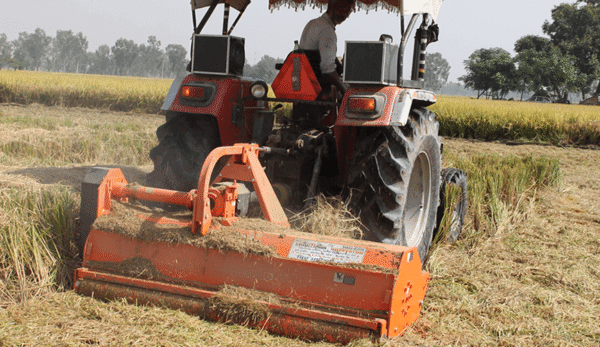

Shaktiman is strengthening its presence in East Africa as it seeks to address some of the persistent barriers to agricultural mechanisation, including the high upfront cost of equipment, limited access to spare parts and a lack of awareness among farmers about modern farming technologies.
The Indian agricultural machinery manufacturer is pursuing a broader distribution strategy, expanding its network of local business partners while exploring dealer-backed financing arrangements and new approaches to customer support.
Speaking during the company’s East Africa Business Development Meet in Kenya, Prabhat Tiwary, Shaktiman’s Africa Business Development Head, outlined a five-year vision centred on bringing mechanisation closer to farmers through stronger local partnerships, education and improved access to equipment.
Tiwary oversees business development across more than 40 countries, with responsibility for expanding Shaktiman’s agricultural machinery business through distributors, dealers and other stakeholders.
His remit also includes exploring agricultural opportunities in the Middle East.
The company’s approach reflects a wider challenge facing agricultural mechanisation in Africa: expanding equipment availability is only part of the solution.
Farmers also need access to financing, reliable maintenance services, spare parts and the technical knowledge required to use machinery effectively.
Shaktiman expands its East African dealer network
Kenya is emerging as an important market in Shaktiman’s regional expansion strategy. According to Tiwary, the company had worked with a single distributor in the country for approximately 20 years before beginning to broaden its distribution model.
Shaktiman has now appointed 11 business partners in Kenya, alongside two in Tanzania and one each in Uganda, Ethiopia and Rwanda.
The company intends to expand this network further, prioritising partners with existing connections to agriculture and farm machinery.
These may include businesses involved in fertiliser distribution, tractor sales, agricultural equipment and related services.
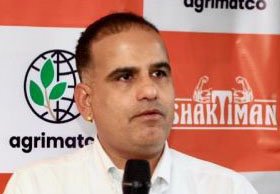
Our long-term vision is to go on the ground to create more awareness and appoint more and more partners.
The strategy is designed to bring machinery closer to farmers while strengthening the local commercial networks needed to support equipment sales and ownership.
Rather than relying exclusively on a central distribution structure, Shaktiman is looking to establish a wider presence across agricultural regions, supported by businesses that understand local farming conditions and customer requirements.
Local partners could also play an important role in helping farmers identify appropriate equipment, access spare parts and obtain technical assistance when machinery requires maintenance.
For a region characterised by diverse farming systems and differing levels of mechanisation, the effectiveness of this approach will depend on how well the expanded dealer network translates into practical support at the farm level.
Shaktiman’s East African Expansion
Figures provided by Prabhat Tiwari, Shaktiman’s Africa Business Development Head, during the East Africa Business Development Meet.
Financing remains a barrier to machinery adoption
Despite the growing availability of agricultural equipment, affordability continues to constrain mechanisation among many farmers.
Tiwary identified access to finance as one of the major challenges in Kenya, explaining that discussions with banks had highlighted difficulties relating to customer credibility and documentation.
These obstacles can make conventional financing difficult for farmers who lack formal financial records or the documentation required by lending institutions.
Shaktiman is therefore exploring alternative arrangements that would allow farmers to acquire machinery through local dealers, using partial payments and monthly instalments.
Under the proposed approach, dealers could play a more direct role in helping customers finance purchases within their respective markets.
A farmer seeking equipment in Mwea, for example, could work through a local agricultural machinery partner rather than depending entirely on a conventional bank loan.
The company is also considering incentives for dealers that help more customers access machinery through such arrangements.
However, Tiwary indicated that the financing model remained under discussion. Details regarding eligibility, repayment terms, risk-sharing arrangements and implementation timelines have yet to be confirmed.
If developed into a workable programme, dealer-supported financing could provide an additional route to machinery ownership for farmers who struggle to meet conventional lending requirements.
Its effectiveness will ultimately depend on the financing terms, dealers’ capacity to manage credit risks and farmers’ ability to generate sufficient returns from their equipment investments.
Can Dealer Financing Make Machinery More Accessible?
Shaktiman is exploring arrangements that could allow farmers to purchase agricultural equipment through partial payments and monthly instalments facilitated by local dealers. The approach is intended to address financing barriers faced by farmers who struggle to meet conventional bank lending requirements.
Spare parts and after-sales service take centre stage
Beyond affordability, the availability of spare parts and dependable technical support remains critical to machinery adoption.
Equipment downtime during planting, harvesting or other time-sensitive farming operations can disrupt production schedules and increase operating costs.
For farmers investing in mechanisation, confidence in the availability of repairs and replacement components can therefore be as important as the initial purchase price.
Shaktiman is seeking to strengthen its customer support arrangements through an authorised service provider and a more structured approach to handling customer complaints.
Tiwari said the company had put an authorised service provider arrangement in place, with plans for dedicated communication access and support for field service operations. The proposed arrangements include access to transport, tools, labour and warranty-claim management.
The company also plans to improve spare-parts availability through regional dealers.
One initiative under consideration involves supplying spare parts equivalent to approximately 10% of a machine’s value alongside the equipment. Tiwari illustrated the proposal using a hypothetical machine valued at $1,000, for which spare parts worth $100 would be provided.
The intention is to ensure that essential components are available closer to the customer, reducing delays when repairs are required.
The precise scope and implementation of the spare-parts initiative remain to be clarified, including which machines and dealers would be covered and whether the provision would apply universally.
Nevertheless, the proposal highlights an important consideration for agricultural machinery suppliers operating in Africa: building a sustainable market requires investment in the support infrastructure surrounding equipment, not simply expanding sales.
Shaktiman is considering supplying spare parts equivalent to approximately 10% of a machine’s value alongside the equipment. The proposed initiative aims to improve parts availability and reduce delays when repairs are needed.
The initiative was described as a plan under consideration, not a confirmed universal policy.
Building awareness through local partnerships
Shaktiman’s five-year vision also places emphasis on farmer education and grassroots engagement.
Tiwary said the company intends to undertake more on-the-ground activities to increase awareness of agricultural mechanisation, particularly among farmers with limited resources and access to technical information.
The approach involves working with agricultural training institutions, local businesses and other organisations that can help communicate the benefits and practical applications of machinery.
Among the partners identified during the interview were Mwea Technical Training College and agricultural businesses including Tebere Hardwares, Bapco Kenya Parts, Uganda Devise Solution and Agrimatco Tanzania.
The official names and roles of the organisations should be confirmed before publication.
Such partnerships could provide channels for machinery demonstrations, technical training and closer engagement with farming communities.
The company also intends to use reward and recognition programmes to encourage partners and customers to become advocates for mechanisation within their communities.
According to Tiwary, the underlying idea is that farmers and local businesses who have positive experiences with machinery can help demonstrate its value to others, encouraging wider adoption through established community relationships.
The company is also looking to expand its partnerships at country, provincial and regional levels, including exploring potential collaboration with government bodies.
For agricultural machinery manufacturers, this type of engagement can help bridge the gap between equipment availability and practical adoption, particularly where farmers need more information about the suitability, operation and economics of mechanised farming.
A wider opportunity for agricultural mechanisation
Shaktiman’s East African strategy comes as agricultural businesses seek ways to improve productivity and make modern equipment more accessible to a broader range of farmers.
Yet expanding mechanisation requires coordination across several parts of the agricultural value chain.
Manufacturers and dealers must ensure that equipment is appropriate for local farming conditions, while financing providers, training institutions and service businesses help address the barriers that can prevent farmers from investing in machinery.
Shaktiman’s expanding dealer network provides a foundation for wider market coverage. Its proposed financing arrangements and spare-parts initiative indicate an effort to address some of the challenges that emerge after farmers begin considering a purchase.
The next test will be implementation: whether the expanded network can deliver consistent local support, whether financing options become commercially viable and whether farmers experience measurable improvements in access to equipment and maintenance services.
For Kenya and its neighbouring markets, the outcome could offer useful lessons on how machinery suppliers can build distribution systems around the practical needs of farmers rather than equipment sales alone.
As Shaktiman advances its five-year vision, its ability to connect distribution with financing, service delivery and farmer education will be central to determining how effectively its regional ambitions translate into broader agricultural mechanisation.
Beyond Machinery Sales
Over the next five years, Shaktiman aims to strengthen farmer awareness, expand local partnerships and improve access to agricultural mechanisation through dealer networks, technical institutions and community-level engagement.
Also Read
- What Kubota’s New BX90 Could Mean for Africa’s Smallholder Mechanisation
- Fendt Debuts 1100 Vario MT Gen2, Momentum 80-Foot Planter and 300 Vario Gen5 in First US Global Launch
- Inside Tanzania’s 10-Year Agricultural Mechanization Plan

Martin is a writer at Agrimachinery Africa specializing in agricultural machinery, mechanization trends, and farm technology across Africa. His work focuses on tractors, harvesting equipment, irrigation systems, and emerging innovations helping farmers improve productivity and efficiency. Through in-depth industry coverage, he highlights technologies shaping the future of modern agriculture.