


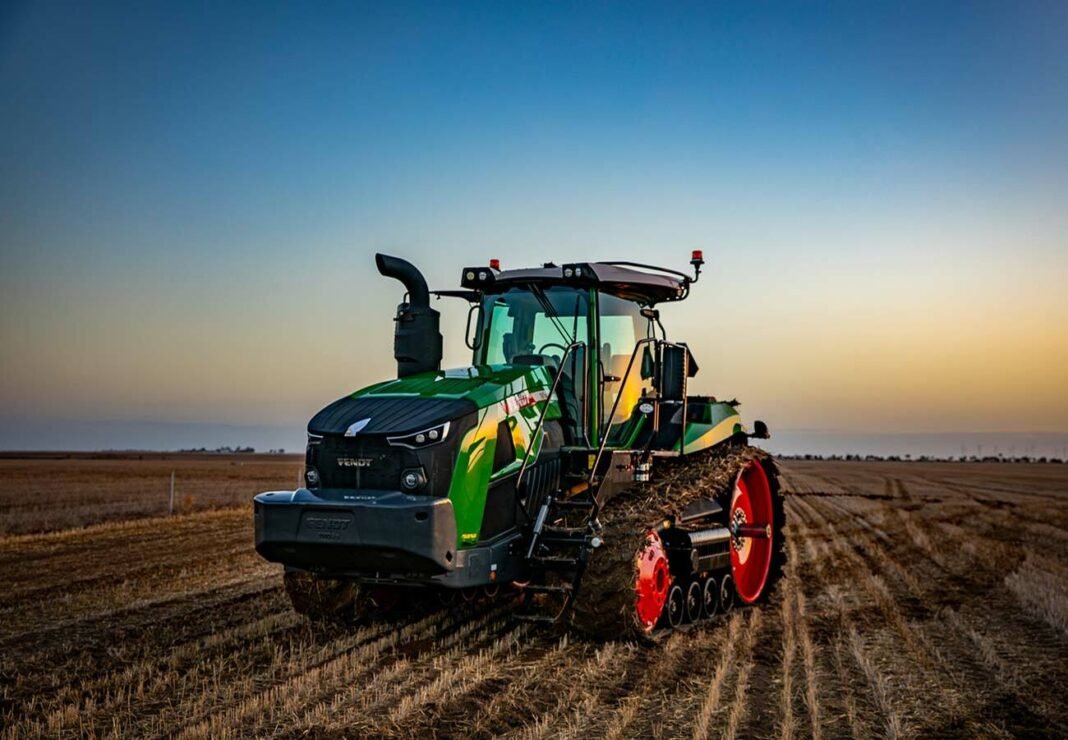

AGCO’s 2026 Farm Progress Show lineup offers more than a preview of new tractors, planters and harvesting equipment.
Behind the new products from Fendt and Massey Ferguson is a broader shift in how agricultural machinery is being developed and used.
At the September 1–3 event in Boone, Iowa, AGCO will also showcase PTx technologies covering precision planting, camera-based spraying, farm management, mixed-fleet operations and autonomous harvesting and tillage.
Taken together, the lineup points toward a machinery industry in which the value of equipment increasingly depends not only on horsepower, capacity or mechanical performance, but also on connectivity, software, sensors and the ability to operate with greater levels of automation.
The move from new machines to smarter fleets
For decades, upgrading farm machinery largely meant replacing an older tractor, combine or planter with a newer model.
That model is changing as agricultural equipment becomes increasingly digital. Modern farms often operate machinery from different manufacturers and different generations, making the complete replacement of a fleet an expensive way to access new technology.
AEGCO’s PTx business is addressing this challenge through technologies designed to bring precision and autonomy into existing machinery.
Its OutRun platform, for example, is positioned as a retrofit autonomy solution capable of supporting autonomous field operations, including harvesting and tillage.
This creates a different proposition from simply buying a new autonomous tractor: farmers can potentially add new capabilities to equipment they already own.
The significance of that approach extends beyond AGCO because it could make autonomy more accessible by turning existing machinery into a platform for new technology.
That makes retrofit autonomy one of the most important stories in AGCO’s Farm Progress Show lineup.
The agricultural machinery industry has spent years developing increasingly automated machines, but adoption will ultimately depend on economics as much as technology.
If autonomy requires farmers to replace entire fleets, the transition could remain concentrated among the largest and most capital-intensive operations.
Retrofit technology creates another pathway. AGCO has already demonstrated the mixed-fleet potential of its autonomy strategy, with PTx developing systems designed to operate beyond a single manufacturer’s equipment ecosystem.
The idea is particularly significant because a farm does not necessarily need another tractor simply because it needs greater automation.
If an existing machine can be equipped with autonomous capabilities, the investment becomes one of upgrading utilisation rather than completely replacing an asset.
PTx shows where precision agriculture is heading
PTx’s other products demonstrate that the transformation is not limited to autonomous driving. Precision technology is increasingly being built directly into the operations that machines perform.
Precision Planting’s new ArrowTube seed-orientation system and SymphonyVision Duo camera-based spraying technology are examples of equipment designed to make planting and crop protection more precise.
DrySet Air provides tower-by-tower metering and monitoring for air seeders, while SmokeRow focuses on managing weeds around field edges.
Meanwhile, PTx FarmENGAGE brings fleet and farm management into the same technology ecosystem.
The direction is clear: agricultural machinery is becoming increasingly capable of sensing conditions, interpreting information and adjusting its operation rather than simply performing a mechanical task at a predetermined rate.
In the case of camera-based spraying, for example, the machinery can distinguish between areas requiring treatment and those that do not, supporting the wider objective of applying inputs more selectively.
Fendt and Massey Ferguson remain central to the equation
The shift toward software, autonomy and precision does not diminish the importance of conventional machinery development.
Fendt will unveil three new products across its tractor and planter platforms, while showcasing the 500 Vario Gen4, 800 Vario Gen5 and IDEAL combine.
Massey Ferguson will introduce its N-Series Split/Narrow Row Planters, featuring factory-installed Precision Planting technology, alongside a next-generation double baler and the MF 5S Series with Dyna-VT transmission.
These machines represent the other side of AGCO’s strategy: increasing productivity, efficiency, versatility and uptime through improvements to the machines themselves.
What is changing is that those machines are increasingly becoming part of a wider digital ecosystem.
The tractor is no longer simply a source of power, the planter is no longer simply a seed-placement machine and the combine is no longer simply a harvesting machine.
Each is increasingly a connected platform capable of working with sensors, software, precision systems and other machines.
Why this matters for Africa
For Africa, the most interesting lesson from AGCO’s Farm Progress Show strategy may be the possibility of improving machinery utilisation without always replacing the underlying equipment.
African agriculture has a different level of mechanisation from the large-scale farming systems where many of these technologies are being developed, but the continent also has an enormous need to get more value from machinery.
Older tractors remain in service for years, machinery fleets are often mixed, and the cost of replacing equipment can be a major barrier to mechanisation.
Retrofit technologies could eventually provide another route to modernisation by allowing selected machines to gain new capabilities through sensors, connectivity and automation.
The economics will determine how quickly that happens, particularly where technical support, connectivity and financing remain challenges, but the principle is important: mechanisation does not necessarily have to mean replacing everything with the newest equipment.
AGCO’s 2026 Farm Progress Show lineup therefore points to a broader change taking place across agricultural machinery.
The next generation of farm equipment will still be judged by horsepower, capacity, reliability and productivity, but increasingly it will also be judged by how intelligently it can operate, communicate and adapt.
Fendt and Massey Ferguson represent the continuing evolution of the machine itself, while PTx illustrates what happens when software, precision technology and autonomy are layered onto that machinery.
The bigger question for the industry is no longer simply how powerful the next tractor will be, but how intelligently the entire farm fleet can operate.
AGCO’s combination of new Fendt and Massey Ferguson machinery with PTx’s precision, mixed-fleet and autonomous technologies suggests that the next phase of mechanisation will involve both new machines and smarter existing equipment.
As AGCO Chairman, President and CEO Eric Hansotia puts it: “Farm Progress Show is where we put our newest technology directly in farmers’ hands, and this year we are doing it in front of the world.”
Also Read
- SPACE 2026 Preview: The Award-Winning Farm Technologies Everyone Will Be Talking About
- How Agricultural Machinery Is Powering Europe’s Biomass Energy Revolution—and What Africa Can Learn
- Africa Doesn’t Lack Farmers Who Want Modern Equipment — It Lacks a Way to Finance Them

Martin is a writer at Agrimachinery Africa specializing in agricultural machinery, mechanization trends, and farm technology across Africa. His work focuses on tractors, harvesting equipment, irrigation systems, and emerging innovations helping farmers improve productivity and efficiency. Through in-depth industry coverage, he highlights technologies shaping the future of modern agriculture.