


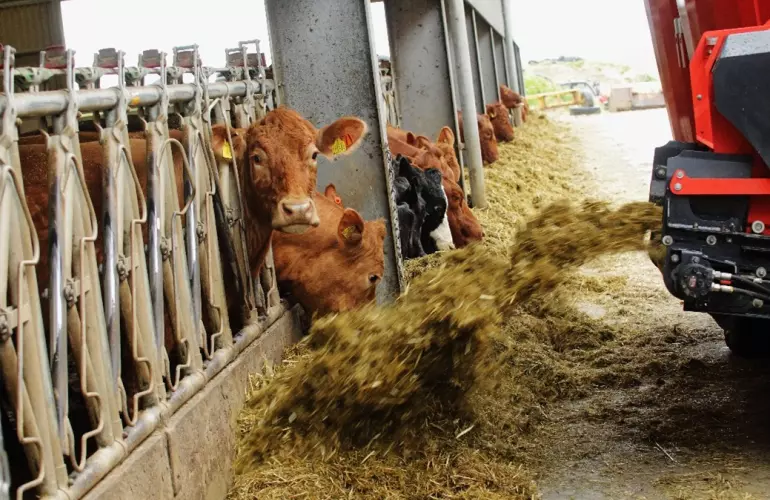

From artificial intelligence and autonomous feeding systems to next-generation machinery and livestock health solutions, the Innov’Space 2026 Awards offer an early glimpse of the technologies set to dominate conversations at SPACE 2026.
Agrimachinery Africa examines the standout innovations and what they could mean for livestock producers in Europe and Africa.
Innovation Takes Centre Stage Ahead of SPACE 2026
Every September, thousands of farmers, machinery dealers, livestock professionals, researchers and agribusiness executives converge on Rennes, France, for SPACE, one of Europe’s leading international exhibitions dedicated to livestock production.
While the exhibition itself showcases hundreds of products and technologies, many industry professionals closely watch one announcement even before the show opens—the Innov’Space Awards.
Recognised as one of the exhibition’s most prestigious distinctions, the Innov’Space Awards highlight technologies judged by an independent panel to offer meaningful advances in productivity, efficiency, sustainability, animal welfare and farm management.
Rather than rewarding futuristic concepts alone, the awards celebrate practical innovations that farmers can adopt to improve daily operations.
For the 2026 edition, the jury reviewed 78 submissions from equipment manufacturers, technology developers and agricultural suppliers before selecting 32 award-winning innovations.
Among them, 26 received one-star recognition, while six technologies earned the coveted two-star award, reserved for the year’s most outstanding breakthroughs.
For visitors planning to attend SPACE 2026, these award-winning technologies provide a valuable roadmap of the products and ideas likely to attract the biggest crowds on the exhibition floor.
Three Trends Dominating Innov’Space 2026
Although the award-winning innovations span many categories, three clear trends stand out.
Artificial Intelligence Becomes a Practical Farm Tool
Artificial intelligence has moved beyond research into everyday livestock farming.
Several award-winning innovations use machine learning, computer vision and smart sensors to automate tasks once reliant on manual observation.
Cameras can estimate livestock weight, monitor behaviour, detect health issues early and provide real-time management recommendations.
Beyond convenience, these systems help reduce labour demands, improve efficiency and support faster, data-driven decisions. Their growing presence shows AI is becoming a standard tool in modern livestock management.
Automation Eases Labour Pressure
Labour shortages remain a major challenge for livestock producers.
This year’s Innov’Space winners demonstrate how automation is reducing reliance on manual work. From autonomous feeding systems to intelligent multi-task machinery, manufacturers are developing equipment that improves precision while requiring less supervision.
Automation is no longer just about replacing labour—it also boosts accuracy, lowers operating costs and frees farmers to focus on management.
Animal Welfare and Biosecurity Take Centre Stage
Growing consumer expectations, stricter regulations and disease risks are driving greater investment in animal welfare and biosecurity.
Many award-winning innovations focus on early disease detection, more precise feeding, improved treatment and vaccination, and reducing animal stress during routine management.
These technologies support healthier animals while improving productivity through lower mortality, reduced veterinary costs and stronger herd performance.
Why the Innov’Space Awards Matter
Unlike many product awards that focus primarily on design or engineering, the Innov’Space Awards evaluate technologies based on their practical value to livestock farming.
The independent jury considers factors such as:
- Technical originality
- Ease of adoption on commercial farms
- Economic benefits
- Improvements in animal welfare
- Environmental performance
- Potential impact on the agricultural sector
This means the award-winning products often represent technologies that are close to commercial deployment rather than distant concepts. Many previous winners have gone on to become widely adopted solutions across European livestock farms.
For equipment dealers, contractors and farmers attending SPACE 2026, the Innov’Space winners provide an efficient starting point for identifying the exhibition’s most influential innovations.
Award-Winning Technologies to Watch at SPACE 2026
While every Innov’Space winner represents an advance in livestock production, a handful of technologies stand out for their potential to reshape how farmers manage animals, labour and machinery.
Together, they illustrate an industry moving rapidly towards intelligent automation, precision management and data-driven decision-making.
Pig’Scan Brings Artificial Intelligence to Carcass Evaluation
Among the most talked-about innovations expected at SPACE 2026 is Pig’Scan, an artificial intelligence-powered imaging system designed to analyse pig carcasses with greater speed and consistency than traditional manual assessment.
Using advanced computer vision and AI algorithms, the system captures detailed images and automatically evaluates carcass characteristics. The technology aims to improve grading accuracy while reducing the time required for inspection.
For processors, more consistent carcass evaluation can help optimise product classification and pricing. For pig producers, the data generated may also provide valuable feedback on genetics, feeding programmes and herd performance.
The recognition of Pig’Scan reflects a broader trend within the livestock sector: artificial intelligence is increasingly moving beyond research laboratories and becoming a practical tool throughout the production chain.
Camera-Based Weighing Eliminates the Need for Manual Handling
Another innovation attracting significant attention is smaRt Weight, a vision-based weighing system that estimates the weight of piglets without requiring them to be physically placed on a scale.
Instead of traditional weighing methods, the system uses cameras and intelligent software to calculate body weight automatically while animals move naturally through the production environment.
Reducing manual handling offers several advantages. It lowers labour requirements, minimises stress on animals and allows farmers to collect weight data more frequently. More regular measurements enable producers to adjust feeding programmes earlier, improve growth performance and make better-informed management decisions.
As labour shortages continue to affect livestock farms worldwide, technologies capable of automating routine monitoring tasks are expected to become increasingly valuable.
Precision Feeding Continues to Advance
Feed typically represents the largest operating cost on livestock farms, making precision nutrition one of the industry’s highest priorities.
Among this year’s award winners is MATERNEO, an intelligent feeding solution developed to improve the management of sow nutrition during key production stages.
Modern feeding systems increasingly move beyond simply dispensing feed. They monitor animal requirements, adjust feed delivery according to production needs and provide farmers with detailed performance information that supports more accurate decision-making.
Improving feeding precision not only reduces feed waste but can also contribute to healthier animals, better reproductive performance and improved overall profitability.
Feeding Robots Continue to Gain Momentum
Automation is also transforming one of the most labour-intensive activities on livestock farms—feeding.
The NEXUS autonomous feeding system demonstrates how robotics is becoming an integral part of daily farm operations. Designed to automate feed distribution, the system reduces repetitive manual work while delivering rations with greater consistency.
Automated feeding offers several advantages beyond labour savings. Animals receive feed more consistently, ration accuracy improves and farmers can devote more time to herd management, business planning and animal health.
As farm sizes continue to increase across many regions, autonomous feeding systems are expected to play an increasingly important role in maintaining productivity without proportionally increasing labour requirements.
Smarter Machinery Takes Centre Stage
Livestock farming increasingly depends on machinery capable of performing multiple tasks efficiently while reducing operating costs. Several Innov’Space winners demonstrate how manufacturers are redesigning equipment to improve productivity, simplify operation and increase versatility.
KRONE Pushes Machinery Innovation Further
German manufacturer KRONE, well known for its forage harvesting equipment, earned recognition for an innovation that combines multiple field operations into a more efficient workflow.
Across Europe, livestock producers face growing pressure to complete harvesting operations within increasingly narrow weather windows. Machinery capable of reducing the number of field passes helps farmers save time, lower fuel consumption and improve operational efficiency.
Innovations of this kind also support more sustainable farming by reducing soil compaction and greenhouse gas emissions associated with repeated machinery movements.
KUHN Focuses on Feeding Efficiency
French agricultural machinery specialist KUHN continues to strengthen its reputation for precision livestock equipment.
Its award-winning innovation reflects the industry’s growing emphasis on improving feed management through greater automation, accuracy and ease of operation.
For dairy and beef producers, even small improvements in feeding consistency can translate into significant gains in animal performance over an entire production cycle.
Kverneland Expands Precision Agriculture
Precision application technologies are becoming increasingly important as farmers seek to optimise fertiliser use while reducing environmental impact.
Kverneland’s recognised innovation demonstrates how digital controls, intelligent application systems and improved machine accuracy are helping farmers apply inputs more efficiently.
Although developed primarily for European conditions, similar technologies are likely to become increasingly relevant in Africa as commercial farming expands and fertiliser costs remain high.
What These Innovations Mean for African Agriculture
Although many of the award-winning technologies have been developed for European livestock systems, the underlying challenges they address are equally relevant across Africa.
Commercial dairy farms in Kenya, South Africa, Egypt and Morocco are already investing in automated feeding systems, digital herd management and precision livestock equipment.
Large poultry and pig producers are also exploring technologies that reduce labour costs while improving production efficiency.
Not every innovation showcased at SPACE 2026 will be immediately affordable for African farmers.
High acquisition costs, limited technical support and access to finance remain barriers, particularly for smallholder producers.
However, history shows that agricultural technologies typically become more accessible over time. Features once considered premium—such as GPS guidance, telematics and precision spraying—are now increasingly available on mid-range machinery.
A similar trend is expected for artificial intelligence, computer vision and autonomous livestock technologies.
As manufacturers scale production and expand global dealer networks, more affordable versions are likely to reach emerging markets.
For African machinery importers and distributors, SPACE 2026 offers an opportunity to identify promising technologies before they become mainstream. Establishing partnerships early can provide a competitive advantage as demand for precision livestock equipment grows across the continent.
Innov’Space 2026 Award Winners Directory
The Innov’Space 2026 Awards recognised 32 innovations selected from
78 submissions. The directory below groups the winners by their primary innovation area, making it easier to identify the technologies shaping the future of livestock farming.
| Company | Innovation | Innovation Category | Award |
|---|---|---|---|
| ALLFLEX EUROPE | Cardboard Packaging for Official Bovine Ear Tag | Livestock Identification & Sustainability | ⭐ |
| VALISOL | Ground Stabilisation Slab | Farm Infrastructure | ⭐ |
| SKAVSKA TUNNELS | Ventilation Ridge | Livestock Buildings & Ventilation | ⭐ |
| IFIP – Institut du Porc | Foodbasket7 | Digital Decision Support | ⭐ |
| MAGSI | Pivoting 3-Point Interface | Machinery Attachments | ⭐ |
| INRAE | Jabnde | Animal Health Research | ⭐ |
| KUHN | KUHN Librafeed | Precision Feeding | ⭐ |
| AGRIPROTECH | LazerTrac® LZT1000-S | Wildlife & Bird Control | ⭐⭐ |
| INRAE | ANTHELMOGRAM | Parasite Management | ⭐ |
| JRS RETTENMAIER FRANCE | ARBOCEL® OilCarrier | Feed Additives | ⭐ |
| KVERNELAND GROUP FRANCE | Alentix 8047 G | Precision Fertiliser Application | ⭐ |
| ELANCO FRANCE | AviPro™ Salmonella DUO | Animal Health | ⭐ |
| IMV TECHNOLOGIES | Bovintel Pregnancy V2 | Livestock Reproduction | ⭐ |
| SYSTEL | Compact Hybrid Boiler Room | Farm Energy Systems | ⭐⭐ |
| HOLM & LAUE GmbH | CanWash | Calf Feeding Hygiene | ⭐ |
| SUBLIME ENERGIE | Charlie: Biogas Liquefier | Renewable Energy | ⭐⭐ |
| LELY | Lely Hub | Farm Management Software | ⭐ |
| ASSERVA | MATERNEO 4.0 | Automated Feeding | ⭐ |
| YXIA | Artificial Insemination Dummy | Livestock Reproduction | ⭐ |
| PROVIMI FRANCE | MycoConnect | Feed Safety | ⭐ |
| RMH FRANCE | NEXUS | Autonomous Feeding Robot | ⭐⭐ |
| VENCOMATIC | Ovoclear | Egg Production Technology | ⭐ |
| UNISSIA | Pig’Scan | Artificial Intelligence | ⭐ |
| PILOT’ELEVAGE | Pilot’Elevage Vaccination | Vaccination & Biosecurity | ⭐⭐ |
| EMILY | Plug & Go | Loader Attachment System | ⭐⭐ |
| MCJ INNOV | Roll-bouch | Farm Waste Management | ⭐ |
| MAISON BLEUE | SANIHOUSE | Farm Hygiene | ⭐ |
| VERMOT | Scari’Bou | Livestock Welfare | ⭐ |
| CCPA GROUP | Securitor Flash | Feed Preservation | ⭐ |
| BIG DUTCHMAN | Sharky 430 | Poultry Automation | ⭐ |
| KRONE FRANCE | Swadro BaleTrain TC 880 Pro | Forage Machinery | ⭐ |
| IMV TECHNOLOGIES | smaRt Weight | Artificial Intelligence | ⭐ |
26 One-Star Award Winners
6 Two-Star Award Winners
32 innovations selected from 78 submissions, reflecting the industry’s growing focus on artificial intelligence, automation, precision livestock management, animal health, smart machinery and sustainable farming technologies.
⭐⭐ Two-Star Award – Reserved for the most outstanding technological breakthroughs selected by the Innov’Space jury.
Why SPACE 2026 Matters
While many agricultural exhibitions focus on displaying the latest machinery, SPACE has increasingly become a platform for demonstrating how digital technologies are transforming livestock production.
The Innov’Space Awards provide an early indication of where manufacturers are directing research and investment.
This year’s winners clearly show that future competitiveness will depend not only on larger or more powerful machines, but on smarter equipment capable of collecting data, automating routine tasks and supporting better management decisions.
As labour shortages, rising production costs and sustainability requirements continue to reshape agriculture, these innovations offer practical solutions that can help farmers remain productive and profitable.
For visitors attending SPACE 2026, the award-winning technologies should be among the first exhibits on their itinerary. Beyond showcasing impressive engineering, they offer a glimpse of how livestock farming is likely to evolve over the coming years.
For African farmers, dealers and agribusiness investors, the exhibition also provides valuable insight into technologies that may soon influence commercial livestock production across the continent.
While adoption rates will vary by market, the direction of travel is unmistakable: livestock farming is becoming more intelligent, more automated and increasingly driven by real-time data.
Best Innovations for African Farmers
| Innovation | African Potential |
|---|---|
| Pig’Scan | ⭐⭐⭐ High for commercial pig farms |
| NEXUS | ⭐⭐⭐ High for large dairy farms |
| Plug & Go | ⭐⭐⭐ High for agricultural contractors |
| Charlie Biogas | ⭐⭐ Medium–High for livestock farms |
| Librafeed | ⭐⭐⭐ High for feed management and livestock operations |
| smaRt Weight | ⭐⭐⭐ High for precision livestock management |
Editor’s Insight: These innovations have been assessed based on their potential to improve productivity, reduce costs, and support precision agriculture across African farming systems. The ratings reflect their likely commercial relevance rather than overall technical merit.
Key Takeaways
| Key Trend | Why It Matters |
|---|---|
| Artificial Intelligence | Improves decision-making through real-time data analysis, computer vision and intelligent automation. |
| Autonomous Feeding | Reduces labour requirements while delivering more consistent and precise feed distribution. |
| Precision Livestock Management | Uses accurate, real-time data to optimise animal health, growth and overall farm performance. |
| Smart Machinery | Combines efficiency, sustainability and productivity by reducing field passes and improving operational performance. |
| Animal Health Technologies | Supports earlier disease detection, improved animal welfare and better herd management. |
| African Opportunity | Growing commercial livestock farms are creating new demand for advanced precision farming and automation technologies. |
Market Intelligence
The Innov’Space 2026 Awards highlight a clear shift toward an AI-driven future for livestock farming.
Nearly every major winning innovation incorporates digital monitoring, automation or intelligent decision-support systems, reflecting manufacturers’ efforts to help farmers reduce labour requirements, improve animal welfare, increase operational efficiency and make more data-driven management decisions.
Also Read
Top 10 Milking Technology Companies in the World (2026)
Milking Technology: How Smart Systems Are Transforming Modern Dairy Farming
SPACE 2026 to Spotlight Water as a Critical Resource for the Future of Livestock Farming

Martin is a writer at Agrimachinery Africa specializing in agricultural machinery, mechanization trends, and farm technology across Africa. His work focuses on tractors, harvesting equipment, irrigation systems, and emerging innovations helping farmers improve productivity and efficiency. Through in-depth industry coverage, he highlights technologies shaping the future of modern agriculture.