


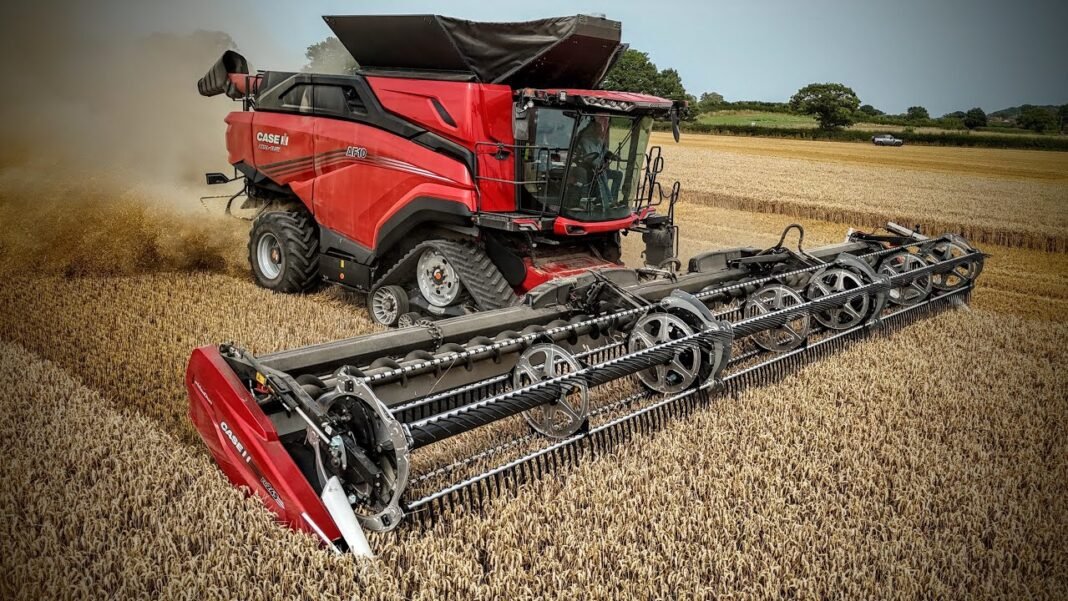

Modern agriculture is undergoing a technological revolution, and nowhere is that transformation more visible than in today’s combine harvesters.
Once viewed simply as machines that cut and thresh grain, modern combines have evolved into intelligent harvesting systems capable of collecting vast amounts of field data while delivering faster, cleaner and more efficient harvests.
From expansive wheat farms in North America and Europe to maize fields across Africa, soybean plantations in South America and rice-growing regions in Asia, combine harvesters have become indispensable to commercial farming.
Equipped with satellite guidance, automated controls, real-time yield monitoring and powerful fuel-efficient engines, the latest machines help farmers reduce harvest losses, improve grain quality and maximise productivity during one of the busiest periods of the farming calendar.
Manufacturers such as John Deere, New Holland, CLAAS, Case IH, Massey Ferguson and Fendt continue to push the boundaries of harvesting technology, while Chinese and Indian brands are introducing increasingly capable machines for emerging markets.
Farmers today can choose from compact harvesters designed for medium-sized operations to flagship models capable of harvesting hundreds of tonnes of grain each day.
This guide highlights 30 modern combine harvesters every farmer should know.
Whether you are investing in your first machine, upgrading an ageing fleet or simply keeping up with the latest agricultural technology, these combines represent some of the most innovative harvesting solutions available today.
What Is a Modern Combine Harvester?
A combine harvester is one of agriculture’s most important machines because it performs several harvesting operations in a single pass through the field.
Rather than relying on separate equipment, a combine cuts the crop, separates the grain from the stalk, cleans it and stores it in an onboard grain tank ready for unloading.
Modern combines harvest a wide range of crops, including:
- Wheat
- Maize (corn)
- Barley
- Rice
- Soybeans
- Oats
- Sorghum
- Canola
- Sunflower
The harvesting process begins with the header, which cuts the standing crop and feeds it into the machine.
Inside, a threshing system separates grain from the heads, while powerful cleaning fans remove chaff and other unwanted material. Clean grain is transferred into the grain tank, while straw is discharged behind the machine or chopped and spread evenly across the field.
Today’s machines complete these complex tasks with remarkable speed and precision, enabling farmers to harvest larger areas in shorter timeframes while maintaining excellent grain quality.
What Makes Today’s Combine Harvesters Different?
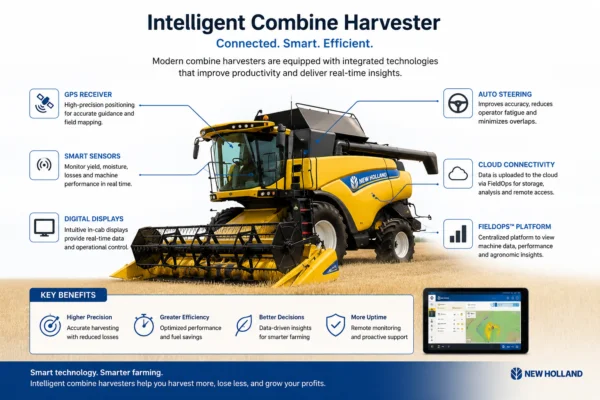
The latest generation of combine harvesters offers far more than increased horsepower. They are sophisticated precision farming platforms capable of making thousands of adjustments every minute to optimise harvesting performance.
Precision Guidance
GPS-guided auto-steering keeps machines on perfectly aligned paths, reducing overlaps and missed strips while allowing operators to work accurately even at night or in dusty conditions.
Intelligent Automation
Many flagship combines automatically adjust rotor speed, fan settings, sieve openings and ground speed according to changing crop conditions. This reduces grain loss while maintaining high harvesting capacity.
Yield Mapping
Integrated sensors continuously record harvested yield across every section of a field. Farmers can later analyse these maps to identify high-performing and low-performing areas, helping improve future fertiliser and planting decisions.
Telematics
Remote fleet management systems allow farm managers to monitor machine location, fuel consumption, productivity and maintenance schedules from computers or mobile devices.
Larger Grain Tanks
Modern combines can harvest for longer before unloading. High-capacity grain tanks combined with rapid unloading systems reduce downtime during peak harvesting periods.
Improved Fuel Efficiency
Advanced engine management systems and efficient drivetrains help reduce fuel consumption while delivering the power required to harvest demanding crops under varying field conditions.
Better Operator Comfort
Today’s combines feature spacious climate-controlled cabs, touchscreen displays, ergonomic controls, suspension systems and enhanced visibility, enabling operators to work comfortably throughout long harvesting days.
The World’s Leading Combine Harvester Manufacturers
Several manufacturers continue to dominate the global combine market through continuous innovation and strong dealer support.
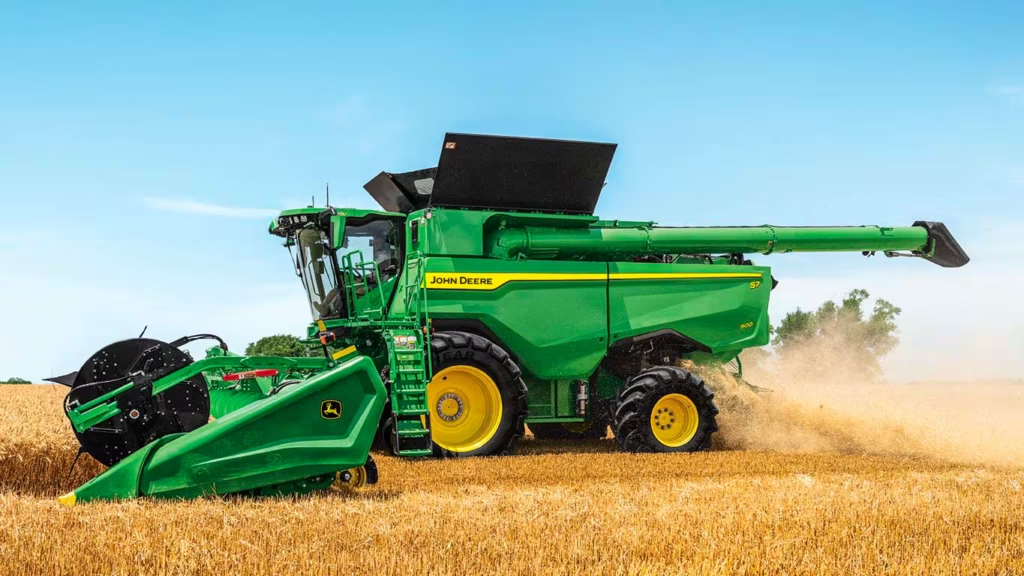
John Deere remains a global leader with its X and S Series combines, recognised for exceptional capacity, precision agriculture technologies and automation.
New Holland Agriculture pioneered Twin Rotor harvesting technology and continues to set new benchmarks with the CR Series, including the flagship CR11.
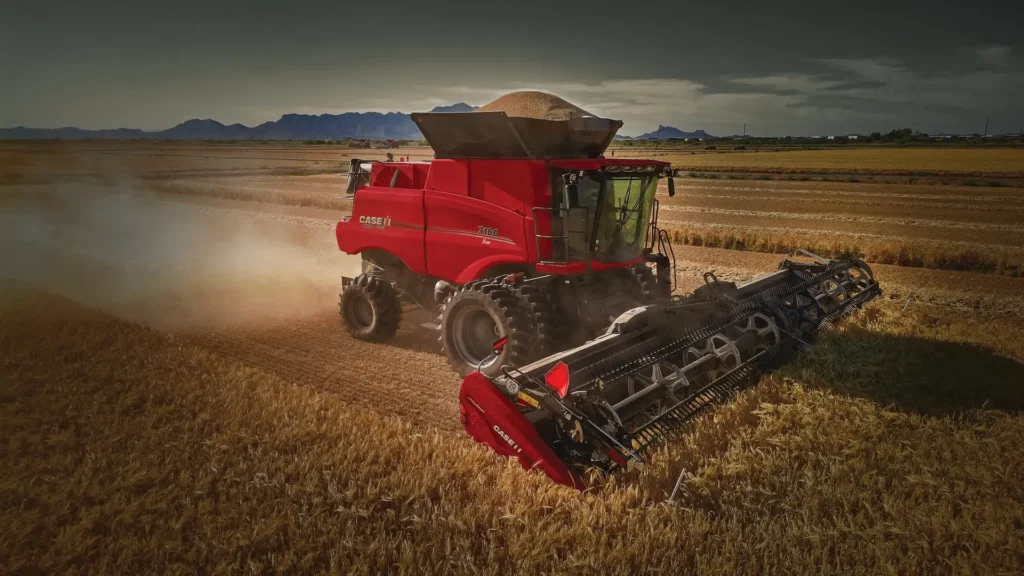
Case IH is renowned for its Axial-Flow combines, which are valued for gentle grain handling, high throughput and mechanical simplicity.
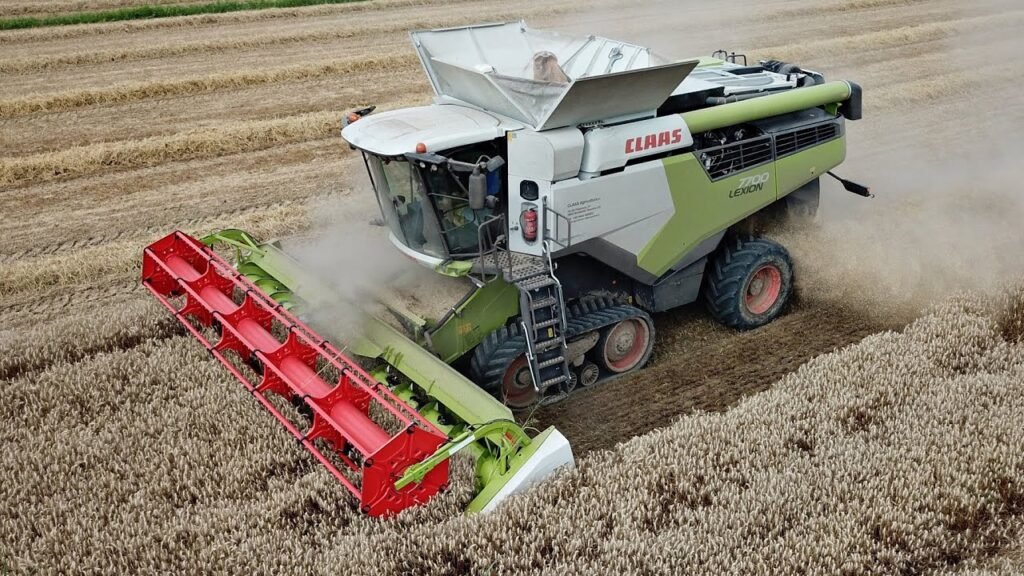
CLAAS, headquartered in Germany, has built a reputation for producing some of the world’s highest-capacity combines, with the LEXION range serving large commercial farms and harvesting contractors across multiple continents.
Other major manufacturers—including Fendt, Massey Ferguson, Kubota, Deutz-Fahr, Rostselmash, Lovol, Zoomlion and Preet Agro—continue expanding their product portfolios to meet the diverse needs of farmers worldwide.
In the next section, we examine 30 modern combine harvesters that stand out for their performance, innovation and suitability for different farming operations, from compact rice harvesters to some of the largest grain-harvesting machines ever built.
Related Stories
30 Modern Combine Harvesters Every Farmer Should Know
1. John Deere X9 1100
The John Deere X9 1100 is among the highest-capacity combine harvesters in the world.
Built for large commercial grain farms, it combines advanced automation, precision guidance and a high-capacity grain handling system to maximize productivity while minimizing grain losses.
2. John Deere S7 900
Designed for high-output harvesting, the S7 900 incorporates predictive harvesting technologies that automatically adjust machine settings according to changing crop conditions. It is ideal for wheat, corn and soybean producers.
3. John Deere T670
Popular across Europe and many international markets, the T670 features a conventional straw walker system that delivers excellent grain quality while preserving straw for baling operations.
4. Case IH Axial-Flow 8260
The Axial-Flow 8260 uses the company’s proven single-rotor technology, offering gentle grain handling, high productivity and simplified maintenance for large-scale farming operations.
5. Case IH Axial-Flow 9250
One of Case IH’s flagship combines, the 9250 delivers impressive throughput with advanced automation, real-time machine monitoring and precision farming integration.
6. Case IH Axial-Flow 7250
This versatile combine balances power and efficiency, making it suitable for medium to large grain farms seeking dependable harvesting performance.
7. New Holland CR11
The CR11 represents New Holland‘s newest generation of high-capacity combines. Equipped with advanced Twin Rotor technology, it is designed to maximize grain quality while reducing fuel consumption and harvest losses.
8. New Holland CR10
Positioned just below the CR11, the CR10 delivers exceptional harvesting efficiency and is well suited to large commercial grain operations requiring high daily output.
9. New Holland CX8.90
The CX8.90 remains a favorite among farmers who prefer conventional straw walker combines. It offers reliable performance across cereals and oilseed crops while producing high-quality straw.
10. New Holland CH7.70
Using Twin Rotor Separation technology, the CH7.70 delivers excellent grain separation and reduced grain damage, making it suitable for diverse harvesting conditions.
11. CLAAS LEXION 8900
The LEXION 8900 is one of the world’s most respected combines, known for exceptional capacity, advanced automation and intelligent machine optimization. It is widely used by harvesting contractors and large grain producers.
12. CLAAS LEXION 7700
Offering an excellent balance between productivity and operating costs, the LEXION 7700 performs well across a wide range of crops and field conditions.
13. CLAAS TRION 750
Designed for medium and large farms, the TRION 750 combines flexibility, fuel efficiency and advanced operator comfort with impressive harvesting capacity.
14. CLAAS EVION 450
The EVION 450 targets growing farms that require a dependable, easy-to-operate combine without the complexity of larger flagship models.
15. Fendt IDEAL 10T
As Fendt’s flagship combine, the IDEAL 10T incorporates advanced automation, efficient grain handling and one of the largest harvesting capacities available today.
16. Fendt IDEAL 9T
The IDEAL 9T offers many of the flagship model’s technologies while providing slightly lower capacity for large commercial farms seeking operational efficiency.
17. Fendt CORUS 518
Designed for medium-sized farms, the CORUS 518 emphasizes simplicity, reliability and ease of maintenance while maintaining excellent harvesting performance.
18. Massey Ferguson IDEAL 10
Developed within the AGCO family, the IDEAL 10 combines high-capacity harvesting with intelligent automation and precision agriculture capabilities.
19. Massey Ferguson IDEAL 9
The IDEAL 9 delivers excellent fuel economy, grain quality and operator comfort, making it suitable for professional grain producers across diverse regions.
20. Massey Ferguson ACTIVA 7347 S
This machine is designed for mixed farming operations requiring dependable harvesting of cereals and oilseed crops while maintaining affordable operating costs.
21. Kubota DC-70 Plus
Popular throughout Asia and increasingly recognized in Africa, the DC-70 Plus is a compact combine specially designed for efficient rice harvesting in smaller fields.
22. Kubota WRH1200
The WRH1200 combines harvesting with direct grain bagging, helping reduce labor requirements while improving harvesting efficiency for rice producers.
23. Deutz-Fahr C9306 TS
Featuring advanced threshing technology and efficient cleaning systems, the C9306 TS delivers high productivity across a wide range of grain crops.
24. Deutz-Fahr C6205
The C6205 offers a practical combination of performance, reliability and operator comfort, making it suitable for medium-sized commercial farms.
25. Rostselmash TORUM 785
Built for challenging harvesting conditions, the TORUM 785 combines powerful performance with high-capacity grain handling for large cereal farms.
26. Rostselmash RSM 161
The RSM 161 is recognized for its durability and productivity, particularly in wheat-producing regions where reliable performance is essential.
27. Sonalika Tiger Combine Harvester
Widely used across South Asia, the Tiger combine provides an affordable harvesting solution for farmers seeking dependable performance with manageable operating costs.
28. Lovol GM100
Chinese manufacturer Lovol continues expanding internationally with the GM100, a combine designed to deliver modern harvesting technology at a competitive price point.
29. Zoomlion TF220
The TF220 demonstrates China’s growing capabilities in agricultural machinery, offering efficient harvesting for rice and cereal crops while emphasizing affordability.
30. Preet 987 Combine Harvester
Manufactured in India, the Preet 987 is valued for its simple design, ease of maintenance and versatility across multiple grain crops, making it attractive for developing agricultural markets.
Which Combine Harvester Is Right for Your Farm?
Choosing the right combine depends on several factors beyond horsepower. Farm size, crop type, terrain, dealer support and operating costs all influence the best investment.
| Farm Size / Type | Recommended Models |
|---|---|
| Small Farms | Kubota DC-70 Plus, Preet 987, Sonalika Tiger |
| Medium Farms | New Holland CX8.90, CLAAS EVION 450, Fendt CORUS 518 |
| Large Commercial Farms | John Deere X9 1100, New Holland CR11, CLAAS LEXION 8900, Fendt IDEAL 10T |
| Harvesting Contractors | Case IH Axial-Flow 9250, CLAAS LEXION 8900, John Deere S7 900 |
| Rice Farming | Kubota DC-70 Plus, Kubota WRH1200, Zoomlion TF220 |
What to Consider Before Buying a Combine Harvester
A combine harvester is one of the largest investments most farmers will make, so careful planning is essential.
Consider the crops you grow, the number of hectares harvested each season, engine power, header compatibility, grain tank capacity and fuel efficiency.
Reliable dealer support and readily available spare parts are equally important, as downtime during harvest can quickly become expensive.
Farmers should also evaluate the machine’s precision farming capabilities. Features such as GPS guidance, yield mapping, telematics and automated machine settings can significantly improve productivity while reducing operating costs over the life of the machine.
The Future of Combine Harvesters
Combine harvesters are becoming increasingly intelligent. Manufacturers are investing heavily in artificial intelligence, autonomous driving technologies, predictive maintenance and cloud-based farm management systems.
Future machines are expected to make even more real-time adjustments without operator intervention, helping farmers harvest more efficiently while reducing fuel consumption and environmental impact.
As precision agriculture continues to evolve, combines will increasingly serve as data collection platforms, providing valuable insights that help farmers improve planting, fertiliser application and overall crop management.
Modern combine harvesters have transformed the way farmers harvest grain. Equipped with advanced automation, precision agriculture technologies and fuel-efficient powertrains, today’s machines deliver higher productivity, lower grain losses and improved operational efficiency than ever before.
Whether managing a family farm or a large commercial enterprise, choosing the right combine depends on matching machine capacity with your crops, acreage and long-term business goals.
The 30 models featured in this guide represent some of the most capable harvesting machines available today, demonstrating how innovation continues to reshape modern agriculture and helping farmers around the world produce more food with greater efficiency.
Also Read
- Combine Harvester Prices in Kenya (2026)
- How They Were Built: The New Holland
- Top 7 Largest Combine Harvesters in the world

Martin is a writer at Agrimachinery Africa specializing in agricultural machinery, mechanization trends, and farm technology across Africa. His work focuses on tractors, harvesting equipment, irrigation systems, and emerging innovations helping farmers improve productivity and efficiency. Through in-depth industry coverage, he highlights technologies shaping the future of modern agriculture.