


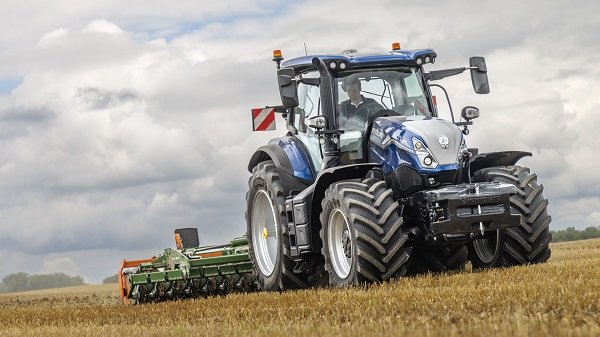

The global farm machinery market is entering a sharply divided phase.
In mature agricultural markets, farmers are delaying machinery purchases as weak farm profitability puts pressure on cash flow.
High-horsepower equipment, particularly machinery used by large row-crop operations, is bearing the brunt of the downturn.
But in Africa, the picture is markedly different.
While North America and Europe are experiencing a machinery downcycle, demand across African markets remains strong, particularly for tractors below 100 horsepower.
According to CNH, the African agricultural machinery industry is now more than 30% larger than it was three years ago, with East Africa and the Maghreb emerging as particularly promising growth regions.
The divergence suggests that the next phase of global agricultural machinery growth may not come primarily from traditional replacement markets. Increasingly, it could come from regions where mechanization is still expanding.
The global downturn may be a postponement, not a collapse
The latest equipment-market assessment from the Association of Equipment Manufacturers (AEM) points to significant pressure in the U.S. agricultural machinery market.
American row-crop farmers have experienced six consecutive years of financial losses, while fuel, fertilizer and other input costs have remained volatile. These conditions have made farmers increasingly cautious about committing capital to new machinery.
AEM says farmers still need new equipment, but many are extending replacement cycles and deferring purchases in order to preserve cash flow. Agricultural equipment shipments have continued to decline since their 2022 peak. And high-horsepower equipment has suffered the most.
AEM’s current data suggests that retail sales of high-horsepower equipment could finish 2026 between 18% and 25% below 2025 levels.
But CNH sees an important distinction between declining sales and declining underlying demand.
Valerio Domenici, Marketing and Business Manager for Africa and the Middle East at CNH Industrial, told Agrimachinery Africa that the company believes the current weakness is primarily a postponement of purchases rather than a fundamental collapse in demand.
“We strongly believe it is merely postponement of purchasing. The demand remains strong but we are simply in another downcycle moment of such demand.”
That distinction could prove important for manufacturers.
If farmers are postponing purchases rather than abandoning machinery investment altogether, the industry could eventually see a release of pent-up replacement demand when farm profitability improves.
High-horsepower machinery is under pressure in mature markets
The weakness is not confined to the United States.CNH says it is seeing similar pressure on high-horsepower equipment in other major markets, although the problem is concentrated primarily in North America and Europe.
“Yes, like every manufacturer,” Domenici said when asked whether CNH was experiencing similar pressure, adding that the weakness is mainly concentrated in North America and Europe.
AEM’s assessment supports that picture.
The average U.S. farm equipment fleet remains relatively young, making it easier for farmers to postpone replacement purchases while they deal with financial pressures. AEM therefore expects near-term demand to remain relatively flat.
The result is a market where the need for machinery remains, but the timing of purchases has shifted.
Financing cannot overcome weak farm economics
The machinery downturn also illustrates the limits of financing as a tool for stimulating equipment demand.
AEM reports that financed sales of both new and used agricultural equipment have continued to decline despite some reduction in interest rates over the past year.
The underlying problem is farmer profitability.
If farmers are not generating sufficient returns from their operations, cheaper financing alone may not convince them to commit to a major equipment purchase.
That helps explain why the current downturn could persist even as monetary conditions become somewhat more favorable.
Related Stories
- Kenya’s Tractor Market Gets a Financing Boost as Equity Bank Offers 90% Funding for Kubota Machines
- Why Farm Machinery Makers Are Turning Sustainability into a Profit Strategy
- Dealer Guide: Top Tractor Dealers in Kenya
- U.S. Tractor Sales Fall 10.9% in July as North American Farm Machinery Market Remains Under Pressure
Equipment inventories are beginning to normalize
There are nevertheless signs that the machinery distribution channel is becoming healthier.
AEM says manufacturers and dealers have adjusted to softer market conditions, with inventory turnover improving toward historical norms.
High-horsepower equipment currently represents approximately five months of inventory compared with a historical norm of four months, while low-horsepower equipment is approaching its normal six-month level.
The development does not mean demand has recovered.
Instead, it suggests manufacturers and dealers are becoming better aligned with the level of demand actually present in the market.
That reduces pressure on dealers, helps preserve asset values and limits carrying costs.
Africa is moving in the opposite direction
The contrast with Africa is striking.While high-horsepower equipment demand is under pressure in North America and Europe, CNH says African agricultural machinery demand remains very strong.
And the growth is being driven primarily by smaller tractors.
“Africa remain very strong,” Domenici said. “Mostly in the segment below 100hp.”
According to his assessment, the African agricultural machinery industry is now more than 30% larger than it was three years ago.
That represents a fundamentally different market dynamic from the mature agricultural economies currently experiencing a replacement-cycle downturn.
Africa’s machinery market is not primarily being driven by farmers replacing relatively young fleets. Instead, the industry is continuing to expand as mechanization reaches more agricultural operations.
The African tractor market is overwhelmingly concentrated around 50–80 hp
The difference becomes even clearer when looking at tractor horsepower.
While large farms in North America and Europe have traditionally supported substantial demand for high-horsepower tractors, African demand is concentrated much lower on the horsepower scale.
“Mainly small HP,” Domenici said. “Almost the entire industry is buying equipment between 50hp and 80 hp.”
There is a structural reason for this.
African agriculture remains highly fragmented in many markets, limiting the practical need for very large tractors.
“Africa struggles to increase the HP on tractor demand, and this is mostly due to fragmentation of land,” Domenici explained.
This creates an important distinction between the two markets.
In mature agricultural economies, the immediate question is often whether farmers will replace large machines already in their fleets.
In Africa, the question is more frequently about expanding access to mechanization with machinery that fits the size and economics of individual farms.
That makes the 50–80 hp tractor segment particularly important for manufacturers and distributors targeting the continent.
Farm Machinery Market at a Glance
Projected decline in U.S. high-horsepower equipment retail sales in 2026
Growth in Africa’s agricultural machinery industry compared with three years ago, according to CNH
The tractor horsepower range dominating African equipment demand, according to CNH
Expected growth rate in East Africa and the Maghreb, according to CNH
Current U.S. high-horsepower equipment inventory, versus a historical norm of four months
Sources: Association of Equipment Manufacturers (AEM); CNH Industrial.
Africa’s growth is not simply a spillover from the Western downturn
One tempting interpretation of the current global market would be that weaker demand in North America and Europe could create opportunities for African buyers through cheaper or more readily available machinery.
CNH does not see a direct connection.
Asked whether the Western machinery slowdown could create opportunities for African buyers through greater availability of used machinery, more competitive pricing or financing, Domenici rejected the idea.
“I don’t see any relation between the economics and machinery currently running in the Western Countries and any opportunities for African buyers,” he said.
“Type of machines and its financing are totally different.”
That is an important qualification.
Africa’s machinery opportunity should therefore not be viewed simply as a consequence of weakness in mature markets.
The underlying drivers are different.
Africa’s machinery opportunity is structural
The African market has its own reasons for growing.
Mechanization remains a major agricultural development opportunity across the continent, while farmers, contractors and governments continue to seek ways of increasing productivity and reducing dependence on manual labor and animal traction.
The equipment requirements are also different.
Rather than simply replicating the machinery mix found in North America or Europe, African markets are developing around equipment suited to smaller and fragmented farms.
That helps explain why 50–80 hp tractors remain such an important part of the market.
It also means manufacturers that can provide appropriately sized, affordable and supportable machinery could be better positioned to capture Africa’s growth than companies simply attempting to export the largest machines used in mature agricultural markets.
East Africa and the Maghreb emerge as growth hotspots
Looking ahead, CNH sees particularly strong potential in two parts of the continent.
“East Africa and Maghreb seem to be the next big thing,” Domenici said, adding that growth is expected to continue at double-digit rates.
The assessment puts East Africa firmly on the radar of global agricultural machinery manufacturers.
Countries across the region are investing in agricultural productivity and mechanization, while demand for tractors and related equipment is being supported by commercial farming, smallholder mechanization initiatives and agricultural value-chain development.
The Maghreb presents a different but equally important opportunity, with established commercial agriculture and continuing demand for modern agricultural equipment.
For machinery manufacturers, the two regions could therefore become increasingly important as mature markets struggle through their current downcycle.
The replacement cycle could eventually turn
The global agricultural machinery market may therefore be approaching an important inflection point.
AEM’s data indicates that machinery sales have fallen significantly in some mature markets, particularly among high-horsepower equipment.
But CNH’s assessment suggests that the underlying demand has not disappeared.It has been deferred.
That means the current market weakness could ultimately create a large pool of postponed replacement purchases.
Once farm profitability improves sufficiently, farmers that have extended machinery replacement cycles may return to the market.
AEM is already seeing evidence that the industry may be moving from rapid contraction toward stabilization. The timing of the next recovery remains uncertain, however.
Two machinery markets, two different stories
The global agricultural machinery market can therefore no longer be viewed as a single story.
In North America and Europe, high-horsepower machinery is facing a significant downcycle as farmers protect cash flow and postpone replacement purchases.
In Africa, machinery demand is continuing to expand, with the strongest demand concentrated in smaller tractors.
CNH’s assessment that the African machinery industry is more than 30% larger than three years ago—and that East Africa and the Maghreb could maintain double-digit growth—provides a striking contrast to the weakness currently affecting mature markets.
The implication for equipment manufacturers is clear.
The next global machinery recovery will not necessarily be driven by the same markets or equipment categories that powered the previous cycle.
For mature agricultural economies, the next opportunity may come when deferred replacement demand is finally released.
For Africa, the opportunity is more fundamental: bringing more farmers into mechanized agriculture in the first place.
That could make Africa one of the most important growth stories in the global agricultural machinery industry over the next several years.
Also Read
- South Africa Tractor Sales Slip 2% in June 2026 as Farmers Delay Machinery Purchases
- Kenya’s Tractor Market Gets a Financing Boost as Equity Bank Offers 90% Funding for Kubota Machines
- Brazil’s Machinery Makers Turn to Export Markets as Domestic Demand Falls 17%

Martin is a writer at Agrimachinery Africa specializing in agricultural machinery, mechanization trends, and farm technology across Africa. His work focuses on tractors, harvesting equipment, irrigation systems, and emerging innovations helping farmers improve productivity and efficiency. Through in-depth industry coverage, he highlights technologies shaping the future of modern agriculture.