


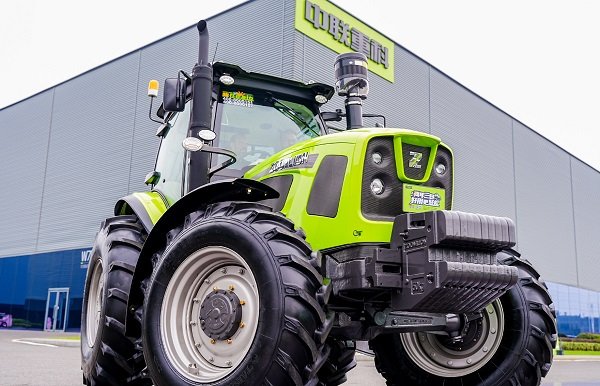

Chinese agricultural machinery manufacturers are rapidly strengthening their presence in international markets, with Africa emerging as one of their fastest-growing export destinations.
Official trade data shows that China exported agricultural machinery and parts worth approximately US$9 billion during the first half of the year, representing an increase of more than 26% compared with the same period last year.
The strong performance follows a record US$9.7 billion in agricultural machinery exports in 2025, when overseas shipments rose by more than 32% year-on-year, underlining the growing global demand for Chinese-made farm equipment.
The export boom reflects more than just competitive pricing. Chinese manufacturers have invested heavily in product development, expanding production capacity and tailoring machinery to suit the unique needs of different farming regions around the world.
For African markets in particular, manufacturers are increasingly recognising that reliability, affordability and ease of maintenance often matter more than sophisticated electronics or premium features.
“The tractors we ship to Europe meet at least the equivalent China V emission standard,” said Xiao Jingjin, General Manager of AGCO (Changzhou) Agricultural Machinery Co., Ltd. “In the African market, the simpler the tractor, the better.”
That philosophy is helping drive the growing popularity of Chinese-built tractors across the continent.
Rather than offering identical products worldwide, manufacturers are adapting their machines to local farming conditions, infrastructure and purchasing power.
The result is a new generation of tractors designed specifically for African agriculture—machines that balance affordability with improving quality, fuel efficiency and durability.
As governments accelerate mechanisation programmes and commercial farming continues to expand, Chinese manufacturers such as Zoomlion, YTO, Weichai Lovol, Dongfeng and XCMG are positioning themselves to capture a larger share of Africa’s growing agricultural machinery market.
Why Africa Is Becoming a Key Market for Chinese Tractor Manufacturers
Africa remains one of the world’s least mechanised agricultural regions, with millions of farmers still relying on manual labour and animal traction for land preparation and cultivation.
At the same time, population growth, urbanisation and rising food demand are increasing pressure to improve farm productivity.
This combination of low mechanisation levels and expanding agricultural investment presents a significant opportunity for tractor manufacturers.
Chinese companies, backed by competitive pricing, expanding dealer networks and improving technology, are increasingly filling that gap by supplying machinery suited to both smallholder farmers and large commercial operations.
Below, we look at the Chinese brands leading this push into the African tractor market, and what is setting each one apart.
1. Zoomlion
Zoomlion has moved from being a familiar name in African construction equipment into one of the most talked-about entrants in agricultural machinery.
The company has been active in South Africa’s construction machinery segment since 2007, and it used that existing footprint as a springboard into farm equipment, with a tractor line-up now spanning 50hp to 350hp.
The headline product is the DV3504, a 350hp tractor that Zoomlion representatives describe as the first commercially launched hybrid tractor in South Africa.
Its hybrid electric drive system, built around Zoomlion’s self-developed MiDD distributed intelligent electric drive technology, adds short-term electric power support during peak-load field operations such as deep tillage, improving torque delivery and responsiveness.
The company has said the hybrid system can cut fuel consumption by roughly 20–30% compared with a conventional diesel tractor doing equivalent work — a meaningful saving for commercial operations running large fleets.
The DV3504 was showcased at NAMPO Harvest Day 2026 in Bothaville, Free State, where it formed the centrepiece of Zoomlion’s push into South Africa’s agricultural machinery market.
Company representatives at the show pointed to South Africa as a strategic stepping stone into the wider Southern African Development Community region, building on Zoomlion’s existing agricultural presence in Kenya and Tanzania.
Alongside the hybrid tractor, Zoomlion has been promoting a broader “intelligent agriculture” strategy — combining hybrid power with automation and data-driven field operations — and is steadily growing its dealer network to support the equipment locally.
2. YTO
YTO Group is one of China’s oldest and largest tractor manufacturers, tracing its roots back to 1955 and its first tractor build to 1958.
With decades of manufacturing scale — historically producing well over 100,000 units a year across a size range from roughly 11kW to 285kW — YTO has built a reputation for reliability and parts availability that matters greatly to fleet operators and government buyers.
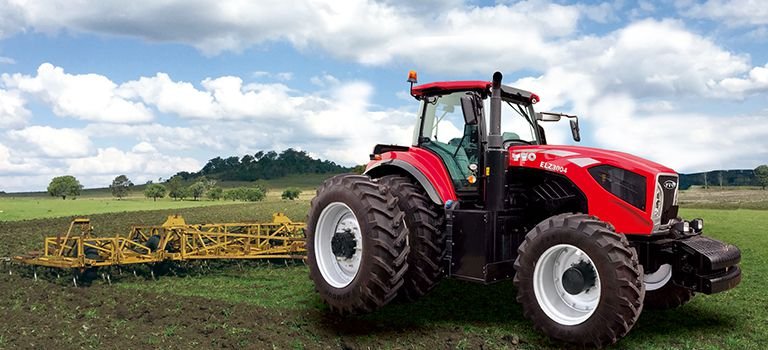
YTO’s African presence has been shaped heavily by government mechanisation programmes and development-linked equipment deals.
The China-Africa Machinery Corp, founded by YTO and the China-Africa Development Fund in 2009, laid early groundwork for the brand’s involvement in state-backed tractor distribution across the continent.
In Southern Africa, YTO tractors are locally adapted and distributed through established agricultural equipment dealers, while the brand also maintains a presence across East and West Africa, where its tractors are frequently associated with public-sector mechanisation schemes rather than purely private retail sales.
3. Lovol (Weichai Lovol)
Weichai Lovol has built one of the broadest global export networks of any Chinese agricultural equipment maker, supplying tractors, combines and construction machinery to more than 120 countries through hundreds of first-class distributors.
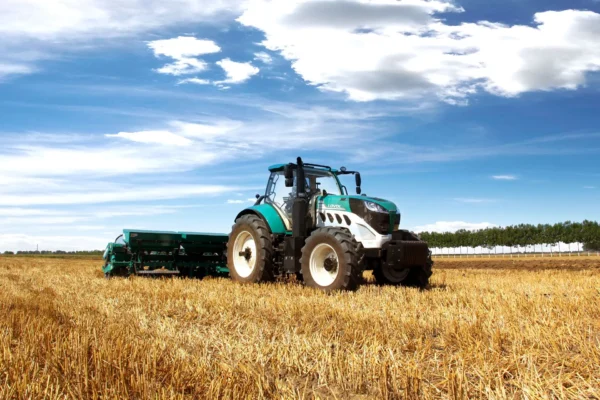
The company has held the top spot in Chinese tractor exports for over a decade, and its mid- to high-horsepower models — spanning roughly 50hp to 260hp — give it credibility with both mixed commercial farms and larger operations.
Lovol’s Africa credentials include one of the largest Sino-Africa agricultural aid packages on record, supplying thousands of tractors and matching implements to the continent as part of a state-backed cooperation project.
In South Africa specifically, Lovol Agri SA — operating as a division of ABC Hansen Africa — provides local sales, servicing and spare parts support, addressing one of the most common concerns commercial farmers raise about Chinese equipment: whether backup and parts will be available when a machine breaks down mid-season.
4. Foton Lovol
Foton Lovol, formed in 2007 from the assets of Shandong Foton Heavy Industries, produces a wide catalogue of utility tractors alongside combine harvesters, wheel loaders and excavators.
Its tractors are positioned firmly at the practical end of the market — reliable, mechanically straightforward machines suited to small and medium-sized farms that need a workhorse rather than a showpiece.
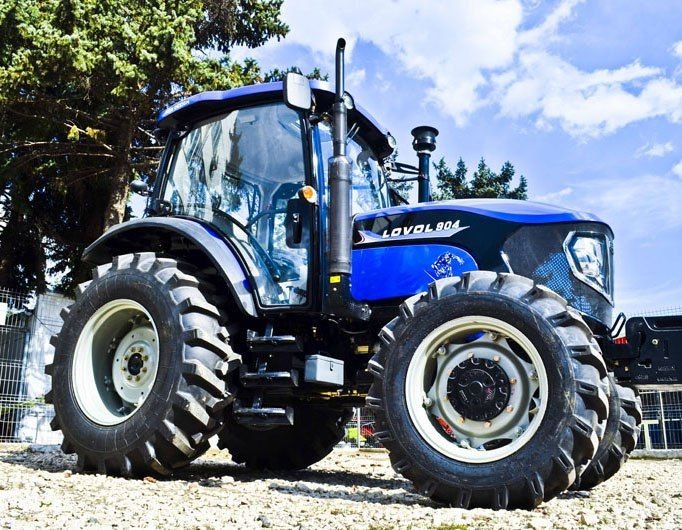
The brand’s African footprint runs through both agricultural and construction channels, with spare parts distributors in South Africa, East Africa and West Africa supporting a large installed base of older and newer Foton Lovol units.
That combination of affordability and wide parts availability has made it a common choice for farms mechanising for the first time.
5. Dongfeng
Dongfeng is best known internationally for trucks and passenger vehicles, but its agricultural machinery division produces a range of compact tractors that have found a solid following among smallholders in East Africa.
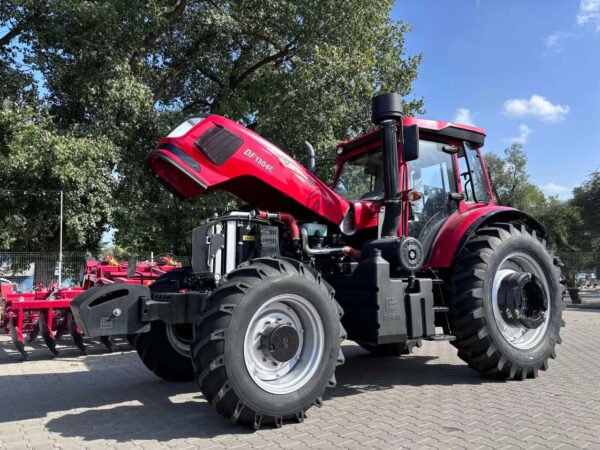
Typically ranging from around 25hp to 120hp, Dongfeng’s tractors are priced to compete directly with the entry-level end of the market, making them an accessible first step into mechanisation for farmers moving away from ox-drawn or hand-tool cultivation.
6. Shifeng
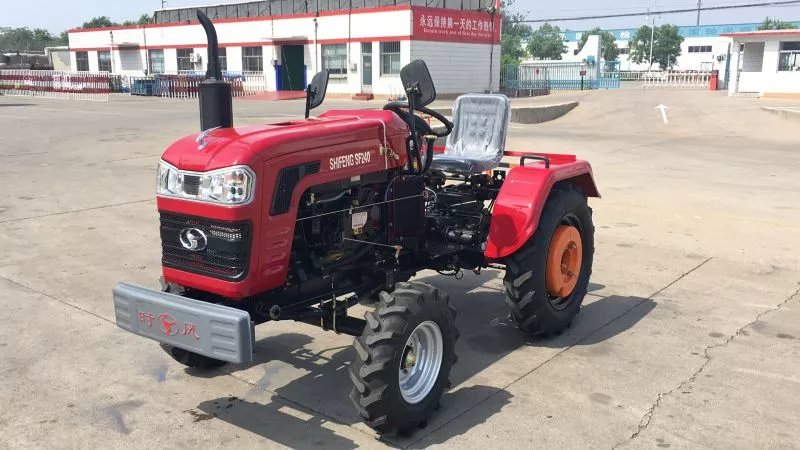
Shifeng specialises in smaller, entry-level tractors — generally in the 20hp to 90hp range — aimed squarely at cost-sensitive buyers in developing agricultural markets. The brand has gained particular traction in West Africa, where smallholder plots and modest budgets favour compact, low-maintenance machines over larger commercial-grade tractors.
7. Changfa
Changfa rounds out the lower end of the horsepower spectrum, with models typically in the 20hp to 80hp band designed for smaller farms and tighter budgets.
While less widely distributed across Africa than YTO or Lovol, Changfa tractors are present in selected markets where affordability outweighs the appeal of a bigger brand name, often sold alongside walking tractors and basic implements.
8. XCMG Agriculture
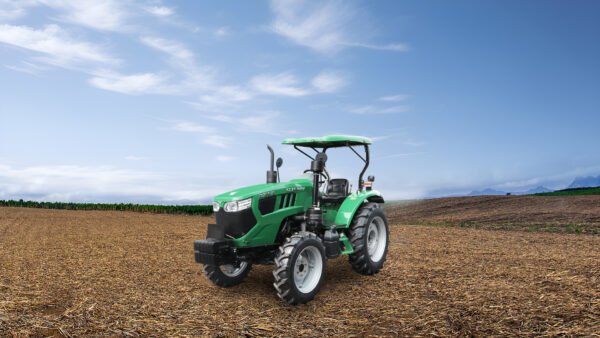
XCMG is one of China’s largest construction machinery groups, and it has been diversifying into agricultural equipment as part of a broader push into precision farming technologies — including automation, telematics and data-driven field management.
Its footprint in African agriculture is still emerging compared with dedicated tractor specialists like YTO or Lovol, but the group’s existing construction-equipment dealer networks across the continent give it a ready-made distribution base if it chooses to scale up its agricultural line-up.
Chinese Tractor Brands in Africa: Quick Comparison
| Brand | Typical Horsepower | Best For | African Markets |
| Zoomlion | 90–350 hp (incl. DV3504 hybrid) | Commercial & large-scale farms | Southern Africa, expanding regionally |
| YTO | 50–220 hp | Government mechanisation programmes | East & West Africa |
| Lovol (Weichai Lovol) | 50–260 hp | Mixed and commercial farming | Across Africa, strong Southern Africa base |
| Foton Lovol | 25–130 hp | Utility work on small and medium farms | East, West & Southern Africa |
| Dongfeng | 25–120 hp | Smallholder and small-scale farms | East Africa |
| Shifeng | 20–90 hp | Entry-level farming | West Africa |
| Changfa | 20–80 hp | Smallholders | Selected markets |
| XCMG Agriculture | 60–200 hp+ | Diversified mechanisation, precision farming | Emerging presence |
Horsepower ranges and market coverage are approximate and vary by model year, importer and local configuration.
Why Chinese Manufacturers Are Gaining Ground
Several factors explain the rapid expansion of Chinese agricultural machinery across Africa.
Competitive pricing
One of the biggest advantages is affordability.
For many farmers, purchasing a new premium Western tractor remains financially challenging. Chinese manufacturers offer tractors across a wide horsepower range at prices that appeal to first-time buyers, cooperatives and emerging commercial farmers.
Lower acquisition costs allow more farms to mechanise without making large capital investments.
Improving product quality
Earlier generations of Chinese tractors were often criticised for inconsistent build quality.
However, many manufacturers have significantly improved engineering standards, manufacturing processes and quality control over the past decade.
Today’s models frequently include features such as:
- Powershift transmissions
- Air-conditioned operator cabs
- GPS guidance compatibility
- Precision farming technologies
- Fuel-efficient engines
- Improved hydraulic systems
Some manufacturers have also begun investing in hybrid and intelligent tractor platforms designed to improve efficiency during demanding field operations.
Expansion of dealer networks
Availability of spare parts and service support has historically been one of the biggest concerns surrounding Chinese machinery.
To address this, several manufacturers have expanded their dealer and service networks throughout Southern, East and West Africa.
Local partnerships are helping improve:
- Spare parts availability
- Technician training
- Warranty support
- Preventive maintenance
- Equipment financing
These developments are increasing buyer confidence.
| Feature | Chinese Brands | Established Western Brands |
|---|---|---|
| Purchase Price | Generally lower | Higher |
| Technology | Rapidly improving | Highly advanced |
| Dealer Networks | Expanding | Well established |
| Spare Parts | Improving | Widely available |
| Resale Value | Moderate | Typically stronger |
| Best Suited For | Cost-conscious buyers and growing farms | Large commercial fleets and premium users |
What the Future Looks Like
Africa’s mechanisation journey is still in its early stages.
Population growth, expanding commercial agriculture and increasing pressure to improve food production are expected to drive demand for tractors over the coming decades.
Chinese manufacturers are well positioned to benefit from this trend through continued investment in:
- Precision agriculture
- Artificial intelligence
- Autonomous farming technologies
- Hybrid and electric tractors
- Digital farm management systems
As dealer networks mature and customer confidence grows, competition between Chinese, Indian, Japanese and Western manufacturers is likely to become even stronger.
Frequently Asked Questions
Are Chinese tractors reliable?
Many newer Chinese tractors have improved significantly in terms of engineering, fuel efficiency and overall build quality. Reliability varies by manufacturer, dealer support and maintenance practices.
Which Chinese tractor brands operate in Africa?
Some of the best-known manufacturers include Zoomlion, YTO, Weichai Lovol, Dongfeng, Shifeng, Changfa and XCMG Agriculture.
Why are Chinese tractors becoming popular?
Their competitive pricing, improving technology, expanding dealer networks and availability through mechanisation programmes make them attractive to many African farmers.
Are spare parts available?
Availability has improved considerably in recent years, particularly in countries where manufacturers have established authorised dealerships and service centres.
A Reshaped Market, Not a Replaced One
It would be an overstatement to say Chinese tractors have simply become “better” than the established Western and Japanese brands that have long dominated African agriculture.
Massey Ferguson, John Deere and New Holland continue to hold strong positions in many segments, particularly where brand trust, dealer heritage and resale value carry weight with commercial farmers.
What is clear is that Chinese manufacturers are reshaping the market rather than simply undercutting it on price.
Zoomlion’s hybrid drivetrain technology, YTO’s decades of manufacturing scale, Lovol’s expansive export and service network, and the steady presence of Foton Lovol, Dongfeng, Shifeng and Changfa across every price tier show a sector that is investing in local support, not just low list prices.
XCMG’s move into precision agriculture hints at where the competition is heading next.
For African farmers and fleet buyers, the practical effect is more choice, more competitive pricing at every horsepower band, and — increasingly — more modern features available without paying a premium associated with legacy Western brands.
Also Read
- Top 7 Tractor Brands Dominating Africa’s Agricultural Sector
- Ghana Orders 1,840 Belarusian Farm Machines in Major Push to Modernize Agriculture
- NAMPO 2026: New Holland CR10 and Scania Super Steal the Show as Machinery Giants Race to Prove ROI

Martin is a writer at Agrimachinery Africa specializing in agricultural machinery, mechanization trends, and farm technology across Africa. His work focuses on tractors, harvesting equipment, irrigation systems, and emerging innovations helping farmers improve productivity and efficiency. Through in-depth industry coverage, he highlights technologies shaping the future of modern agriculture.