


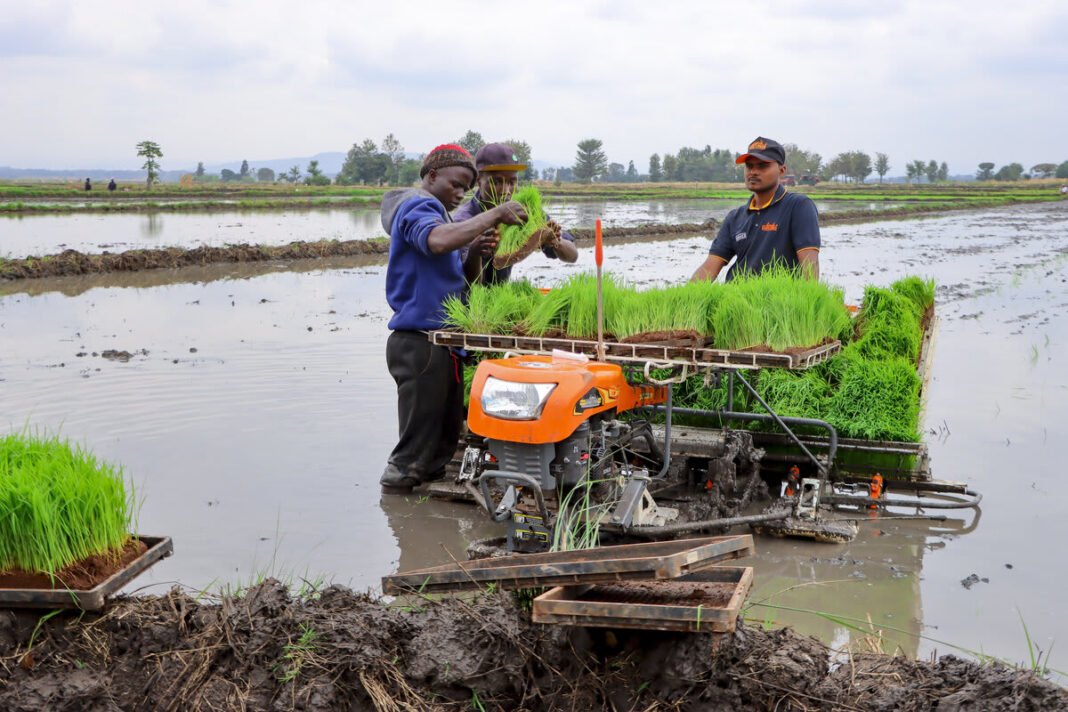

In Kenya’s Mwea rice-growing region, the sound of machinery has become increasingly difficult to separate from the rhythm of rice production.
Tractors prepare the fields. Combine harvesters move through mature paddies during the harvest season. Machinery has reduced some of the most labour-intensive tasks and helped farmers deal with a growing rice industry.
But there is one major operation where mechanisation has struggled to make the same breakthrough.Transplanting.
Across the Mwea Irrigation Scheme, farmers still rely heavily on manual labour to move young rice seedlings into the muddy fields.
Several attempts have been made to mechanise the operation, but the physical conditions of Mwea’s fields and the economics of raising seedlings for mechanical planting have created a difficult barrier.
The result is an unusual picture of mechanisation: land preparation and harvesting are highly mechanised, while one of the most important stages between them remains largely manual.
For machinery dealers, farmers, agronomists and the cooperative sector, solving that problem could become one of the defining challenges of the next phase of Mwea’s rice revolution.
MWEA BY THE NUMBERS
From manual farming to a mechanised rice economy
The transformation has been significant.
According to Maina Murimi, an agronomist with the National Irrigation Authority, virtually every stage of rice production was manual around a decade ago.
That has changed considerably.
Today, machinery is deeply embedded in the Mwea production system. Anthony Waweru, General Manager of the Mwea Rice Growers Multipurpose Co-operative Society (MRGM), says the scheme now has an estimated 100 tractors and more than 100 combine harvesters serving rice farmers.
The scale matters because Mwea is at the centre of Kenya’s rice industry. Kirinyaga County currently has an estimated 30,600 acres under active paddy rice cultivation, with the vast majority of that area located within the Mwea Irrigation Scheme.
Mechanisation has therefore moved beyond being a symbol of modern farming. It has become an essential part of keeping the production system functioning at scale.
Waweru says mechanisation improves efficiency and makes farming easier for producers.
For harvesting in particular, its impact extends beyond labour savings.
Murimi says combine harvesting has greatly reduced post-harvest losses, giving machinery a direct role in protecting the value of the crop after months of cultivation.
But the progress is uneven.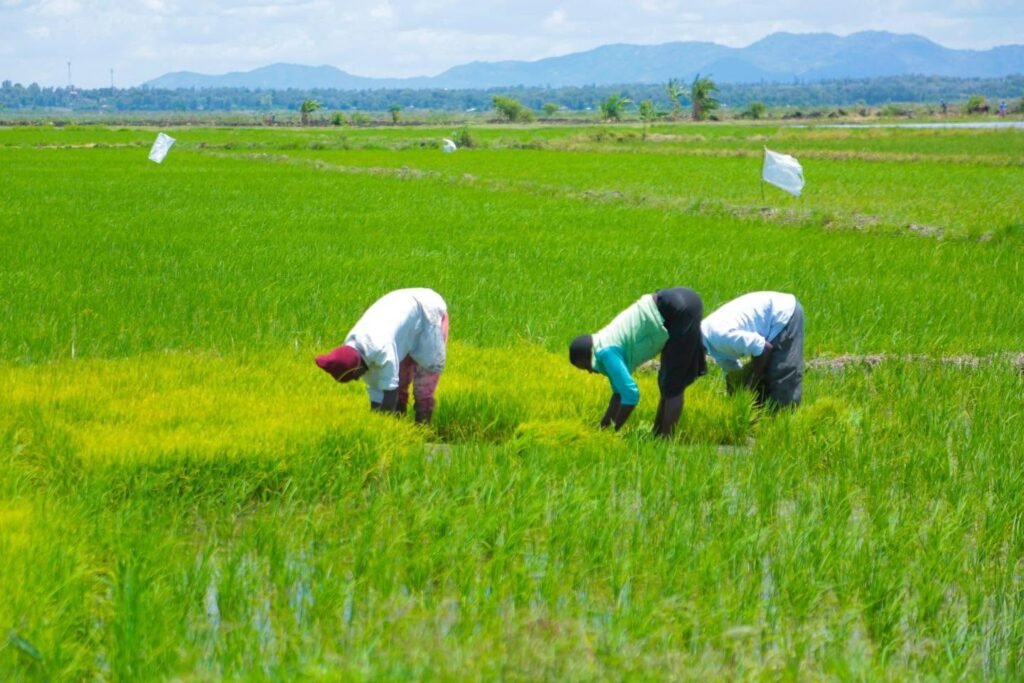
- Inside Kakuzi’s Digital Farm Strategy: Precision Agriculture, AI, Drones and Data
- Why Farm Machinery Makers Are Turning Sustainability into a Profit Strategy
- China’s Agricultural Machinery Revolution: From Low-Cost Tractors to AI and Autonomous Machines
- Brazil’s Precision Agriculture Market Has a Technology Problem — But Not the One You Might Expect
Transplanting remains the missing link
Paul Kahuthia, CEO of Tebere Hardware, a dealer in Shaktiman rice machinery, identifies transplanting as the most significant mechanisation challenge facing Mwea.
The problem is not simply that farmers lack access to transplanters.
The machines themselves face a difficult operating environment.
Mwea’s rice soils can become deep and extremely muddy, creating conditions in which conventional transplanting machinery struggles to move through the field.
Kahuthia says no manufacturer has yet produced a transplanter that is ideally suited to the deep black-cotton soils found in the Mwea rice fields.
Murimi gives a similar assessment.
“Several machines have been tested, but some have struggled in the muddy conditions, becoming bogged down instead of delivering the productivity gains expected from mechanisation,” he explains.
The Missing Link
This is an important distinction for machinery manufacturers.
The challenge in Mwea is not necessarily a lack of interest in mechanisation. It is a machine-design and operating-condition problem.
A transplanter that performs effectively in another rice-producing market may not automatically work in Mwea.
For manufacturers looking at Kenya’s rice market, that creates an opportunity for locally adapted engineering.
The successful machine may need to combine low ground pressure, adequate traction and the ability to work effectively in deep, saturated soils without damaging the field or becoming immobilised.
The hidden cost of mechanical transplanting
Even if the right machine becomes available, another challenge remains: seedlings.
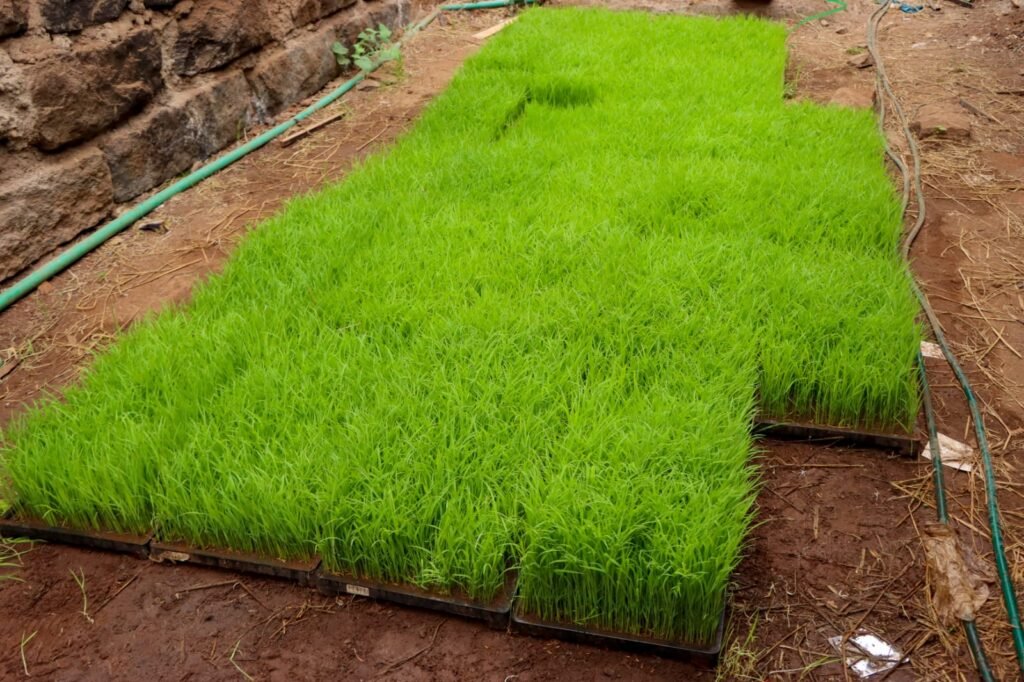
Mechanical rice transplanting generally requires farmers to prepare seedlings in trays rather than relying on the traditional method of raising and transplanting seedlings manually.
Kahuthia estimates that one acre can require more than 100 seedling trays for mechanical transplanting.
For a small or medium-sized farmer, the cost quickly becomes significant.
This means that solving Mwea’s transplanting problem requires more than importing a better machine.
Farmers also need affordable seedling production, financing,
machinery-hire services and technical support.
Farmers need an economically viable mechanised transplanting system.
That could include affordable tray-seedling production, shared seedling facilities, machinery-hire models, financing and technical support.
Both Kahuthia and Murimi see financial support as an important part of the equation.
Without it, the additional cost associated with trays and specialised machinery could discourage farmers from adopting the technology even if a technically suitable transplanter becomes available.
This is where government, manufacturers, cooperatives and financial institutions could potentially play a larger role.
Why farmers are still repairing old machines
The machinery market in Mwea also reveals another important reality about African mechanisation.
Farmers are buying new machines, Kahuthia says, but they are equally interested in keeping existing equipment working for as long as possible.
The reason is straightforward: agricultural machinery is expensive.
When a machine represents a major capital investment, replacing it is not always the first option when it develops a problem.
Repair, maintenance and spare-parts availability therefore become critical elements of mechanisation.
At Tebere Hardware, Shaktiman spare parts are readily available, helping farmers keep equipment operating.
This highlights an often-overlooked aspect of sustainable mechanisation.
A sustainable machinery market is not only about selling more new equipment. It also requires the infrastructure to maintain the machines already working on farms.
Dealers, technicians, spare-parts suppliers and manufacturers therefore become part of the productivity equation.
Kahuthia nevertheless expects the replacement market to grow as older machinery reaches the end of its useful life.
He sees a future beyond 2030 in which Mwea could achieve much more complete mechanisation.
The question is how quickly the industry can close the remaining gaps.
Mwea’s transplanting challenge points to an opportunity for machines
engineered specifically for deep, saturated soils, with low ground
pressure, adequate traction and an economically viable seedling system.
The next challenge: fertiliser efficiency
Transplanting is not the only pressure facing Mwea’s production system.
Murimi points to a deeper issue emerging beneath the surface: soil fertility.
Farmers today are using considerably more fertiliser than they did several years ago.
According to Murimi, some farmers previously used around three bags of fertiliser, while current application levels can reach six or seven bags.
One reason is the changing economics of the rice system.
Farmers increasingly sell rice straw rather than leaving it to decompose in the fields. While this creates an additional source of income, it also means less organic material is returned to the soil.
The result is a potential long-term sustainability challenge.
Higher fertiliser use may help maintain productivity in the short term, but it raises questions about nutrient efficiency, soil health and the future cost of rice production.
For a machinery publication, this creates another important connection.
The future of Mwea mechanisation may not simply be about putting more horsepower into the field. It could increasingly involve precision application technologies that help farmers use inputs more efficiently.
Drones show promise — but price remains a barrier
The same pattern is visible in crop protection.
Drone technology has been tested for spraying in Mwea and can offer advantages in speed and application efficiency.
But according to Murimi and Waweru, the cost of drone services remains a major obstacle for farmers.
As a result, many farmers continue to spray manually, sometimes without adequate protective equipment.
The current situation illustrates one of the central challenges of agricultural technology adoption in Africa.
A technology can be technically effective but still fail to achieve widespread adoption if its business model does not work for farmers.
For drones, the answer may therefore lie not in individual ownership but in affordable service-provider models, cooperative contracting or other forms of shared access.
The same principle could apply to expensive harvesting and transplanting machinery.
Mechanisation is changing the economics of harvest
The strongest evidence of what machinery can accomplish in Mwea is perhaps found during harvesting.
With more than 100 combine harvesters operating in the scheme, farmers have moved far beyond the predominantly manual system of the past.
The machines allow harvesting to take place faster and have significantly reduced post-harvest losses.
That matters because rice quality and value can deteriorate when harvesting is delayed.
Mechanisation therefore creates benefits that extend beyond saving labour. It can protect the crop, reduce exposure to weather-related losses and allow farmers to complete harvesting within a narrower window.
The challenge now is to reproduce that success at other stages of production.
The cooperative model could be crucial
MRGM’s role illustrates another potential pathway for mechanisation.
The cooperative does not only represent farmers. It operates across several parts of the rice value chain, including production, marketing, milling and agro-vet services.
It also has a dedicated filling station supplying fuel and lubricants to the agricultural and transport sectors.
Importantly, the cooperative purchases machinery for use by its members.
That model could become increasingly important as agricultural equipment becomes more sophisticated and expensive.
Rather than requiring every farmer to purchase specialised machinery individually, cooperative ownership or organised machinery services can spread the cost across a larger number of users.
MRGM has also worked with machinery companies, including FM World and Massey Ferguson, while local leadership and after-sales support remain important considerations.
The lesson is clear: mechanisation does not necessarily mean every farmer owns a machine.
In many cases, access to the machine may be more important than ownership.
Water remains part of the equation
Mwea’s machinery story cannot be separated from water.
Rice production depends on reliable irrigation, and water availability remains a challenge despite the major contribution of the Thiba Dam.
The irrigation system also presents a contrast with some more advanced agricultural systems internationally.
Kenya continues to rely heavily on open-channel water distribution, meaning that future improvements in water management could potentially complement machinery and precision agriculture.
Better water control, efficient pumping, field levelling and precision irrigation could all contribute to the productivity and sustainability of the rice system.
For Mwea, mechanisation is therefore becoming part of a much bigger technological transition.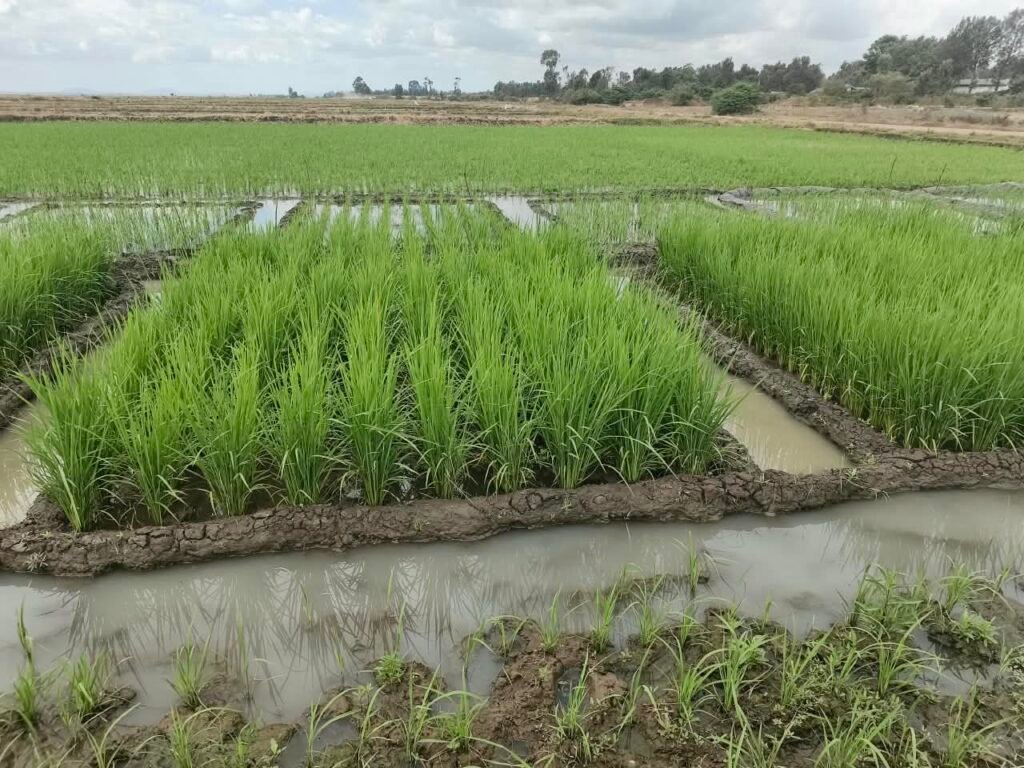
Looking beyond 2030
The interviews conducted in Mwea suggest that the next phase of rice mechanisation will not be about simply adding more tractors and harvesters.
Those machines have already established themselves.
The bigger challenge is filling the gaps between them.
A suitable rice transplanter could be transformative. More affordable drone services could improve crop protection. Better precision fertiliser application could help address rising input use. Improved water management could protect productivity as pressure on resources increases.
And all of these technologies will need to work within the economic realities of Kenyan farming.
Tractors ✓ | Combines ✓ | Transplanting — | Drone services —
More reliable transplanting | Affordable drone services | Precision input application | Better water management
For Kahuthia, complete mechanisation is possible beyond 2030.
But reaching that point will require more than machinery manufacturers alone.
Farmers will need financing. Manufacturers will need to adapt machines to local conditions. Dealers will need to provide parts and technical support. Cooperatives will have to continue developing shared-access models. Government and development partners may need to support technologies where the initial investment is beyond farmers’ reach.
Mwea has already demonstrated that rice farming can move rapidly from manual production towards a machinery-intensive system.
The next question is whether the industry can solve its hardest problem.
The fields can be ploughed by machines. The rice can be harvested by machines. But until machinery can reliably plant the crop in Mwea’s difficult soils, the rice revolution remains only partially mechanised.
And that unfinished chapter may provide one of the biggest opportunities for the next generation of agricultural machinery in Kenya.
Mwea’s Mechanisation Gap
- Land preparation is already highly mechanised.
- Harvesting has moved to more than 100 combine harvesters.
- Rice transplanting remains largely manual.
- Deep, muddy soils make machine design critical.
- Seedling-tray costs add another adoption barrier.
- Shared machinery and service models could reduce the cost of access.
Also Read
- Dealer Guide: Top Tractor Dealers in Kenya
- Inside Kakuzi’s Digital Farm Strategy: Precision Agriculture, AI, Drones and Data
- Valtra Tractor Dealers in Africa: 12 Countries, Contacts and Buyer Guide (2026)

Martin is a writer at Agrimachinery Africa specializing in agricultural machinery, mechanization trends, and farm technology across Africa. His work focuses on tractors, harvesting equipment, irrigation systems, and emerging innovations helping farmers improve productivity and efficiency. Through in-depth industry coverage, he highlights technologies shaping the future of modern agriculture.